What Paper Could No Longer Hold
Ali Arkady on displacement, the memory inside stone, and why a photograph needs a surface that can break.
Ali Arkady was born in 1982, seven kilometres from the Iran-Iraq border, into a family where art came long before war. His father was a calligrapher, a school supervisor, an artist who filled a building with exhibitions — a man who had known a quiet, good life until the wars began. They began, more or less, when Ali did. His childhood was spent in shelters, with the sound of the front line close enough to feel. The war, he says, was part of the life.
He did not begin as a photojournalist. He began as a painter, then as an art student in newly liberated Kurdistan. The first years the institute taught in Kurdish, the language Saddam's regime had suppressed. A masterclass in 2011 redirected him toward documentary photography. What followed were years of sustained witness — the American occupation, the rise of the Islamic State, the Yazidi genocide, the displaced populations of Fallujah and Mosul. But alongside the conflict coverage, he was constantly returning to something else: long-term projects about Iraqi identity, everyday life, and the people the news cycle ignored. In 2017, after he documented Iraqi armed forces committing war crimes, his life was threatened. He fled Iraq with his family and was granted asylum in France.
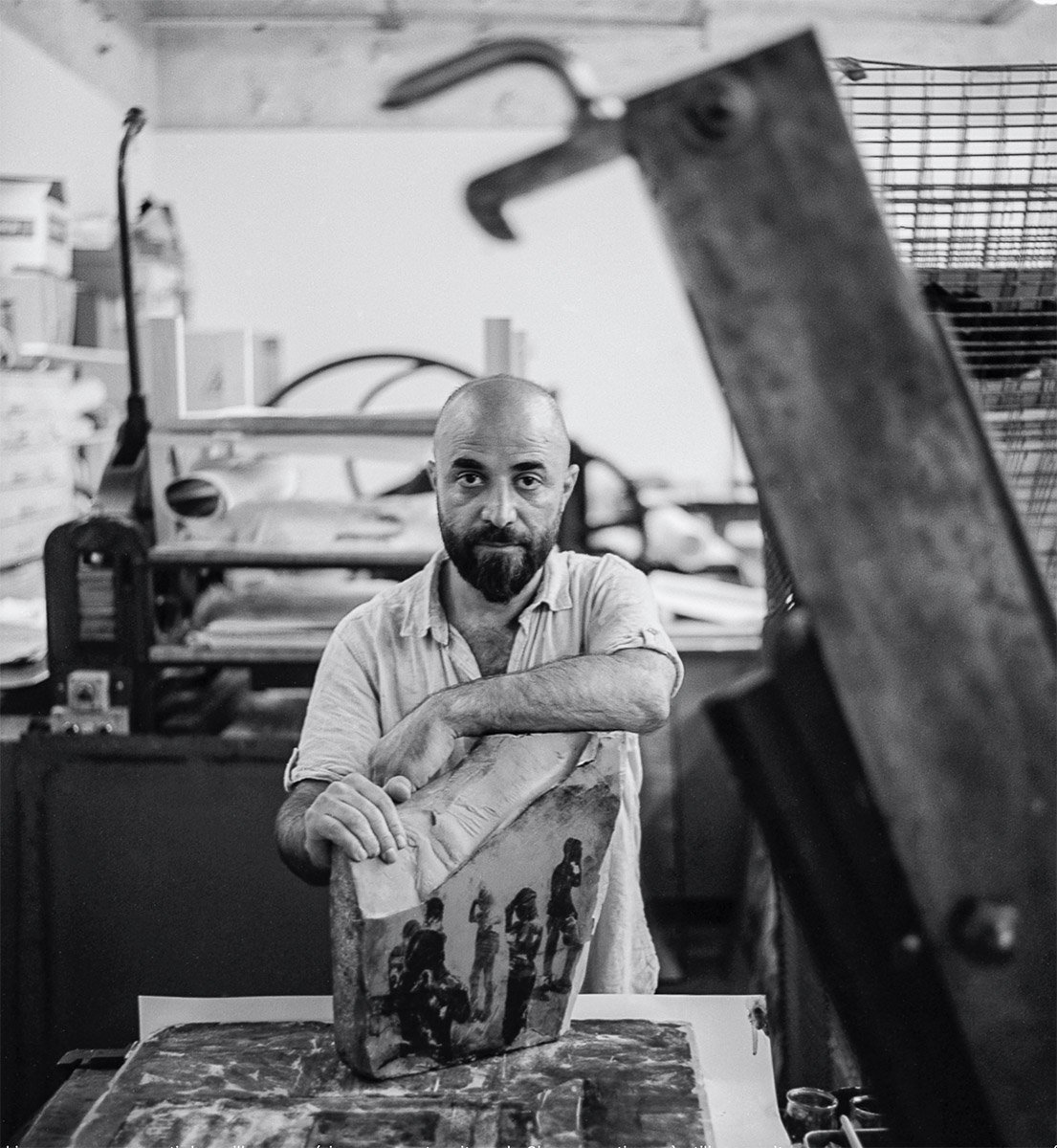
He arrived in Paris traumatised, unable to document, carrying a hard drive full of evidence and a body that could no longer hold what it had seen. His wife, also an artist, also a graduate of the art school in their hometown enrolled them in a transitional programme at the École des Beaux-Arts de Paris. He was thirty-four years old. He had not made art since 2011, when he had given all his paintings away, placed a camera on a table, and decided that photography was his form.
Then he found the stones. What has followed is a practice he calls monolithography — transferring photographic images onto centuries-old Bavarian limestone, pressing memory into a surface that holds, and sometimes breaks. Photography has continued alongside it: documentary work, long-form projects, film. This is a conversation I had with Ali on a Friday afternoon in July, continued over several written exchanges.
This piece draws from a recorded conversation and subsequent written correspondence with Ali Arkady.
The Father's Paintings
Uday: I want to start at the beginning — not the start of your photography, but the beginning that made everything else possible. You grew up in a family where art was already present. Can you tell me about your father, and what happened when you had to leave?
Ali: My father is an artist. He was a calligrapher — Arabic calligraphy and a supervisor of all the schools in my town. He had a big building where he did exhibitions. Designer, many things. When I was a kid I helped him. So this is how I started — with creativity, with making things.
In 1999, when I was eighteen, we had to leave. My uncle had been kidnapped by the Iraqi Army during the revolution in Khanaqin. He disappeared. After that, the regime kept coming to my father. It became dangerous to stay.
My father said: I will not leave unless my artwork comes with me. But you couldn't take anything through the checkpoints. There were twenty checkpoints between Khanaqin and the Kurdish region. For me, at eighteen, they might think I was going to join the army. That was a problem also.
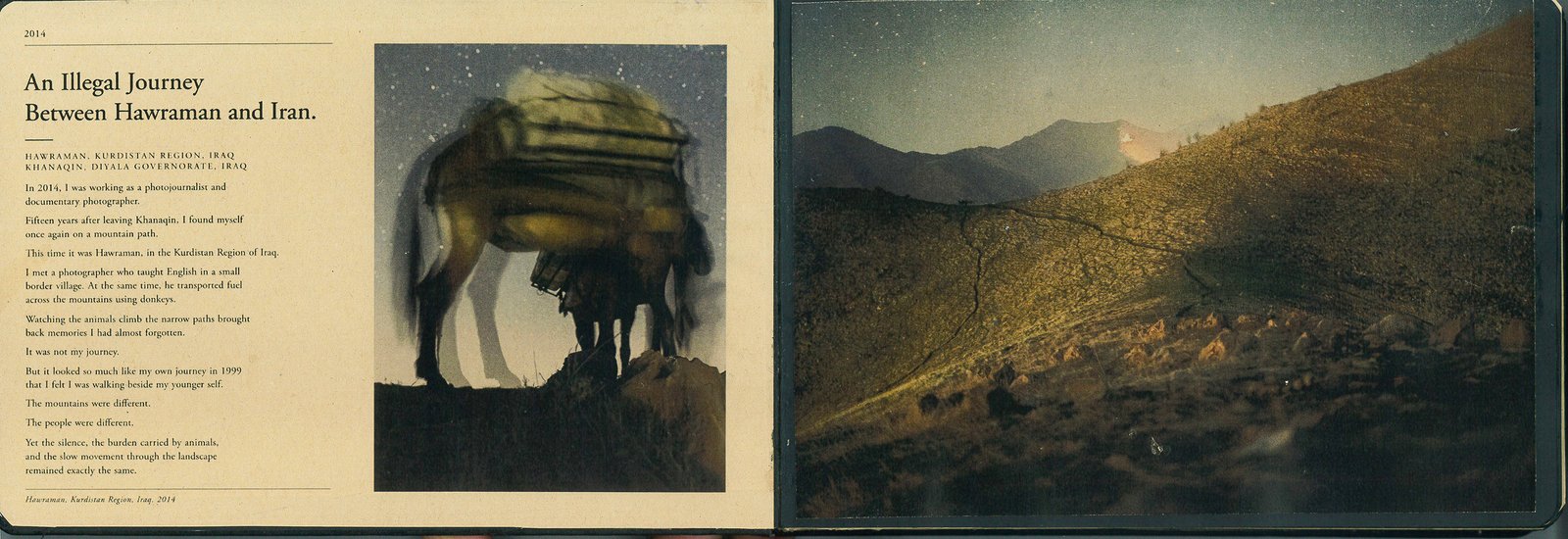
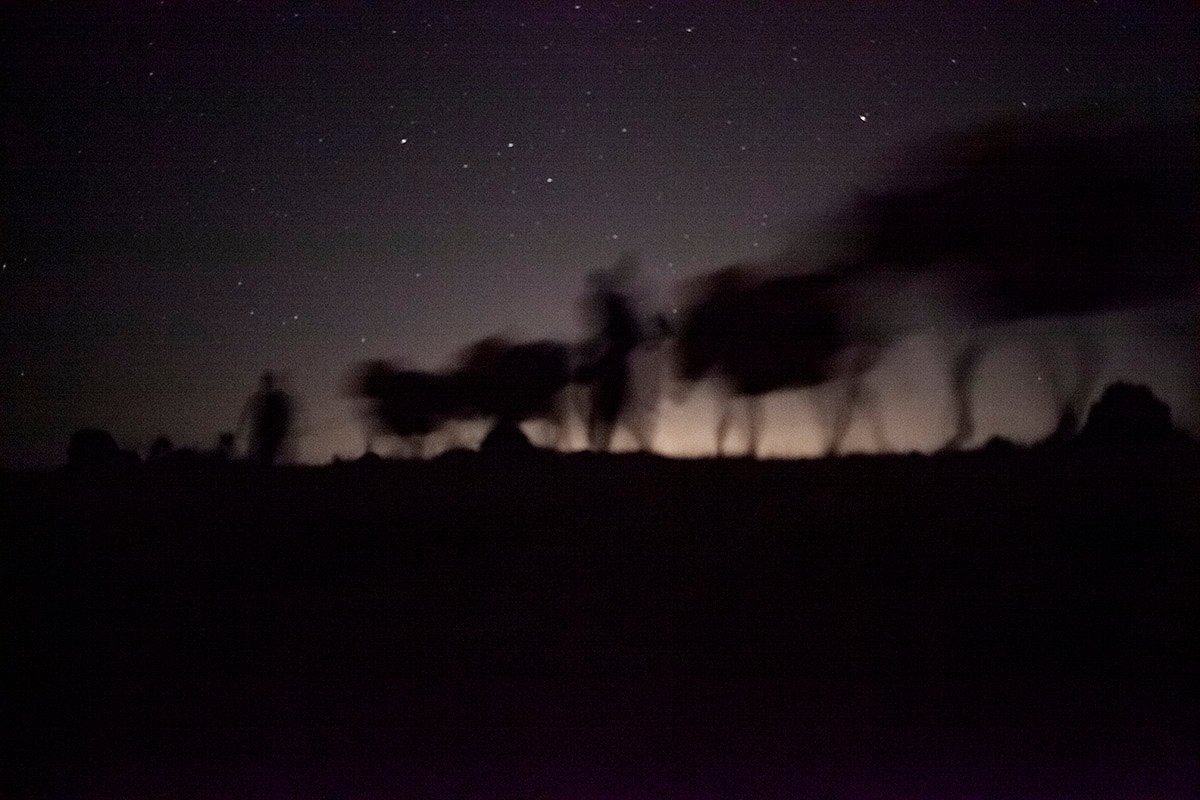
I had a friend from school who smuggled oil through the mountains on donkeys. I said: I have an idea. I took all my father's artwork around one hundred and fifty kilos. I rented two donkeys, and we walked through the mountains at night. My family took the checkpoint. That was the first journey.
Uday: Carrying your father's paintings on donkeys through a mountain pass at night, to avoid the checkpoints, that image stays with me. It feels like it contains something essential about everything that comes after.
Ali: Yes. Because later, when I understood what I was doing with the stones — putting memory into something heavy, something you have to carry, I think this was already there. I didn't know it at the time. I was eighteen. I was just trying to bring his work. But the weight was always there.
What the Camera Found
Uday: When Khanaqin was liberated in 2003, you went back the same day with a camera, not as a journalist. How did that happen?
Ali: I was in Kurdistan, watching everything on television. Twenty days — from the south of Iraq all the way to Baghdad. I didn't go to work a single day. Khanaqin was under the regime, you see.
When it was liberated, I went back to Khanaqin the same day. With a film camera, eight millimetre. I started documenting first my family, my grandmother, my grandfather. I interviewed them, I interviewed people in my neighbourhood. I didn't know why I was doing it. It was something I just did. I saw on television how people do this and I did it. People asked me: are you a journalist? I didn't know what journalist meant at that time. I was twenty-one. But I knew the concept of documentation. That was the thing.
I also recorded something I shouldn't have. When the Kurdish forces came into my town, they were asking the Arab families, families Saddam had brought there to change the demographics, to leave. I was upstairs recording how they were handling this. My mother saw it and said: keep it hidden. They will do something bad to us if they find out. Because we are Kurdish.
I kept that footage until 2019. I never published it.
Uday: Sixteen years. You carried it for sixteen years.
Ali: Yes. Because she was right. And because I understood already at twenty-one, that documentation is not the same thing as publication. You carry things. You decide later. Or you don't decide at all.
Art School in Kurdish
Uday: In those years after 2003, before the journalism really took hold, you went back to study. You enrolled in the Fine Arts Institute in Kurdistan at a moment when it was teaching for the first time in the Kurdish language. What did that mean?
Ali: My mother tongue. Saddam's regime had suppressed the Kurdish language we could not study art in Kurdish. When the institute opened and began teaching in Kurdish, my father's friends contacted me: Ali, where are you? The institute is open. Come.
I hadn't finished my baccalaureate when I was eighteen. But I brought my old school documents and they accepted me. I was a crazy painter. I loved it. The photograph was always with me also — every day I made photographs, and I used them to paint from. But painting was my thing.
Then in 2011 there was a masterclass — ten days, how to tell stories. The teacher was an editor from Time Magazine. After that, I did an exhibition in Baghdad. I sold most of my work. The gallery director told me: Ali, your painting is amazing, but go with photography. Many people paint. What you do with the camera is unique.
I came home and stayed in my room for three months. There was a conflict in my brain. Then I took all my artwork, all my paintings, and gave them to a friend. I said: this is all for you. I put a table, a camera, a computer, a shelf. That's it. From that day: photography.
The Iraqi Human Being
Uday: The years between 2011 and 2017 are often described through the events you documented — ISIS, the Yazidis, the front lines. But looking back at that period now, how do you understand what you were actually searching for?
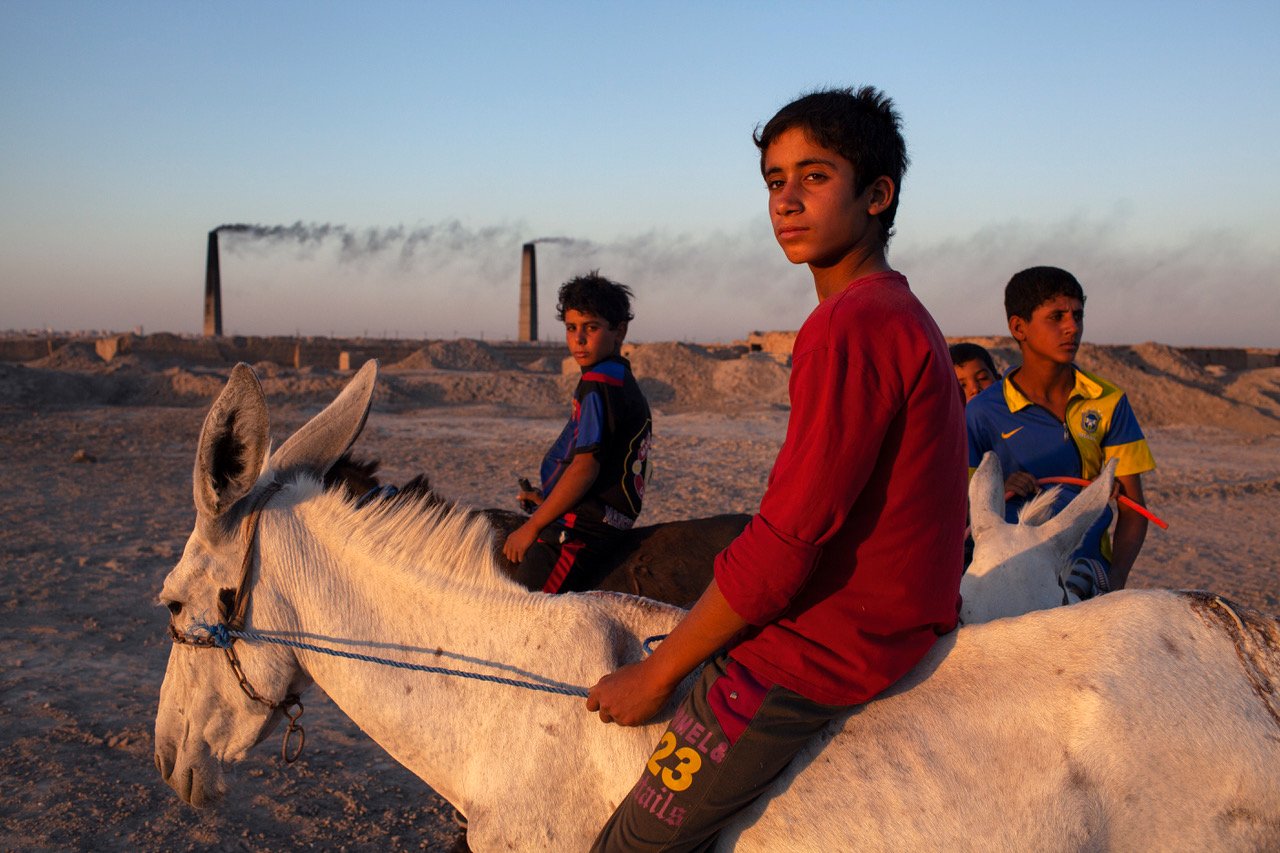
Ali: I was never searching for war itself. I was searching for the Iraqi human being. War was always present, but it was never the subject that interested me most. What interested me was the person living through it, how people endured, adapted, remembered, loved, created, and continued to live despite decades of conflict.
I felt that daily news could never fully explain the country. So I was constantly returning to long-term projects alongside the conflict coverage. Projects about identity, memory, belonging, resilience about everyday life. The construction workers in Sulaymaniyah. The Forgotten a soldier who lost his leg, and how he continued. Mountain of Gold, an environmental project that took several years to complete. I also spent years photographing artists, musicians, writers, ordinary families across Iraq. Many times I would return directly from the front lines to continue working on stories that had nothing to do with combat.
It was important to me to show that Iraq is not defined only by war. It is also a place of beauty, hospitality, creativity, and people who continue building their lives every single day.
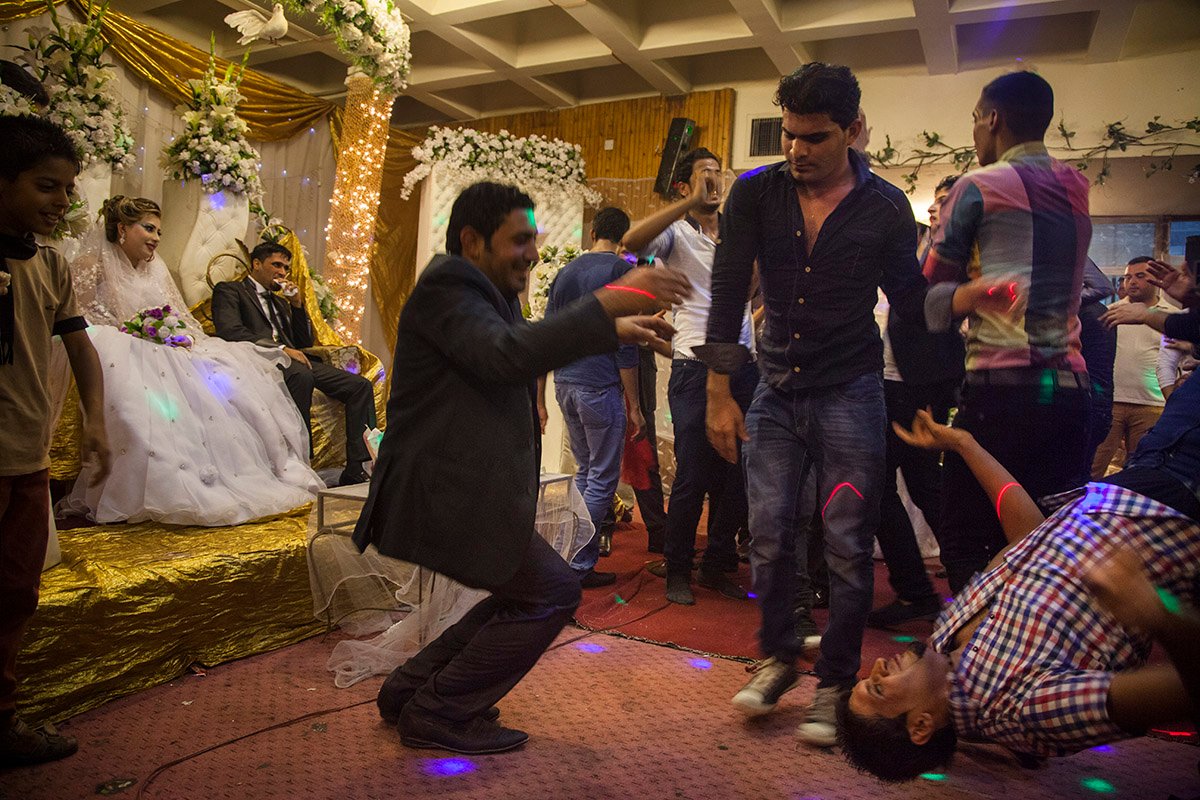
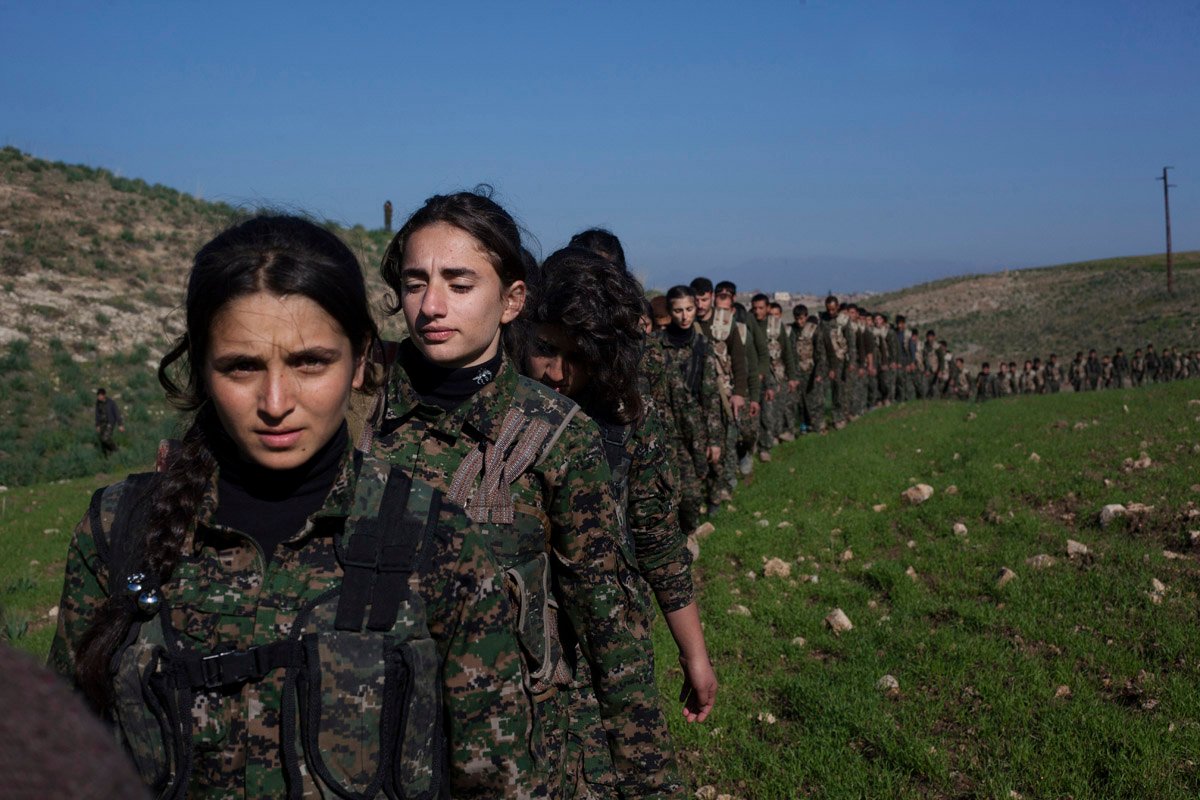
Uday: That distinction, between the war and the people living through it feels central to everything that comes after. Including the stone work.
Ali: Yes. I have always believed that some of the deepest wounds are not always visible. Beyond physical destruction, there is the loss of memory, the loss of place, the struggle to preserve dignity and identity. The long-term projects were a way of exploring those quieter, slower stories. The ones that rarely appear in breaking news, but say much more about a society. That is what I was always trying to reach. The stone became another way of reaching it.
What Paper Could No Longer Hold
Uday: And then in 2017 your life was threatened after you documented war crimes committed by Iraqi armed forces. You came to Paris with your family. What was that arrival like?
Ali: I arrived with my hard drive. For five months I was busy just transmitting, giving the evidence to the world, making sure it existed outside my hard drive alone. There were prizes. People contacted me. But at the end of 2017, my body fell down. My brain couldn't hold any situation anymore. I went through almost three years of processing, of trying to get rid of some of the effects.
I was traumatised. I wasn't ready to do documentation. I couldn't stay at home, but I also couldn't go out as a photographer. My wife is also an artist, we had both studied at the art school in our town. She heard about a transitional programme at the Beaux-Arts de Paris. We could learn the language, meet artists, participate in exhibitions. They would give us a student card. We applied together. We were accepted.
I went to the photography department first. It felt like repetition. Not much. Cinema — also not much. And then one day a friend told me: there are stones in the back of the school. They are going to throw them away. Three tons. I went to look.
Uday: And when you saw them?
Ali: I wrote my name and number on them immediately. No touch. If you need to move them, call me. That was it.
Find History from the Trash
Uday: Before you put any of your own images into the stones, you made an installation about what was already in them. Tell me about that.
Ali: I started to study the stone. I discovered it exists from two to three hundred years. Thousands of artists had worked on the same surfaces — and you can still find their marks. Commercial work from the 1950s. Newspapers from the 1920s. Student exercises. The stone carries all of it. The lithography teacher — Chef Attalhi told me the history. This stone comes only from Bavaria, one specific area. It is limestone. You cannot do lithography on any other stone in the world. It is very expensive. And the school was going to throw these away.
I made my first installation from them. I called it Find History from the Trash. It was my third-year diploma project at the École des Beaux-Arts de Paris. I was saying: this is already history. These stones are already witnesses. Before I put anything of my own into them.
My graduation project was Between Two Memories. It explores the dialogue between two memories — my memory of the war in Iraq, the displacement, the people I documented there, and the new memory I was building at the Polish-Ukrainian border, documenting refugees fleeing the war in Ukraine. The two memories were speaking to each other through the stone. The same face of distress. The same chaos. But in two different places, two different times. That is when I understood what I was doing and why.
Then I found a way to transfer my own photographs into the stone — and reprint from the stone onto other surfaces. I shortened the process from two days to thirty minutes. I named it: monolithography. The stone is not just the printing surface. The stone is the medium. The stone is the object.
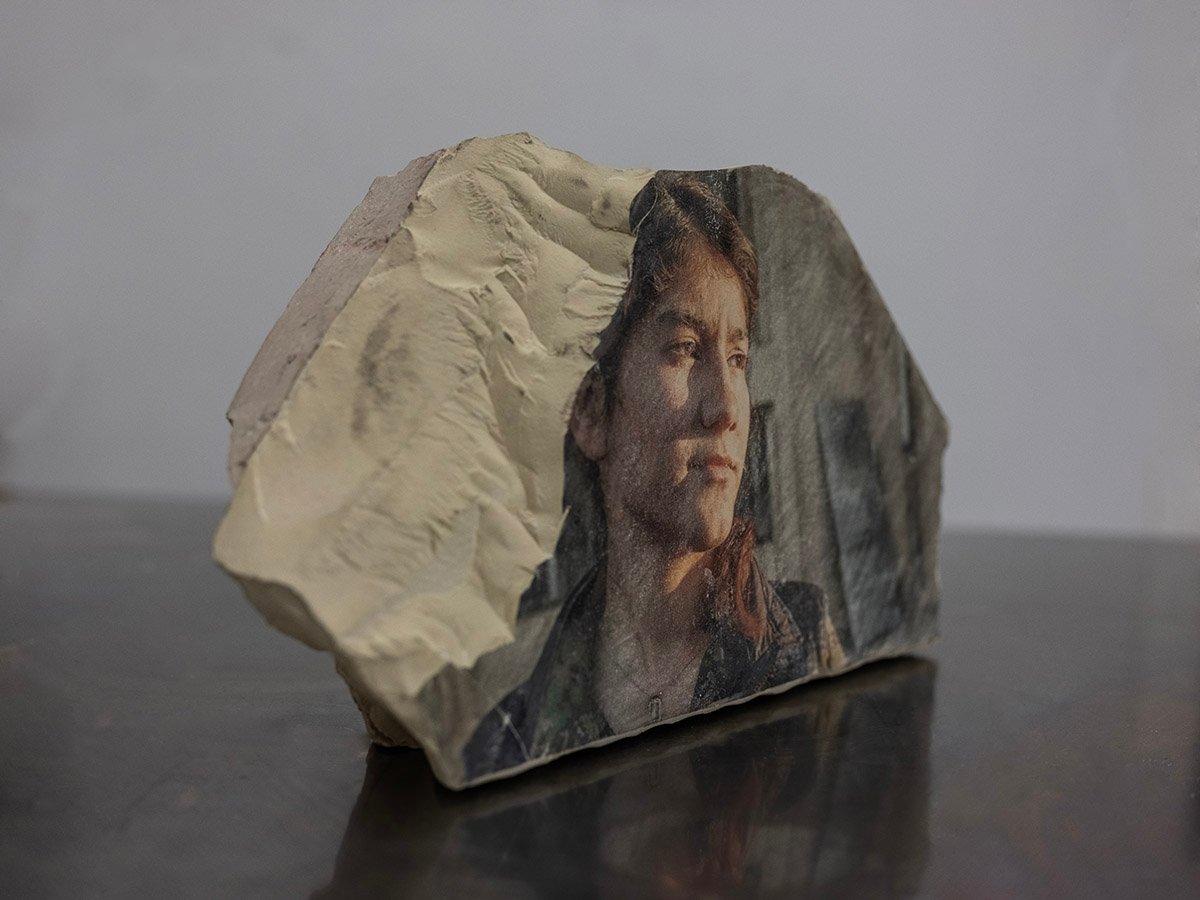
From the monolithography series. © Ali Arkady
The monolithography process. © Ali Arkady
Uday: And what made you choose your war photographs specifically for the stones as a material, pressed into that surface?
Ali: I needed relief. There was memory in my brain, heaviness in my shoulders. I thought: maybe if I put it in the stone, maybe it could help me to cross the psychological weight. The stone could carry it. Paper — when I arrived in Paris I tried to put my images in paper. It felt like nothing. Routine. It is not working for me. But the stone gives the image a soul. It brings you back in time. The photograph lives in the stone differently than it lives in paper.
And also there is something from Iraq in this. From the civilisation I came from. The Sumerians, the Egyptians — how they transferred story through stone, through tablets. That was the technology they had. And here I am transferring story through stone because this limestone, with my measurements, will stand two, three, four thousand years without any problem. I am a journalist. I am a documentary photographer. Why not tell the story through stone?
I did not study this connection. I did not compare. I let my brain decide freely. But sometime when I see ancient work in a museum, broken stone, image in stone — I say: okay, this does not look so different from mine. I am from that area. It was always in my environment, in the museums, in the books, in school. It was already here, inside me.
The Press and the Explosion
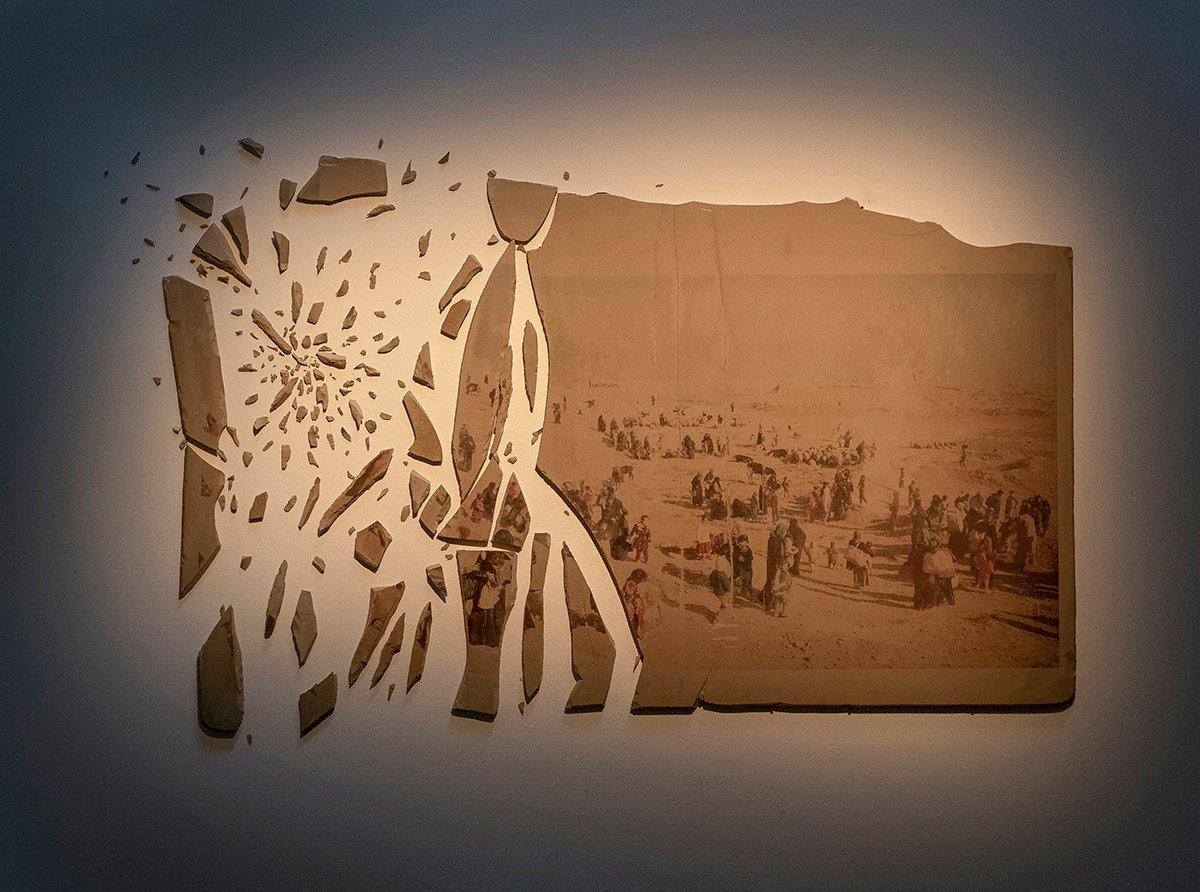
Uday: Tell me about the first time a stone broke under the press.
Ali: I put the image in the press. I try to transfer it. And then — boom. It broke. And it reminded me immediately of an explosion. Because I heard a lot of those sounds in Iraq. My memories came back. It is like — wow. That is an explosion. I just had deja vu. I went to the front line for a few seconds. And then I came back.
When I took the stone out I was very, very sad about what had happened. I put my hand in the press. I looked for the image in the fragments. And then I said: no. This is the right way to show things. Maybe the stone couldn't hold this memory — my memory and my energy at the same time. The pressure broke it.
And then in a conceptual way I understood: that piece is about human being. It is about this situation. War, displacement — what breaks and what remains.
Uday: And after that, breaking became part of the work itself.
Ali: Yes. When someone comes to the exhibition, I tell them: you can hold the piece if it is not too heavy. If the stone decides to fall, if you cannot hold it, that is the new life. Every broken piece becomes another artwork. There is no waste. In Paris the culture is: do not touch. I am against that. You can hold it. You can even break it. That is the work continuing.
Strong and Fragile
Uday: You talk about the stone as both very strong and very fragile. It holds enormous pressure from the press machine, and then if it falls it shatters like glass. You compare this to human beings.
Ali: Yes. I felt the same as a human — very strong and very fragile. The stone holds two hundred, three hundred kilos of pressure from the press. And then if you drop it on the floor, it breaks directly. Like glass. It is a different material of stone.
And we need to accept fragility. My work is about fragility, but to be strong also. Both things at the same time.
When I think about the destroyed cities in Iraq — Mosul, Fallujah — the houses built from stone, five hundred years old, one thousand years old. They were witnesses. They held the memory of those streets, those families, that life. And then they broke like everything else. The family is broke. The society is broke. Everything.
When I put the image in the stone, I am speaking about that feeling. The stone is already a witness — from Bavaria, from the school, from the press. My photograph enters that history. And if the stone breaks, it is not a failure. It is another form of the same truth.
Rubble as evidence. If something is destroyed, we can bring it back — but first we need to face that it is broke. We try to give it another form so that life can continue. Because human beings are very complicated, and also very strong. The same as my stone.
Jigondi
Uday: You made a book from the stones. Tell me about that.
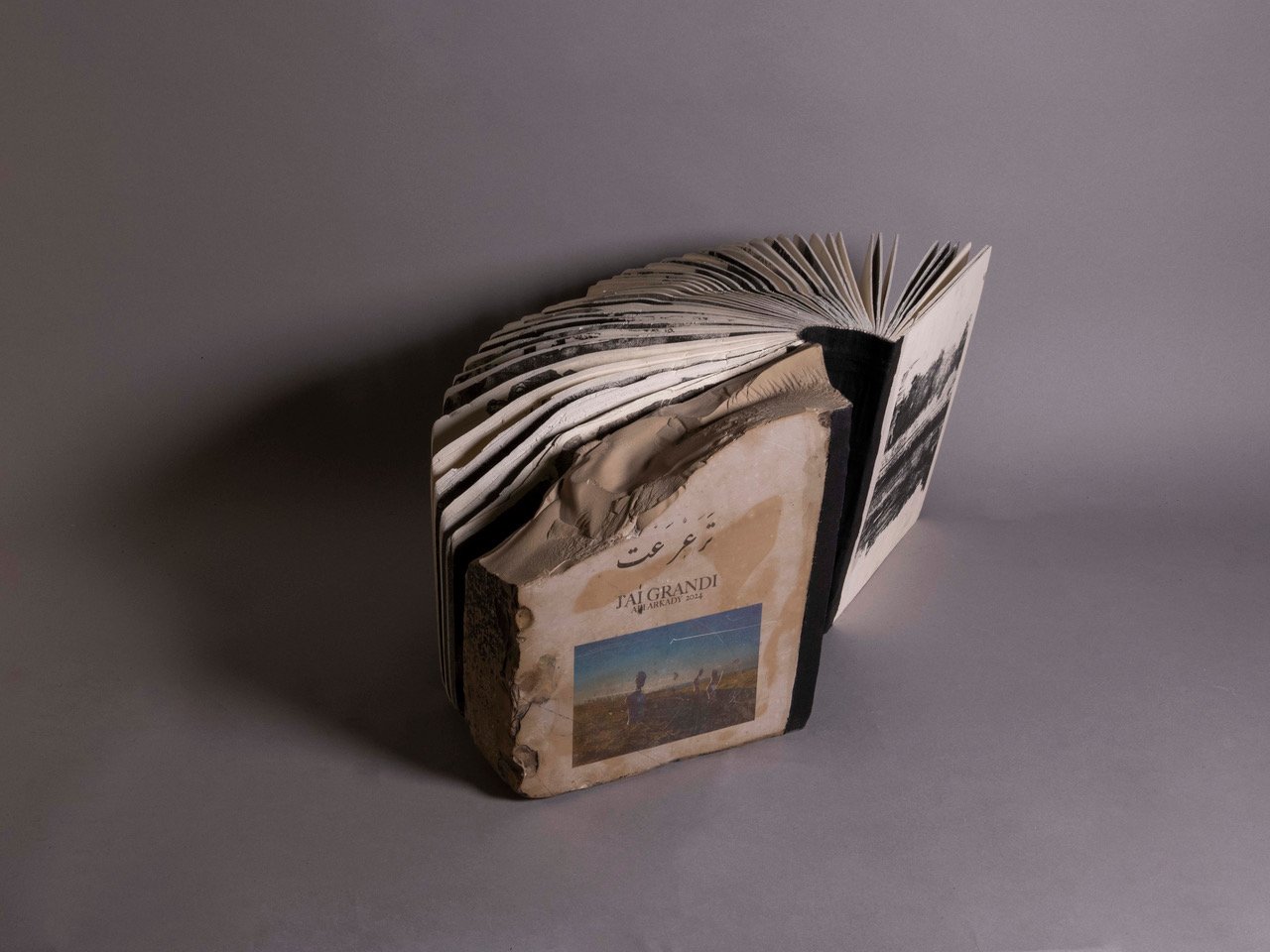
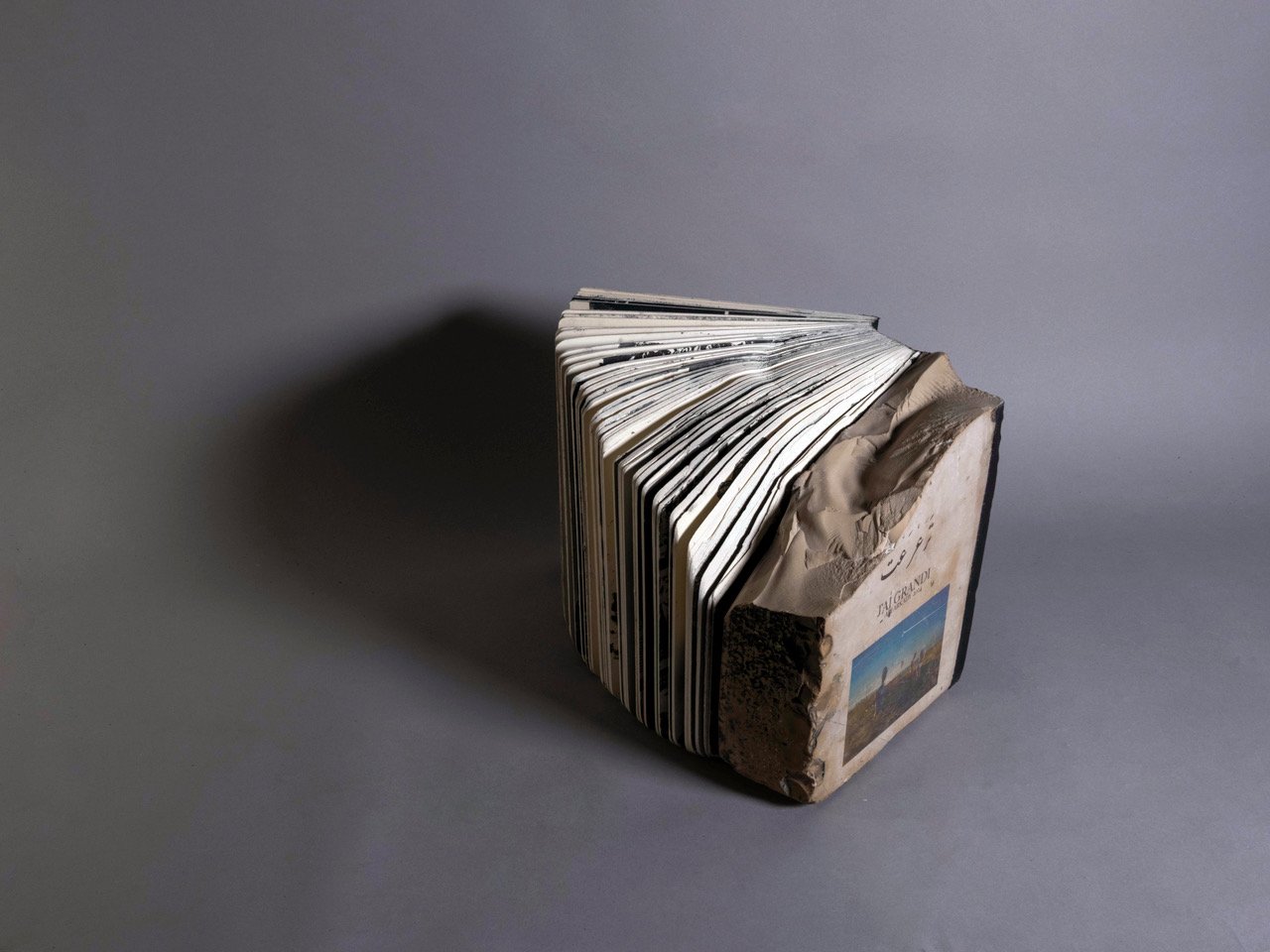
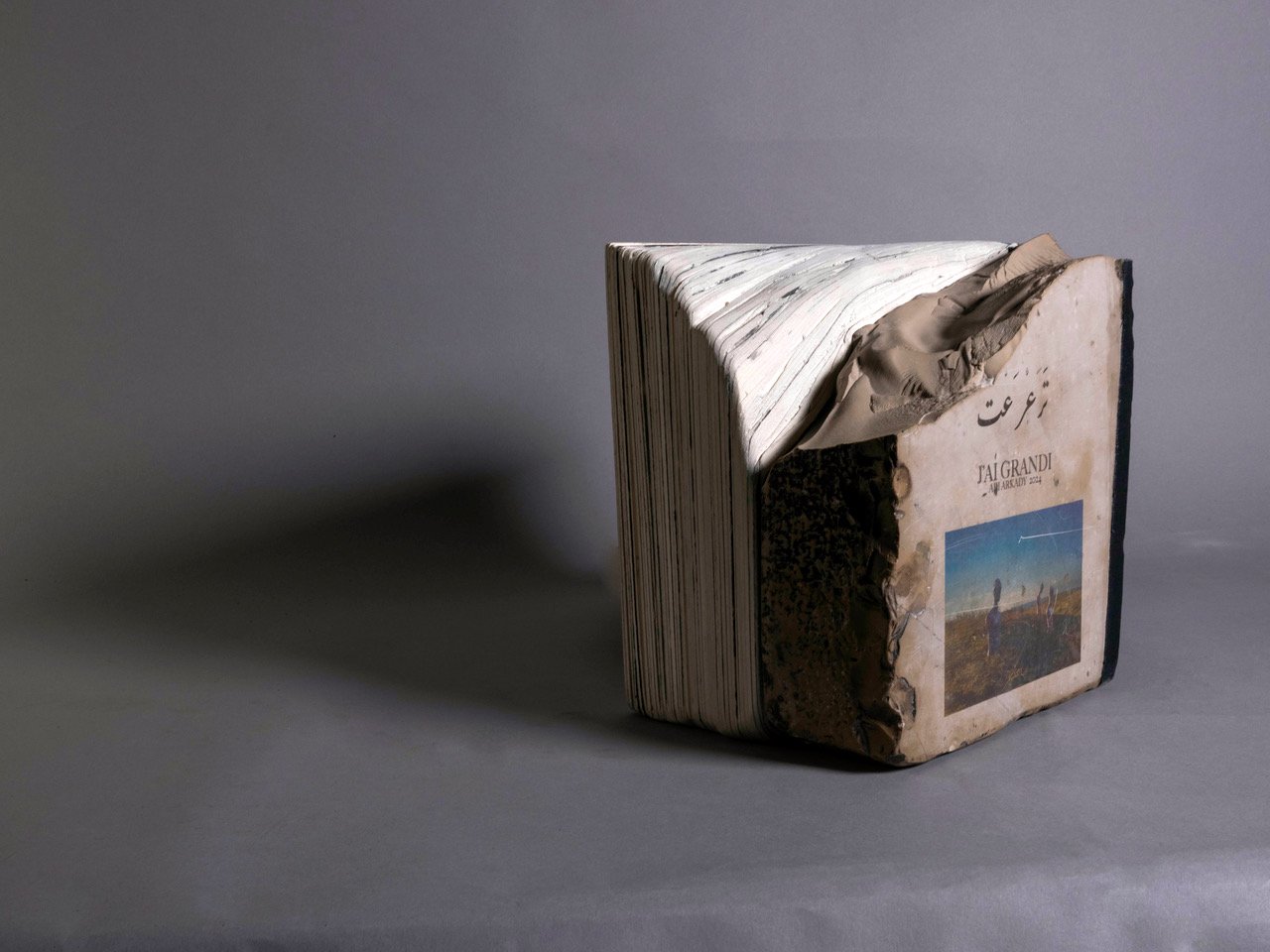
Ali: I called it Jigondi. In Kurdish it means: I grew up. In Arabic the word is taraaraatu — a beautiful word. Forty pages. Forty years of my life.
I reprinted on carton, the carton from the school's collection department, packaging from artworks by famous artists from five hundred years. That carton also has memory now, it also transformed. I transferred my images from the stones onto this carton, then I thought: why not bind it as a book? I worked with a man named Olivier — he runs the binding and framing department, for five to six months, learning how to bind stone pages together. We found a solution. Simple, beautiful.
That book was exactly what I had imagined. It gave me the feeling of holding heavy stories, dark moments — not just for one year, maybe for a thousand years. When the finished work is exactly what I imagined, that is a beautiful confirmation.
Art is not study. Art is the moment. Like photojournalism, you cannot study the decisive moment. When you feel it, you do it.
The Circle
Uday: You began as an artist — your father's son, a painter. War made you a photographer. And now the photographs are inside the art, literally pressed into stone. You have come back to where you started, but carrying everything that happened between.
Ali: Yes. It is a full circle, but it is not a return to the same place. I came back with everything. The photographs are inside the stone now. They are not separate. The journalism and the art are not two things — they are the same memory on a different surface.
At twenty-one I was a painter who had never been to the front line. Now I carry twenty years of witness inside everything I make. Paper can't hold that. The stone was built for that.
Uday: There is sometimes an assumption that moving into fine art means leaving documentary photography behind. But that is not what happened for you.
Ali: No. Moving to Paris did not mean leaving photography behind. I have continued working on long-term documentary projects alongside the stone work. Between 2021 and 2022, I spent seven months following a farmer in southern France — producing a story about hybrid seeds. I have continued making documentary and fiction films, including My Balcony, a project that took eight years to complete.
I don't see photography, filmmaking, and installation as separate disciplines. They are simply different languages that allow me to tell a story in the form it asks for. Sometimes a photograph is enough. Sometimes it needs a film. Sometimes it needs stone, space, and the physical presence of an installation. The medium has changed over the years. The intention has remained the same — to tell human stories with honesty, care, and respect.
Uday: You teach now — Yazidi survivors, students from Iraq, Lebanon, Egypt, Morocco, Somalia, in Arabic, Kurdish, and English. What do you want them to understand?
Ali: I want them to understand that when your life changes — two years, three years, five years — you need to accept it. You need to have flexibility. To go forward, not be lazy about change. Because when you accept the changeable, everything opens. Every material, every language, every surface becomes possible.
I also want them to understand that strong and fragile are not opposites. The stone that holds three hundred kilos of pressure can shatter when it falls. This is not a weakness. This is the truth. And the truth is what we are trying to put into whatever surface we have.
—
A note on this conversation: Ali Arkady speaks in English, his third language after Kurdish and Arabic. In shaping this transcript, the editor has chosen to preserve something of his speaking voice — its directness, its particular rhythms, the way it moves. This is not the register of the journal's other writing, and it is not meant to be.
Ali Arkady on Monolithography — The Genesis of the Practice
Ali Arkady describes in his own words the origins of monolithography and the stone process.
TEDx Baghdad, 2017 — Ali Arkady (Arabic)
A TEDx talk delivered in Baghdad in 2017, in Arabic, shortly before Ali left Iraq.
Boutique Hospitality — Map Spread
A page from Ali Arkady's book Boutique Hospitality, depicting the 1999 departure from Khanaqin. View full size for detail.
Boutique Hospitality — Mountain Crossing Spread
A page from Ali Arkady's book Boutique Hospitality, depicting the night crossing through the mountains. View full size for detail.
Leave a reflection
What stayed with you after reading? We welcome thoughtful, respectful responses.
Write to us at: editor@betweenstill.com