Breaking the Mould
Priyanka Chharia on starting a podcast nobody else was making, and why the photobook keeps refusing definition.
Priyanka Chharia is a photographer and journalist who transitioned from the final days of print media to digital storytelling. Following her work as a writer for Mumbai's Better Photography magazine and her studies at the International Center of Photography in New York, she embraced a new medium. Undeterred by a healing fracture, she attended a podcasting workshop on crutches and soon launched The Photobook podcast.
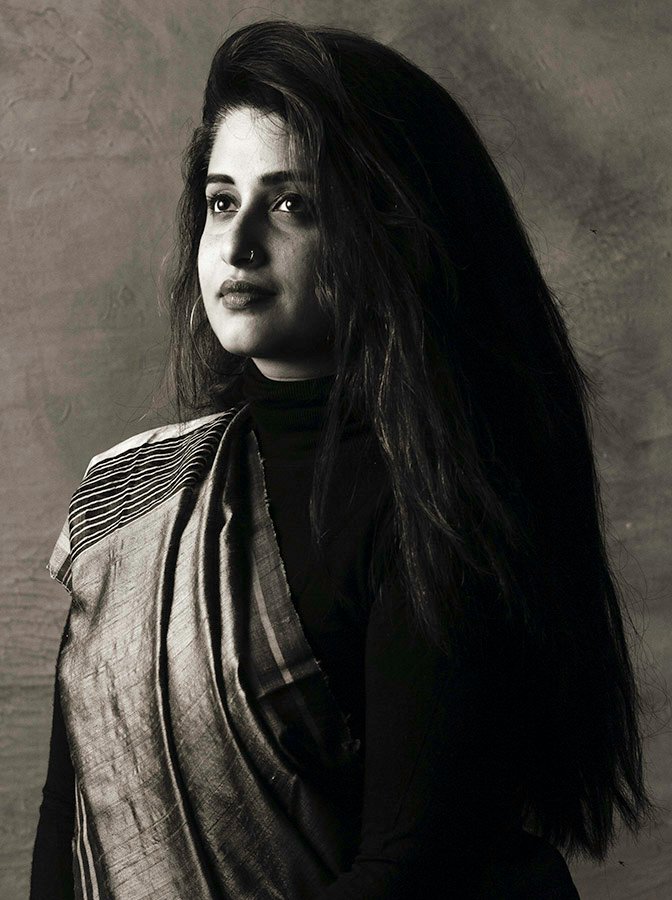
Today, the podcast highlights photographers, bookmakers, and publishers from around the globe, with a distinct focus on South Asia. In 2026, she founded Books Beyond Borders, an initiative dedicated to organizing in-person exhibitions and workshops centered on photobook culture. Currently based in Delhi, she continues to maintain her own photographic practice alongside community initiatives. Her current work focuses on themes close to home, informed by her sociology background and a deep, ongoing interest in gender, community, and collective identity.
We spoke over a video call in July. This is a conversation about why she started something nobody else in the region was doing, what she no longer believes a book has to look like, and what it means to describe a tactile, visual medium entirely in sound.
Selected Q&A
Beginnings
Uday: How did this begin for you — not necessarily the podcast, but photography and photobooks specifically?
Priyanka: I studied journalism, and worked in print through the years it was dying, then moved into digital. I was at Better Photography for a while — that job taught me a lot about editorial choices, actually, about who your audience is and what serves them, because Better Photography's audience was quite eclectic. It was a widely read publication with an English and Hindi edition, which mattered, because most writing on photography only existed in English. I spent nearly two years there, and towards the end, the magazine was on the brink of a shutdown, which was sad to watch. But by then I'd already decided I was going to ICP, and so I spent the next year just studying.
However, when I came back to India, I found myself back to square one and had to restart without the comforts of ICP and its facilities. Also, during this time I was shooting in Srinagar, and I came back with a fracture, which did not allow me to move much for almost three months. In that window I signed up for a one-day podcasting workshop in Delhi and I went on crutches! The instructor was genuinely shocked I'd shown up in that state. But it stuck — I'd trained in journalism when audio and video weren't specializations yet, so audio already felt familiar to me. The first real episode I recorded was with Anshika Varma from Offset Projects in 2023, a five-hour marathon session I then had to cut down to one. I hadn't really planned for how much editing that would take, but I really enjoyed the process and learnt so much along the way.
Why South Asia, Why Audio
Uday: You've said the gap you saw was specifically about South Asia. Can you say more about that?
Priyanka: There was a podcast I loved — A Small Voice, run by a British photographer called Ben Smith — and I noticed that almost everyone he spoke to was either from Europe or America. Maybe one or two people from the subcontinent, if at all. I got tired of always hearing the same, very Western-centric idea of what a "photobook" is and the fact that nobody was really talking about this in South Asia. So that's partly what pushed me to start.
There was also a personal thread — I'd taken bookmaking workshops with Yumi Goto and Mariela Sancari in Jaipur back in 2017, and again at ICP. So, I'd always been drawn to the book as something photographers could properly claim as their own — not a monograph or a catalogue the way a painter might use it, but a form with its own grammar. And this was around the time photography itself was changing as a language — the idea of "pure photography" was already crumbling, and I was glad of it. It felt like photography as a medium was breaking the mould. Books felt like where photographers were taking that most seriously.
Uday: Given all of that is so visual, why choose audio as the format?
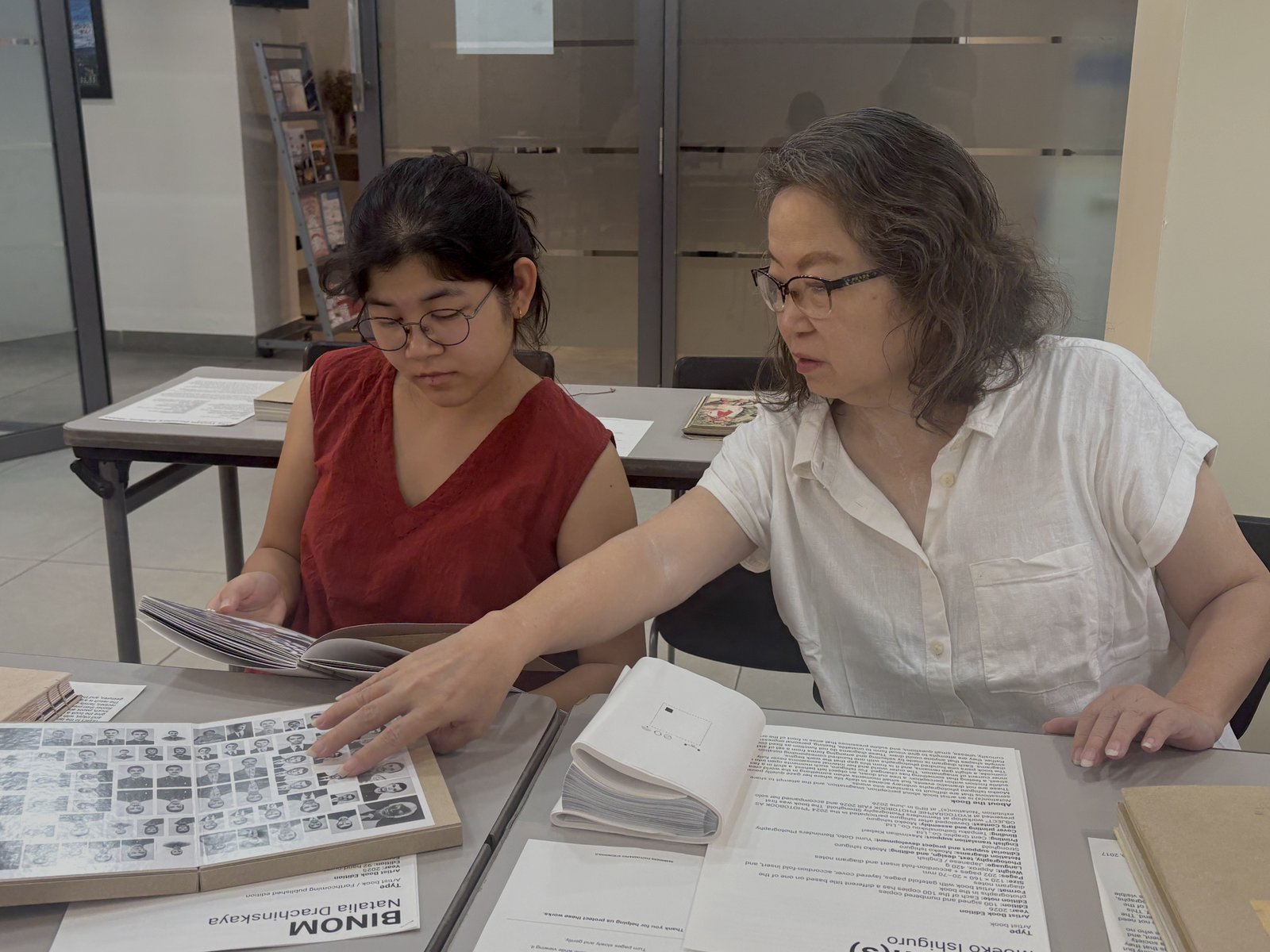
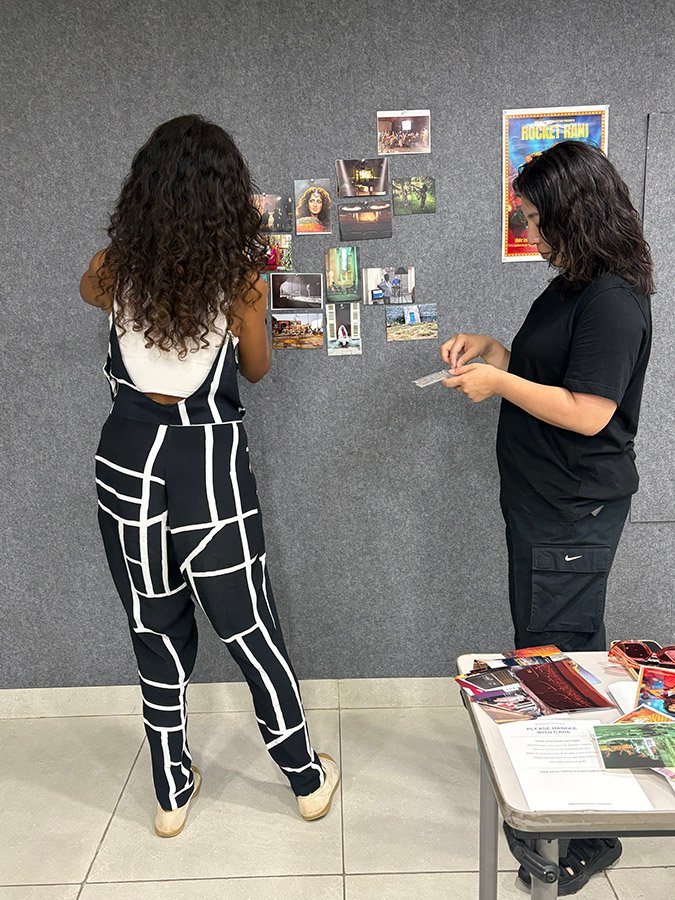
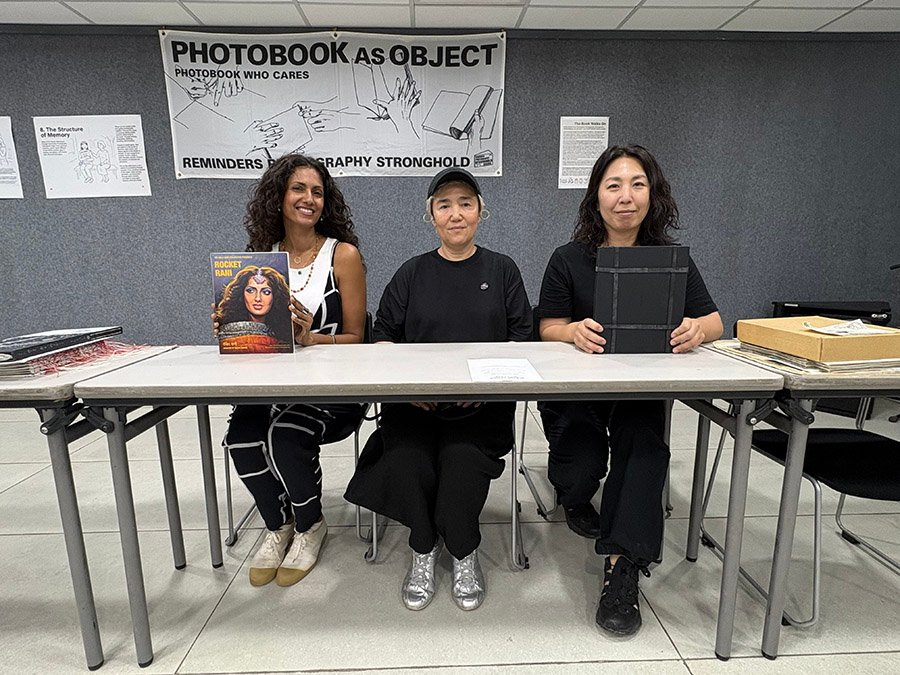
Priyanka: People still tell me to turn it into a video podcast, but I'm fairly against that. I feel there is already so much being done in text and video, YouTube interviews, all of it — that I don't want to add to that clutter. And it is a strange choice, if you think about it — I'm describing something extremely tactile, extremely physical, entirely through sound. That contradiction doesn't fully resolve, but what I've settled on is that it's just one small intervention in a much bigger landscape — a drop in the ocean. Which is also why I do physical things alongside it. Last month I organized a three-day exhibition of Japanese artist books in Delhi, through Books Beyond Borders, and in collaboration with Reminders Photography Stronghold and the Japan Foundation. After enough time talking about books online, I felt I needed to do something that people could actually touch, hold and experience on their own terms.
On Hierarchy, or the Absence of One
Uday: Something that struck me listening back through the episodes — you'll put a two-year-old collective like Tasveer, still finding its footing in Lahore, in the same kind of conversation as 10x10 Photobooks, which has been building its own canon for over a decade. Is that a deliberate flattening on your part?
Priyanka: Honestly, I've never thought about it as a hierarchy. What 10x10 is doing matters enormously — they're self-funded, sustained, serious. But what Tasveer is doing matters just as much, to the people doing it and to the wider picture. I don't think I discriminate between the two in my head. If anything, the choices I make consciously are smaller than that — more about rhythm than ranking. For instance, if I've just featured one self-publisher, I try not to follow it immediately with another, because it starts to feel repetitive rather than additive. Sometimes it's about timing rather than hierarchy at all — I wanted to run Smita Sharma's episode close to March 8th, because her work is gender-focused, and the timing didn't work out that year. But I try to resist thinking like a news editor. Part of why I left journalism was that a story runs once and there's no real follow-through after. This medium lets me be more flexible than that.
What Even Is a Book Anymore
Uday: I recently visited ICP and saw their twenty-five-year photobook survey — fifty photographers, fifty books, no fixed theme. It made me think about how much the form itself has stretched.
Priyanka: I spent a lot of time in the ICP library when I was there, and that's really where my love for this started — finding books I didn't know existed. And yes, it keeps stretching. For instance, there's Gareth Phillips, a British photographer who considers installations as photobooks. Or, there's Yuri Goto's Love Knot, a book styled after a smartphone, which people kept coming back to at the exhibition thinking it was actually a phone. That kind of interaction is what tells you something's working, regardless of the concept behind it.
Even the idea of what counts as "final" has loosened, especially when we look at Dayanita Singh's Zakir Hussain Maquette, which is a dummy of a book she'd first made in college, and published decades later as a unique book object. So, the question of what a book actually is does not really have a fixed answer for me anymore. Instead, I'm excited by what a book can be, as it seems that the possibilities are truly endless.
On Her Own Practice
Uday: You mentioned you're still working on your own projects alongside all of this.
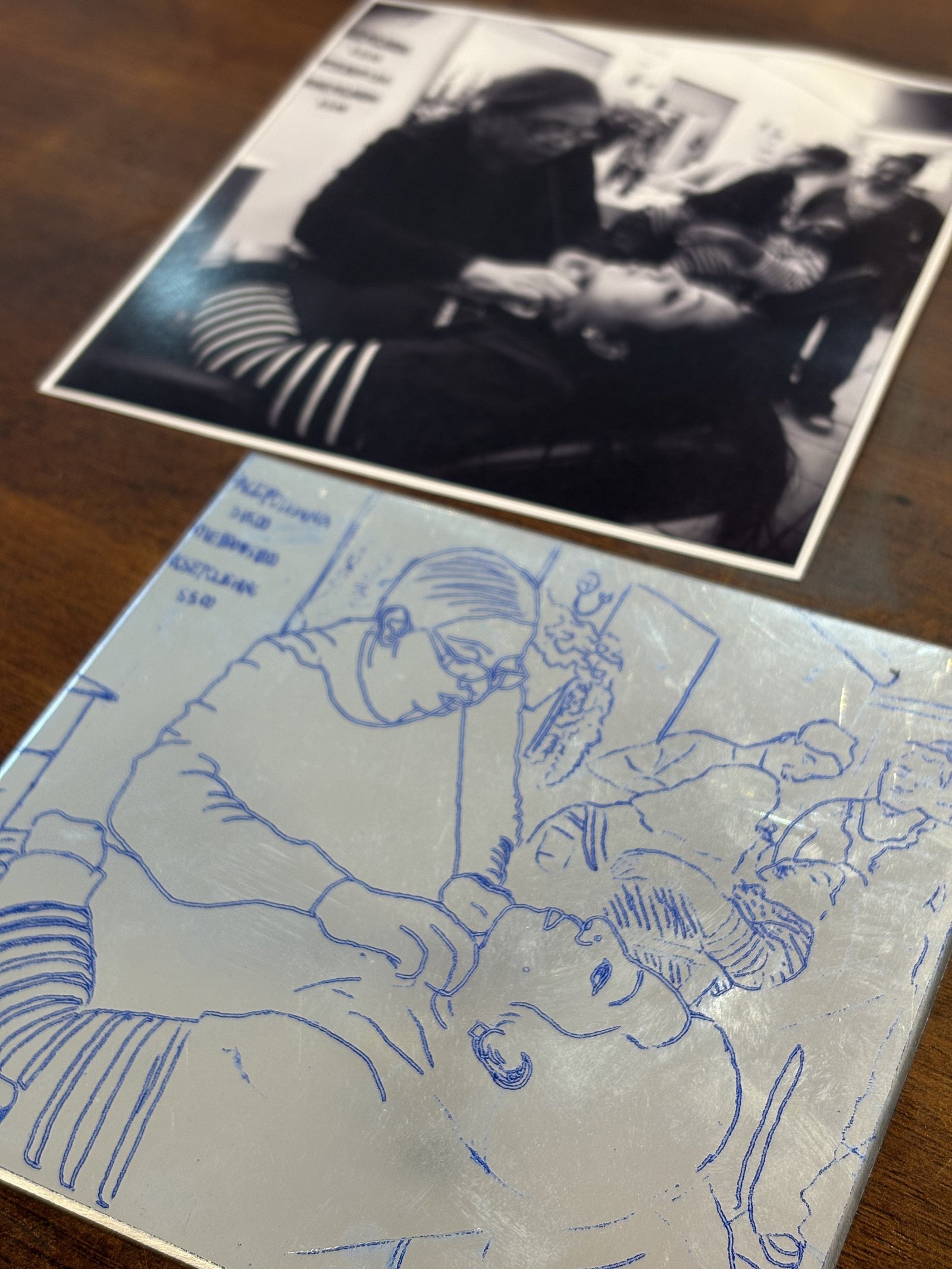
Priyanka: I studied sociology before any of this, and that's shaped a lot of what I return to — gender, community, identity. My relationship to photography changed a great deal after I left ICP; I don't have the same access to labs and film processing I once did, so I've picked up other mediums too — I have a small ceramics setup at home and I also draw. Right now, I'm photographing things close to me — my garden, my home, alongside some ongoing work around gender and the political environment. It's still finding its shape. Running the podcast and the physical events has meant my own practice has had long stretches on the back burner, so getting back to it properly is something I'm trying to make room for.
Books Worth the Trouble
Uday: Is there a photobook, or a small number, that you keep returning to — not necessarily anything you've covered on the podcast, but something that shaped how you think about the form?
Priyanka: A few stand out. The first is Dayanita Singh's Myself Mona Ahmed — the first photobook I ever bought. I'd been eyeing it for ages but could never justify the price, and then one day I walked into a bookstore in Delhi and found it heavily discounted. I still remember the joy of finally taking it home. I went through it in one sitting. What stayed with me is how completely it conveys Mona's spirit — her struggles, her aspirations, all of it.
Then there's Junpei Ueda's Picture of My Life, which pulled me into its protagonist's life almost instantly. It moves between drawings, letters, and photographs in a way that feels clever but never forced.
And Karen Marshall's Between Girls — I actually had it shipped over from the US, which should tell you how much I wanted it. Karen was my mentor at ICP, and the project took her years to make. Despite how many people appear across the book, it never feels over-intellectualised. It's the letters, and the design as a whole, that really speak to me. It's the kind of book I'd like to make myself, one day.
Leave a reflection
What stayed with you after reading? We welcome thoughtful, respectful responses.
Write to us at: editor@betweenstill.com