Building from the Ground Up
Kaamna Patel on how Editions JOJO grew from a self-publishing practice into a library, platform, and space for photographic exchange in Mumbai.
There is a particular kind of commitment required to build something that doesn't yet have a template — a publishing house, a library, a community — in a city as loud and commercially driven as Mumbai. Kaamna Patel has been doing exactly that for the better part of a decade. What began as a quiet, personal impulse to make books has grown, steadily and organically, into Editions JOJO: an independent publishing house and photography library based in Mumbai, that has quietly become one of the most important spaces for photographic discourse in India.
Editions JOJO operates across several registers at once. It publishes artist books — both Kaamna's own and, more recently, those of other photographers — distributes work internationally, houses a browsing library of photo books and functions as an informal gathering point for practitioners, writers, architects, and curious minds looking for something outside the commercial mainstream. Editions JOJO has participated in art book fairs from Chennai to Paris; from Printed Matter's New York Art & L.A. Book Fairs to Athens Art Book Fair, Singapore International Photography Festival to Focal Point in Sharjah.
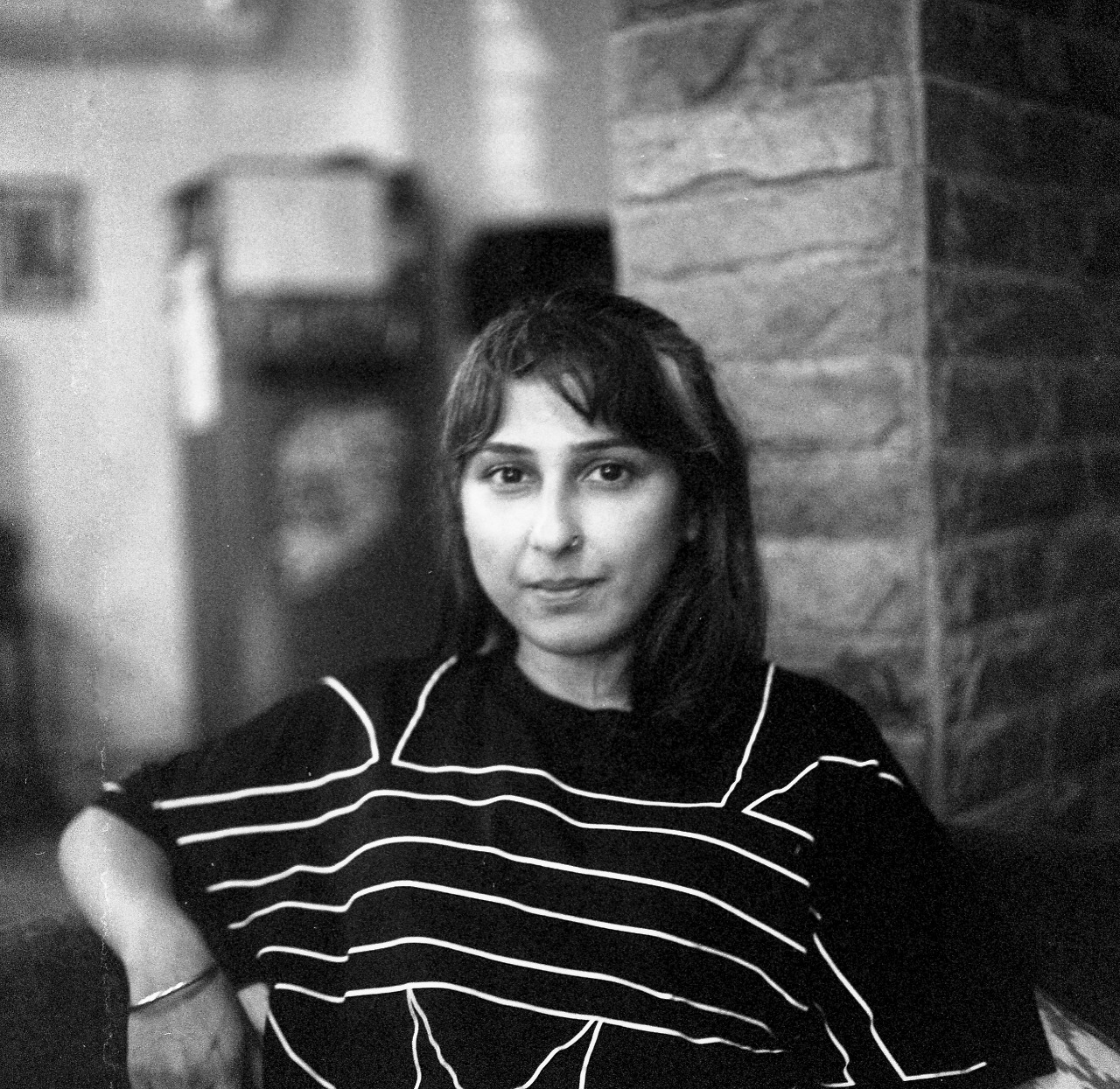
I spoke with Kaamna over a video call while she was in Goa, working simultaneously on colour corrections and an InDesign file — which felt entirely fitting. This is a conversation about how you build something meaningful in photography, not through a grand plan, but through patience, presence, and a willingness to jump off the edge.
Selected Q&A
Making a Start
Uday: You studied abroad and were moving between Paris and Mumbai for a while. Where did the impulse to publish come from, and how did Editions JOJO begin?
Kaamna: Making books was already part of my photographic practice by the time I started thinking about publishing formally. I had made a couple of small books — one right after graduating and one as a graduation project itself — and I think that process made me realise this was a direction I was comfortable thinking in.
The more concrete turn happened in 2018 or 2019, when I attended a workshop with the 13 Jara collective in Hyderabad conducted by Valentina Abenavoli. I brought a couple of manuscripts to that workshop, but left with the idea for In Today’s News. That’s when the thought of creating a separate publishing entity really crystallised for me. I wanted an alias, an alter ego under which the publishing work would happen, with the intention of opening it up to new possibilities in the future. That’s how Editions JOJO was born. In Today’s News became the first book released under the imprint, and it marked a shift in the trajectory of my practice.
Uday: That first book is such a significant step. How did you actually produce it, and how did you deal with the fear of putting it out into the world?
Kaamna: It was made very locally, very cheaply — which was part of what made it possible. I bought the paper from Bora Bazaar, right next door to the printing shop, the kind of plain, inexpensive stock that people quite literally call “book paper.” The book was offset printed, 300 copies, numbered and signed. I did the binding myself. The hardcover was made somewhere else. It was a long, winding production chain — jumping from one place to another across the city — but it was fun.
As for the fear of putting it out — I was in my early twenties and I just sort of launched myself off the edge. I like to compare it to the one time I went bungee jumping. I went up to the edge three times and had to come back down because I thought I couldn’t do it, and then at some point I just started laughing, mainly at my bravado before the fear of standing on the edge hit me, and then finally there was nothing left to do but trick myself into jumping. There’s no turning back, you see. That’s what publishing feels like every single time.
I hate to say it, but what helped enormously was Instagram — I think it’s because very few people in India were publishing photo books of this kind. I don’t think it was just the scarcity though. The first encounter with In Today’s News: Alpha Males & Women Power might have been on Instagram, and I think many of my peers in India moved to buy it for themselves & for others after that. The community in France, where I had studied, had been supportive of my work from my student days, so there was already a small audience there. But the jump itself — you just have to take it.
There’s no turning back, you see. That’s what publishing feels like every single time.
Finding an Audience
Uday: There’s a recurring tension in photo book publishing between reaching beyond the echo chamber of photographers buying photography books, and actually finding a broader audience. How do you see that playing out in Mumbai?
Kaamna: It has changed enormously even in the ten years that I’ve been working in this space. When I started, photo books were quite niche — and relatively unknown to most people. The concern you’re describing was, and still is to a certain extent, very real.
Mumbai is a peculiar and wonderful mix of people. Architects, urban planners, writers, filmmakers, designers — all kinds of creative minds pass through, and Editions JOJO sits at the intersection of these practices. What’s been encouraging is that the audience for our books is quite varied. People are wanting to own these objects, engage with them, bring them home. I can only speak for Mumbai — when I say that something is changing, I mean it.
Uday: The Editions JOJO Library is such a distinctive part of what you’ve built. How did that come about?
Kaamna: The library actually came to me through the BIND collective. At the time, they were looking for someone to take on and manage their photo book collection, with two conditions: they wanted to keep it in Mumbai, and they wanted it to remain free and accessible. Because I was already publishing under Editions JOJO, there was an existing entity with some credibility that could take this on. So I agreed.
The timing was unusual — the transition happened largely through the two years of the lockdown. But once the library became part of Editions JOJO, it opened up possibilities. It suddenly felt like the platform had gone beyond being my alias. It was its own thing now. And that’s when I started thinking about publishing other people’s work too.
Publishing for Others
Uday: What does publishing for someone else require that self-publishing doesn’t?
Kaamna: It’s a heavier responsibility, and it took me a long time to be ready for it. A publisher’s role is far more than taking a manuscript to print. A good publisher has to really work with the artist — arrive at something together that honours the artist’s vision without being heavy-handed, while also being aligned with the publisher’s own ethos (in my humble opinion). That collaborative process is something I find deeply meaningful, but it demands trust on both sides.
The first book I published for another artist was How to Climb a Tree, in 2024. It came about through a partnership where we both put in money, both took on the distribution, and worked really symbiotically. There was an immediate sense of shared trust, and the format felt unique. That experience has shown me what publishing for others can be at its best — but I’m still going slowly and deliberately with it.
A good publisher has to really work with the artist — arrive at something together that honours the artist’s vision without being heavy-handed.
Uday: How have you built your distribution and international presence? Editions JOJO has shown up at Printed Matter, Polycopies in Paris, Sharjah Books — how does that happen from Mumbai?
Kaamna: A lot of it happened through travel. In the early years, I was moving around a lot for work, and I would use my weekends and downtime to visit bookshops, meet other artist book publishers, have conversations, and carry my books with me. Quite literally in my suitcase — door-to-door, in a way. Those trips helped me build relationships across the world slowly and organically.
Then there were the book fairs — doing pop-ups, participating in events whenever we could, which connected us further to audiences and to other people working in this space. Printed Matter & Sharjah Art Foundation invited us. Polycopies, I applied directly — they had actually filled up, but they had one last half-table and offered it to us, and I said yes immediately. That’s how a lot of things have happened: you put yourself in motion and say yes to what opens up.
You put yourself in motion and say yes to what opens up.
The Larger Picture
Uday: You’ve also been involved with some of the newer photography spaces in Mumbai — photography gallery at the NCPA, for instance. How do you think about the role of physical, dedicated spaces for photography?
Kaamna: They are essential, and we don’t have nearly enough of them. To have a space that is dedicated to photography, that can host conversations and shows outside of commercial galleries — that’s rare, especially in Mumbai, where it’s nearly impossible to do anything without thinking about commerce because of how expensive and demanding the city is. What’s been exciting about the Dilip Piramal Art Gallery at the NCPA is how active it has become, and the quality of the curation — from Kalpesh Lathigra’s show to the Twin Sisters With Camera exhibition curated by Sabeena Gadihoke. Good curatorial vision and a solid team running the show behind the scenes (Tejal Pandey and Tanvi Dhulia) makes all the difference.
Uday: Can you tell us about your new project, Dossier?
Kaamna: Dossier is a magazine I’m developing in collaboration with Bangalore-based artist Chinar Shah. Each issue is dedicated to a single collection of photographs organised around a theme — purely images, no critical writing, no interviews. We are calling it a magazine, but it’s more like a collectible periodical. The thinking behind it is quite different from what Between, Still is doing, for instance. It’s not trying to build a critical archive. It’s more playful than that, though still rooted in rigorous thinking about images.
We’re working on the first two issues now — figuring out the costs, the frequency, how to make it financially sustainable. Ideally it launches this year, but we’re not rushing it.
Uday: Editions JOJO has grown considerably in the last five years. How have you navigated the practical realities of running this — the funding, the burnout, the team?
Kaamna: Honestly, unsystematically, for the longest time. The funding came from my own commercial work, from studio projects, and from grants — Photo South Asia in particular has been a significant supporter, as well as Art South Asia Project and Arthshila. It was mainly me and then Parikshit and myself doing everything, and because we took on so much in the last three years, I burned out. That was a real moment of reckoning. We are finally in a place where the team can grow and I can give more time to the operations of Editions JOJO. We’re now a team of three women.
What I’ve been fortunate about is that everyone who has come on board has understood how it operates — how the money comes in, how it doesn’t, what we’re building together. People have been willing to be part of it for the right reasons. But that can’t go on indefinitely, and I’m aware of that. The goal is for this to be a space where people are paid fairly, where there’s a sustainable life in doing this work. That’s the future I’m trying to work toward.
I just want a space in Mumbai where something free and genuinely accessible can exist.
Uday: When you look ahead, what do you want Editions JOJO to become?
Kaamna: I want it to be self-sustaining. A physical space that allows all of these things — the publishing, the library, the conversations, the collaborations — to happen under one roof, or while connecting with people across the country and eventually the world. A small team, paid well, working toward building this repository of knowledge and exchange.
I don’t have ambitions of scale for its own sake. I’m not trying to build the largest archive or the most prominent institution. I just want a space in Mumbai — which makes almost everything difficult without a commercial rationale — where something free and genuinely accessible can exist. Where people can come in, get out of their boxes, have conversations across disciplines, experiment, learn. That’s enough. That’s actually everything.
Leave a reflection
What stayed with you after reading? We welcome thoughtful, respectful responses.
Write to us at: editor@betweenstill.com