An Extended Family
Stephen DiRado on Bell Pond, his father, and a camera that never let go.
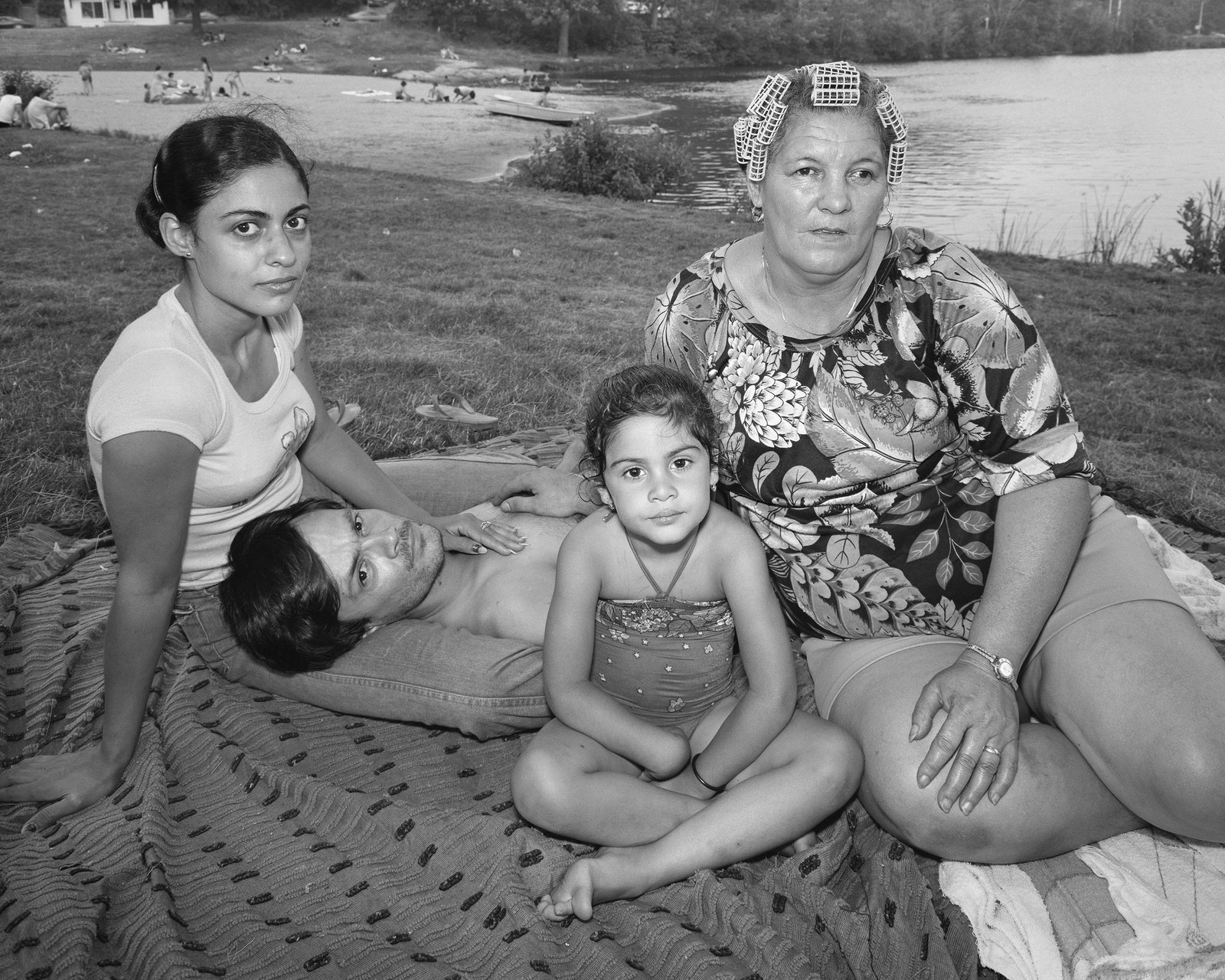
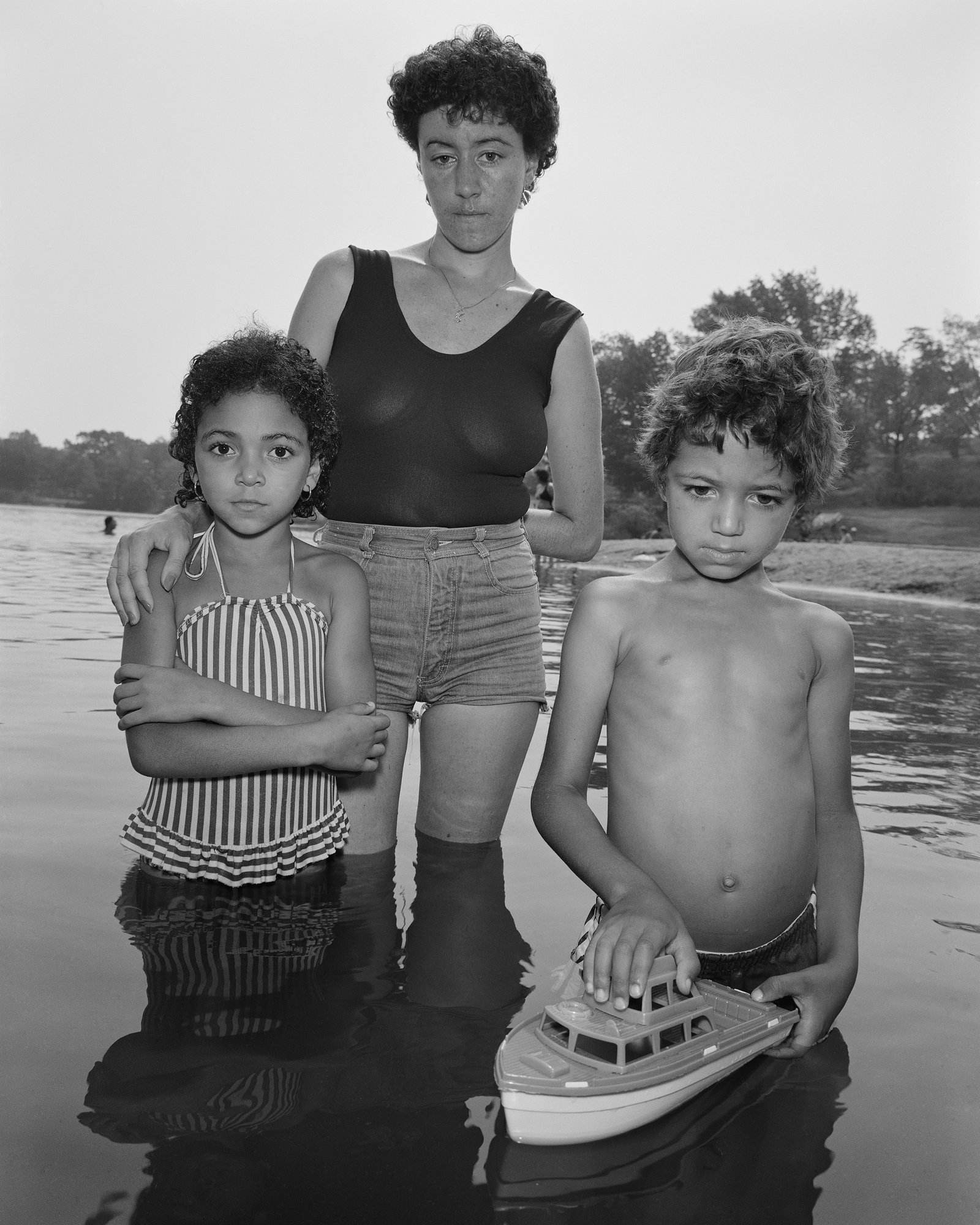
Stephen DiRado has been teaching photography at Clark University in Worcester, Massachusetts, since 1982, and for nearly as long, he has been working with a tripod-mounted view camera — a slow, cumbersome instrument that exposes a single sheet of film at a time, nothing like the rapid-fire safety net of digital photography, where dozens of frames can be sorted through later. Bell Pond and the Worcester Mall Series were made on 4x5-inch sheet film; by the time he turned the camera on his father, he’d moved to the far larger, heavier 8x10 format, a shift he made at the start of 1985. In 1983, just a few years out of college and with no more assignments to fulfill, Stephen set out to find, in his words, “an extended family to lock onto,” and drove to Bell Pond, a public park a few miles from Westborough, where he was living at the time. What followed was a summer that became a body of work, and a body of work that became a career: Bell Pond is being published this year by TBW Books, alongside a companion volume of the Worcester Mall Series from the same period.
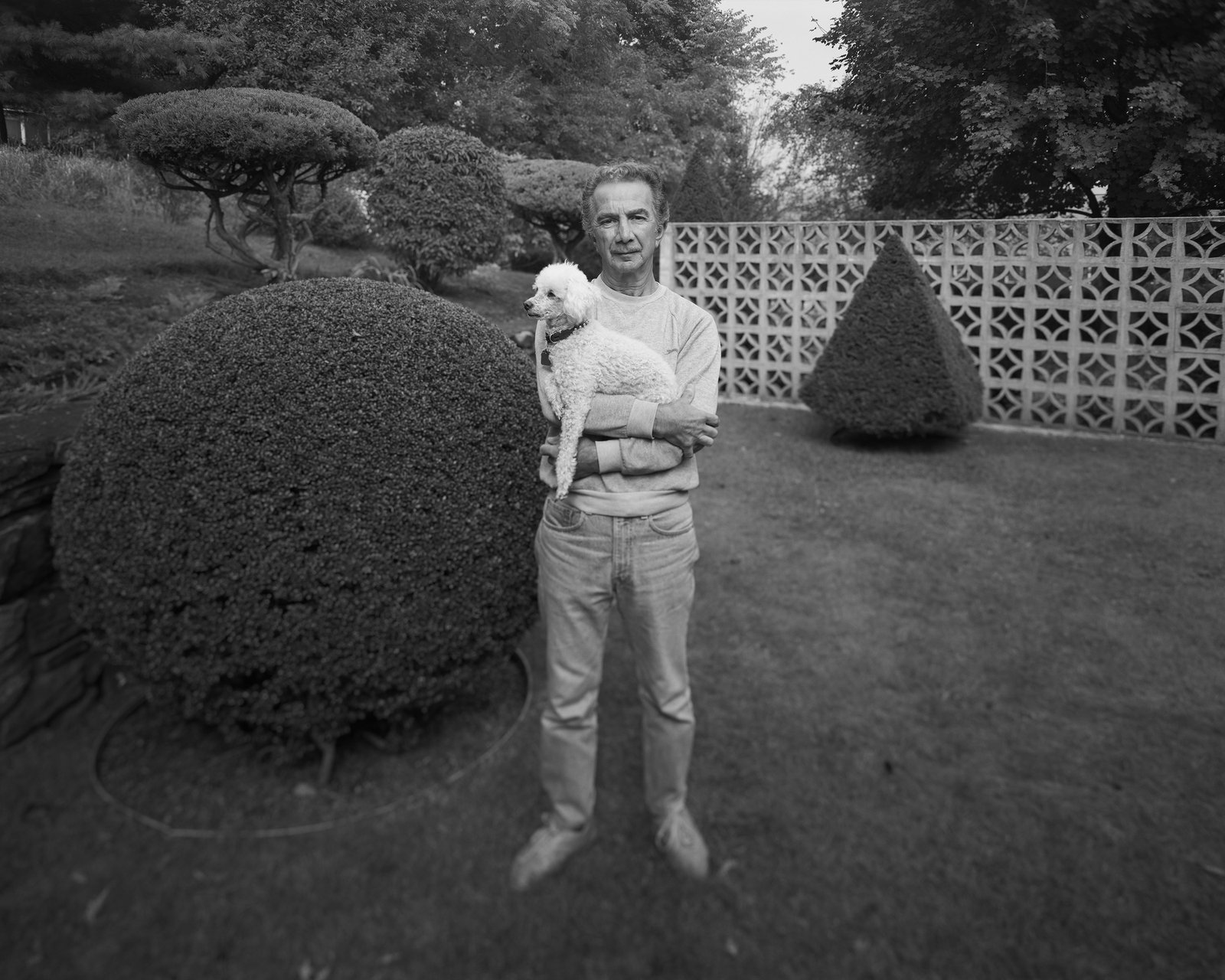
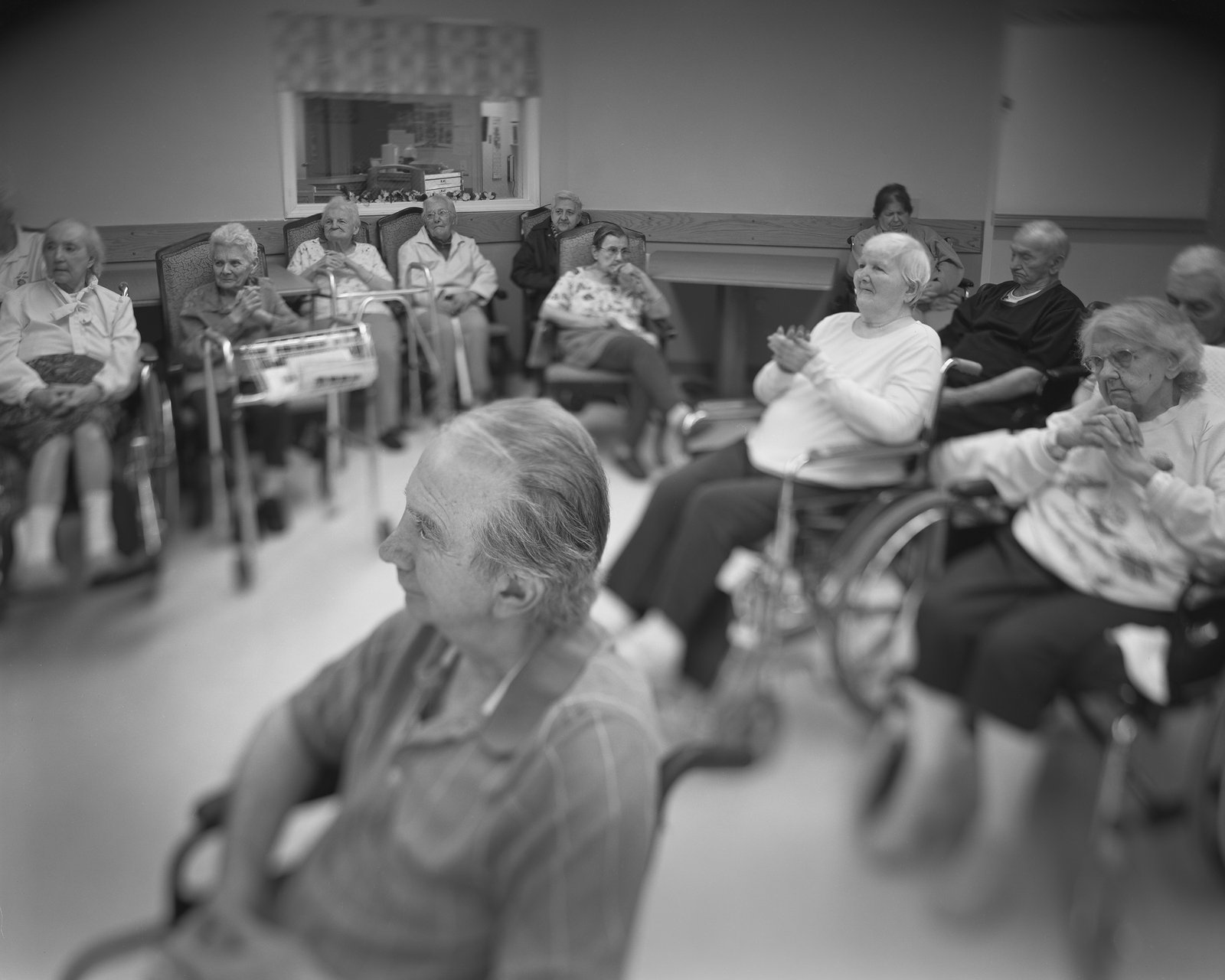
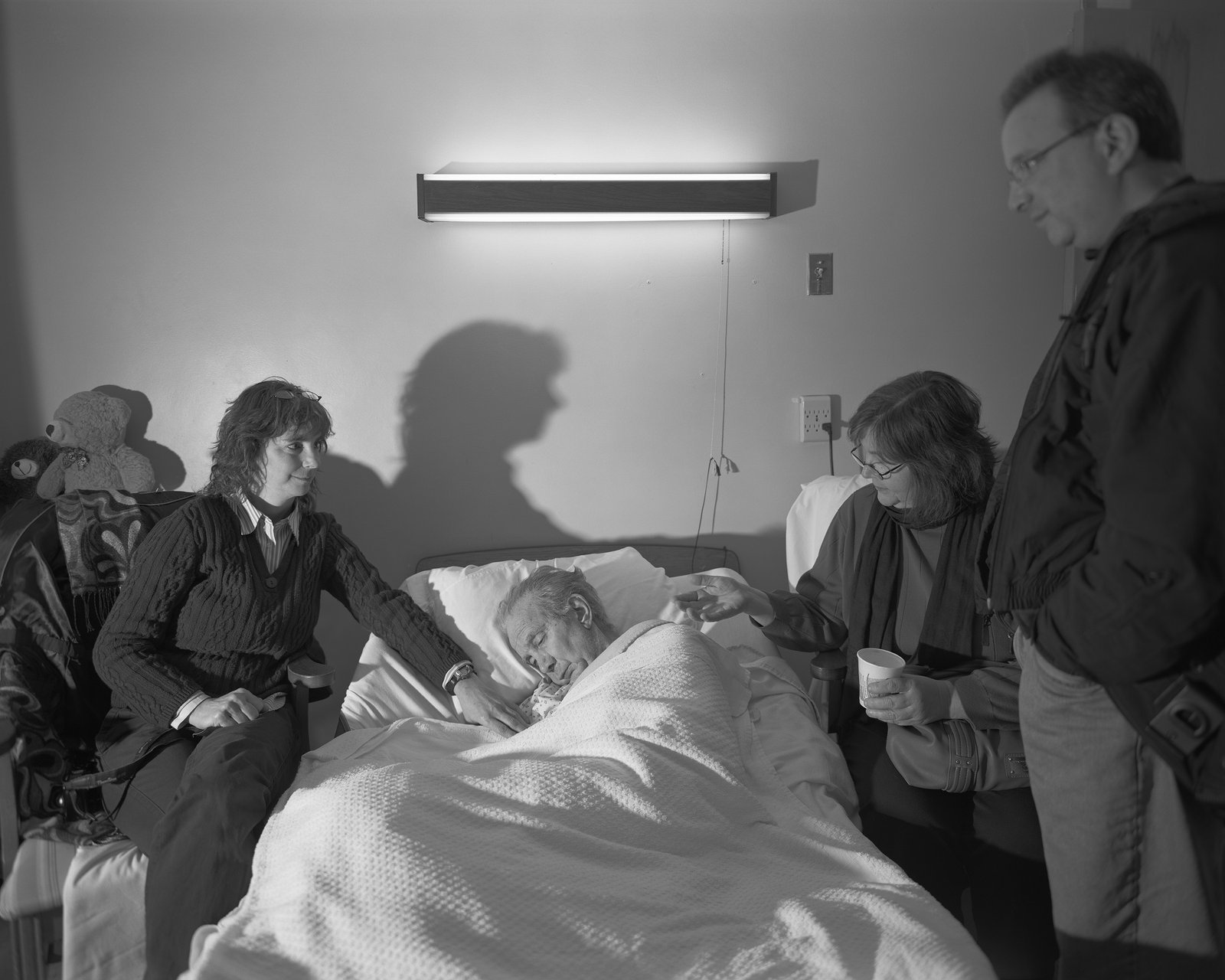
A decade later, Stephen turned the same camera and the same patience toward his own father, Gene, who was diagnosed with Alzheimer’s in 1998, the same year he suffered his first major stroke. Gene was admitted to a nursing home in July 2004, after a second stroke, and died there on December 11, 2009 — eleven years after his diagnosis. That project — With Dad — became a book, and later a PBS documentary made with director Soren Sorensen, following Gene DiRado from his own home to a care facility to his death, Stephen photographed the entire way.
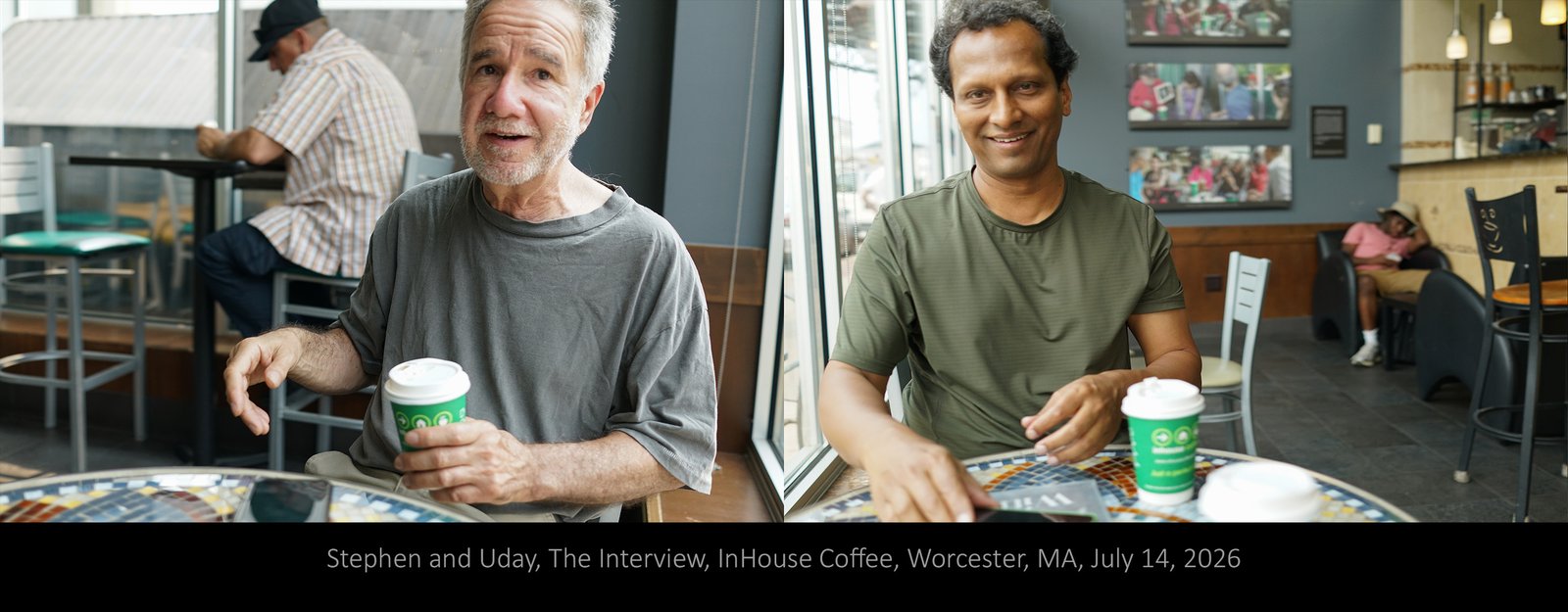
I met up with Stephen on a Tuesday afternoon at InHouse Coffee, a coffee shop in Worcester, where he keeps a standing Sunday gathering of friends, students, and whoever wanders in. There’s a towering display of his photographs on the wall directly behind us as we spoke. Throughout our conversation, he kept a small camera close at hand, impulsively photographing whatever caught his eye from across the table — me, a passerby outside the window, the light on the table — the same restless habit, it turned out, that first grew out of dinners with his wife and has since become a project of its own: nearly 2,000 images since it began in 2013. At one point Stephen turned it on me and then handed it over so I could do the same to him — a diptych, the kind he has been quietly making of whoever sits across from him for years now, turning it into something of a game, egging me on to shoot back. Mine became number 114, added this year, 2026. It felt like a fitting way to spend an afternoon with a man who has never really separated the act of photographing someone from the act of knowing them.
Stephen talked for nearly two hours, moving freely between decades. What became clear over the course of the conversation is that this is simply how he works: find a person, a family, a place that interests him; establish a relationship; commit to returning, again and again, to photograph it — for months, for years, sometimes for decades — never stopping until the essay exhausts itself or, as with his father, until it’s ended by death. Bell Pond and With Dad, thirty years apart, were built from that same instinct: find someone, stay with them, and don’t leave.
Selected Q&A
On Finding a Family
Uday: Bell Pond is often described as the project that legitimized you as a photographer. What sent you there in the first place?
Stephen: I had to put into practice everything I’d learned as a photographer and ask myself what subject matter actually interested me. Without hesitation: people — specifically people who identify as family, as part of a community. That’s what inspires me most. So in the summer of ’83, I started driving around central Massachusetts, photographing people in public parks, bus stations, city streets, wherever I had public access. And then one day, in Worcester, I found myself driving past a public park and a pond. It was full of people — families, elders, teenagers, all massed together on the beach and in the water. I realized, this is the family I’d been looking for.
Uday: How did you actually introduce yourself to strangers with a camera that size?
Stephen: Just what you’d expect — badly. I’d walk up and say, “Hi, I’m Stephen DiRado, I’m working on an essay about this community, would you mind if I stayed and photographed you this summer?” People asked me all kinds of questions — was I a cop, was I shooting for a newspaper, was I some kind of pervert. I’d say, would I be carrying a camera this size if I was? And I promised to bring back a print of whatever I made of them, in person, the very next day, as a thank you.
I called my first photographs of new subjects “sacrifice photos” — simple head-and-shoulders portraits, nothing hidden. It was how I built trust. One of my humbling experiences that first week, I went back to hand someone a print of her and a friend together. Without a pause, she tore it in half, folded her half into her pocket, and dropped the other half on the ground. She told me, flatly, that they weren’t friends anymore. I remember thinking: Good for you. It humbled me — as carefully composed and thoughtful as my photographs were, to the people in them, they were often just snapshots, reminders of some past afternoon.
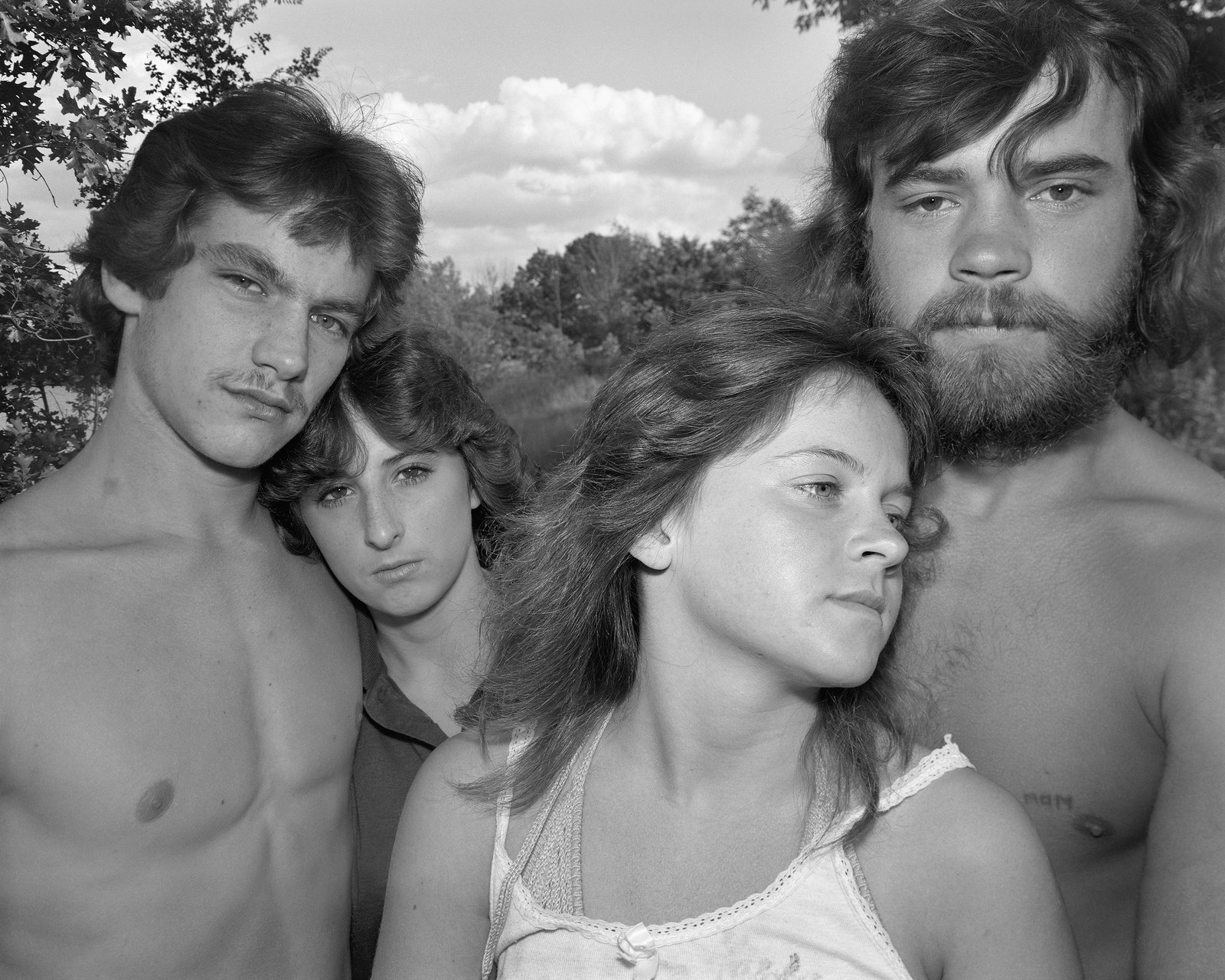
About a week into the project, once I’d made a few dozen photographs, a young man came up to me with a message: “Freddie needs to speak to you.” Who’s Freddie, I asked, and why? He just pointed away from the pond. “You’ll find out. He’s up there.”
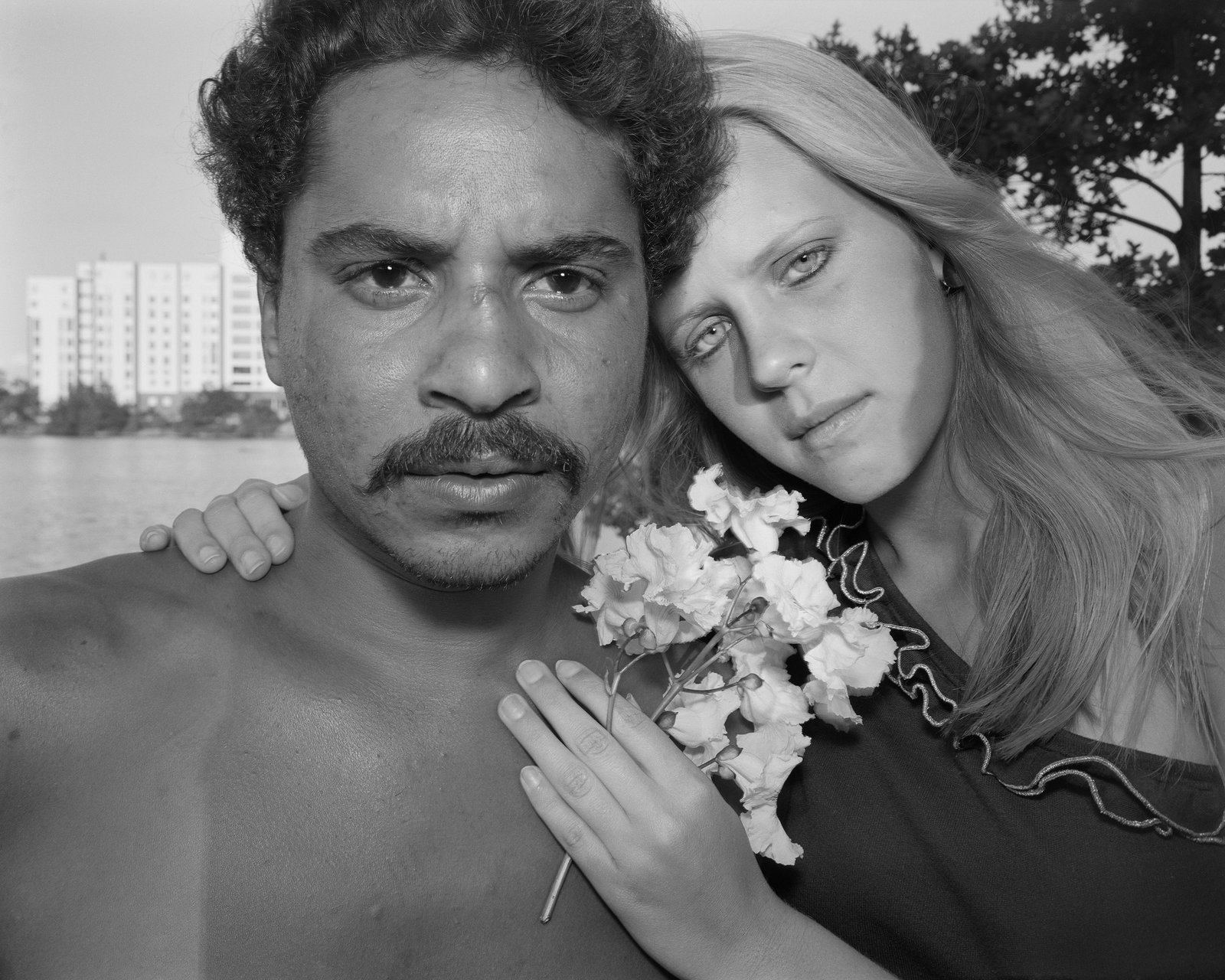
So with my camera and tripod over my shoulder, I walked up the hill, guarded, toward a man standing alone, watching the pond. Closing in, I could make him out — shirtless, well-built, about my age, Hispanic, with dark, penetrating eyes, and a recent cut across the bridge of his nose. He was sizing me up the same way I was sizing him up. He was smiling. “Freddie?” Without hesitation, he told me he’d been keeping an eye on me, that he’d studied all my photographs. I was caught off guard, but I understood — he was the keeper of Bell Pond.
“You don’t see white or black. You see people for who and what they are. You’re welcome here, and I’ll make sure you’re always safe.”
I was struck by how precisely he’d named exactly what I was hoping to do with the work — and relieved, honestly, to be accepted. I was acutely aware of my own bias, a white guy with a camera, and I’d worried it would get in the way of what I was trying to see.
After that, I wasn’t Stephen anymore. I was “the photo guy.”
Uday: Once you were in, what did staying actually look like — beyond just making the pictures?
Stephen: I quickly learned to listen — keenly, to every single person. That was the real work, honestly, far more than setting up the camera. Listening shaped the outcome of every photograph; it’s how I got close enough to make images with any real intimacy in them. People told me things — a mother’s cancer diagnosis, the sadness of a friend moving away, or wanting my opinion on whether some teen’s new boyfriend actually loved her. I fell into the role of therapist without meaning to. I came to understand that my job was to listen and respond to their lives as much as it was to make the photograph — the photograph itself was almost incidental to them, but the time I gave each person mattered enormously.
It wasn’t all easy. I spent time with teenagers I knew, just knew, weren’t going to be on this earth much longer — I’d watch them drinking heavily, consuming every kind of drug. Some nights, Donna, my wife, would look at me and see how drained and stressed I’d become. It was a real warning — I had to learn to protect myself and establish clear boundaries, the way a doctor does with a patient. I had to become emotionally steady, present in the moment, and let the heartbreak I felt for people pass through me rather than settle in. I learned never to get involved, never to judge, never to offer solutions. “Just listen” was the only thing I really had to give.
Uday: That patience — showing up, being watched, being tested, staying even through the hard parts — does it feel connected to anything else in your life, or was it particular to that summer?
Stephen: It turns out it’s been the same throughout my entire career. I’m always being tested, judged, my intentions questioned — and honestly, that’s fair. What I do — finding strangers, potential subjects, and, in a sense, using them to make my art — isn’t “normal.” There’s something voyeuristic in it. What I learned on day one at Bell Pond is that being honest and sincere about what I’m looking for is my only real defense. Once I’m accepted, my job is to stay present, be patient, listen, and watch closely for where the photograph actually is — my story about the person, which isn’t fact so much as my own impression of them, as realized in that moment. That’s been my guide for every project since, including my father’s Alzheimer’s.
I wrote something once, for the introduction to a small book, that I think distills it as well as I ever have:
“My affinity towards people is articulated through the process of photography; the rewards come about by socializing over long periods of time, connecting to individuals, listening and observing. Each photograph materializes from a synthesis of premonitions and response long before I bring my camera into action.”
On Turning the Camera Toward Home
Uday: When did you first notice something changing in your father?
Stephen: He was in his late fifties. He’d come home from work and just sit in front of the television — he’d stopped going out to his studio after dinner, which was unlike him. There were other signs, too: notes he’d leave himself by the phone and the kitchen table, reminders for the most ordinary tasks. Once, it took him hours to make what should have been a twenty-minute drive to my sister’s house. My mother, Rose, eventually became his full-time caregiver, and my brother Chris, my sister Gina, and I started rotating shifts to help her — we called it “Daddy Sitting.”
But before any of those more alarming signs, I’d already asked him: Dad, are you depressed? He always said no. I decided to use the camera to help me find some kind of evidence for what was actually going on with him. I made it formal — I asked his permission to document him regularly. I told him: “Dad, you’re thirty years older than me, and I want to see what I’m going to become. I want to use you as a healing power, for both of us.” He laughed and said, whatever, fine. So I started making weekly appointments, just to be with him exclusively. My mother didn’t become part of the project until later, once the signs of Alzheimer’s were unmistakable and the rest of my family had to start playing their roles as caregivers, too.
Uday: Did the photographs tell you things before you noticed them yourself, in the room with him?
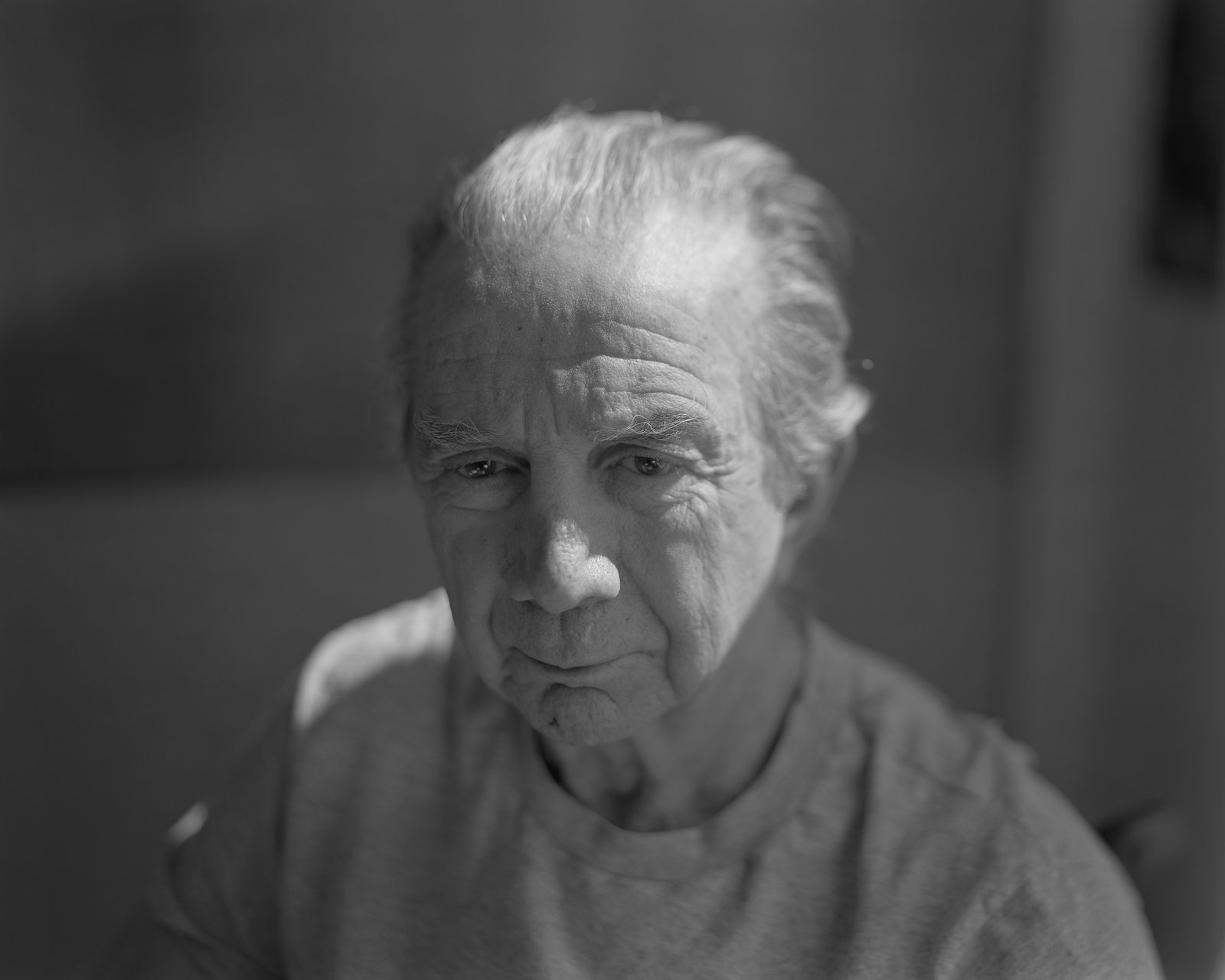
Stephen: Absolutely. I learned more from the resulting photographs than I did standing next to him. It was in the prints, not in the room, that I first noticed it — something wasn’t right in his eyes. In the photographs he seemed distant, a vacant look, very little emotion showing through. The camera saw it before I let myself see it.
Uday: There’s a detail you mentioned — that your father started identifying you by way of the camera, rather than as his son.
Stephen: That’s the strangest thing that ever happened to me, and it’s one of the truest things about the whole project. When I’d set up the camera, he would walk over and stand in front of it. I’d move the tripod, and he’d move to stay in front of it. He was recognizing me through the camera, not as his son anymore, but as the man behind that box. Over time, as he was succumbing to the disease, he became more aware of my camera than of any sense of me, his son, standing behind it. It was alarming — I was slowly losing him, and all that was left between us was a tripod-mounted camera that he seemed to be struggling, somehow, to hold onto.
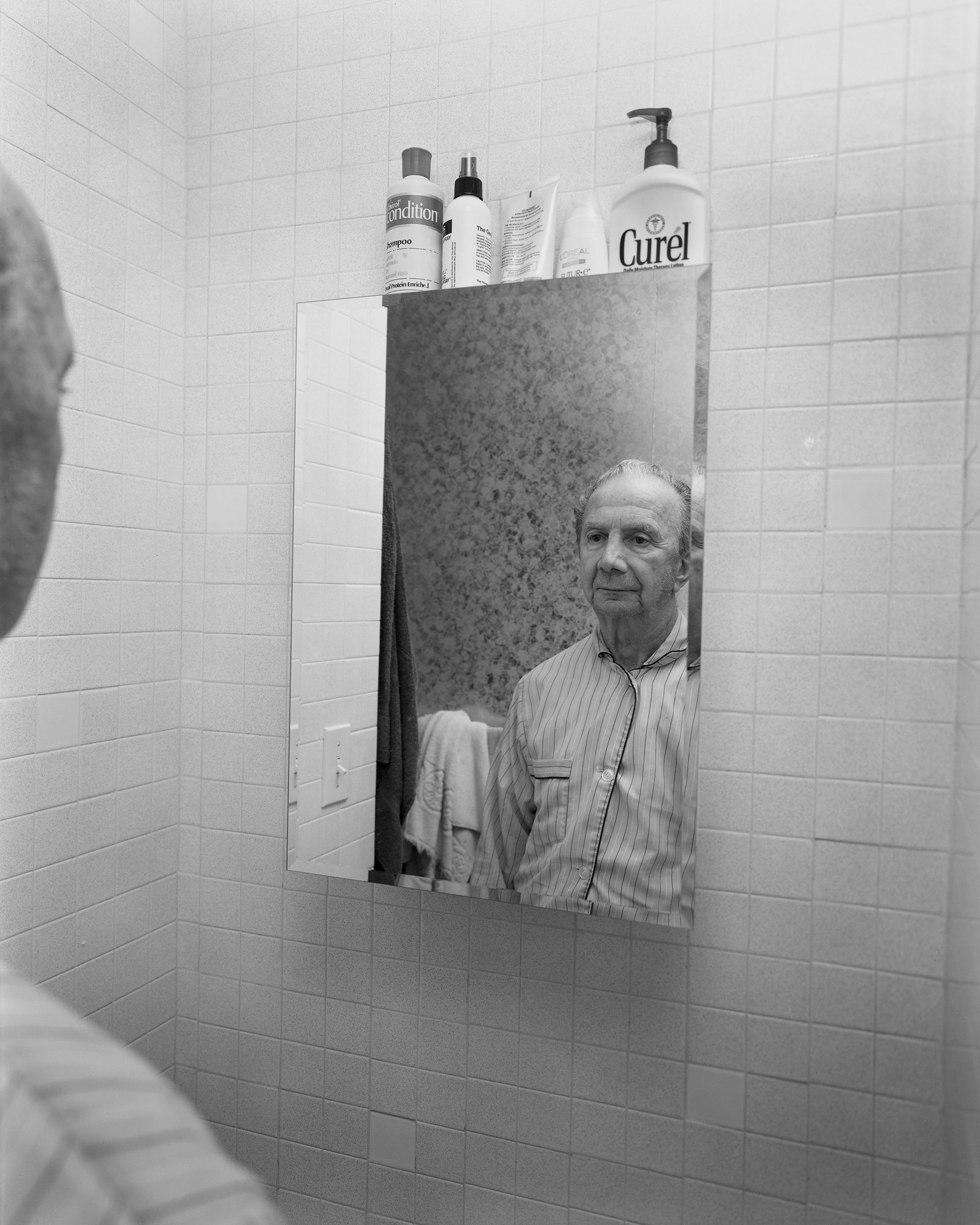
There’s a scene, from the bathroom, that I still find hard to talk about. I’d noticed his time in there had started stretching out — sometimes close to an hour, always in total silence, no water running, no flush. I’d check the room after he came out and find nothing — everything clean, untouched. So one day I asked him to pose for me in there, curious what he was actually doing. He walked right up to the mirror and studied his own reflection, very consciously. I framed him in it and told him I was about to take the photograph. He turned toward the camera instead and smiled — an old habit, performing for the lens the way he always had. I asked him to turn back around and hold the pose. He refused.
“That man is looking at the camera, so why can’t I?”
That’s when I understood — all those long, silent stretches in the bathroom, he’d been visiting a stranger. “That man.” Devastated, I asked him what he thought of this person. He looked back at his own reflection, paused, and said, “He is a good man.” I agreed with him. And the two of us stood there, looking at the man in the mirror together, while I made the photograph.
On the Choice to Keep Going
Uday: That must have raised the question of whether to keep photographing him at all.
Stephen: It did, constantly. That mirror moment was startling to me in a specific way — I was heartbroken, not wanting to accept that he was already in the advanced stages of the disease. It became a kind of benchmark for me, a question I had to keep asking myself: am I now exploiting a helpless situation, and to what real purpose? I had to struggle to hold onto the belief that the photographs would help others going through something similar. A few years earlier, I’d had a conversation with my father and asked his permission to document the advancing stages, whatever they turned out to be. He’d said yes. I had to hold onto that as still true, even now that he couldn’t confirm it anymore. I decided I had to believe that he would be proud I carried it all the way through. I still believe that.
Uday: How literally did “all the way through” end up being?
Stephen: When he had his first stroke, I walked into the emergency room with the camera. They asked what I was doing there and I said, I’m here to photograph my father. Years later, when he was admitted to the nursing home, I walked into the facilities with the camera and told the staff plainly — this is my job, to document my father through this disease. I made it my job. Over the next five years, I visited three days a week: Wednesdays, Fridays, and a weekend day. I always carried a bundle of recent photographs of Gene with me — I’d share them with staff, and with other visitors who had their own loved ones there. Over time, I became the nursing home’s unofficial artist-in-residence. Staff looked forward to seeing whatever I’d photographed that week. It made them feel like they were part of something. I was always humbled by that.
Uday: Was there a ritual to those visits, beyond the photographing itself?
Stephen: Yes, absolutely, on both ends of the visit. I’d always park at the far end of the lot. I’d open the hatch, reach in, sling a satchel full of film over my shoulder, assemble the 8x10 camera onto the tripod right there, and start walking toward the main entrance. Before going in, I’d pause and take a deep breath, then head for the elevator to the second floor. On the ride up, I’d catch my own reflection in the polished metal doors, and I’d wonder — would I ever look at my own reflection someday and recognize the stranger looking back as “a good man,” the way Gene once had? As the doors opened, I’d see him there, in the middle of the room, and I’d exhale and say to myself, Dad, what kind of photos will we make today?
Leaving, I had a much slower routine — I’d deliberately choose side roads home, giving myself time to think through what I might have made that day. I’d usually stop at a local music and entertainment store on the way and pick up a film or two, a small reward for the day’s effort. Once home, I’d immediately develop the negatives, just to make sure everything had come out technically. I was never disappointed, though I always worried I would be.
On What the Camera Gave Him
Uday: Looking back at both projects side by side — Bell Pond and your father — what do you think the camera was actually doing for you, underneath the pictures themselves?
Stephen: It gave me a purpose. It was a coping device, and I mean that plainly — not as a metaphor. If I hadn’t had it, there would have been nothing standing between me and the sadness of watching my father leave this Earth. I learned that as a kid, actually, photographing my own boisterous, loud, chaotic family before I understood why I was doing it. The camera let me see them instead of just being talked over by them. It’s the same thing, decades apart — Bell Pond was the first time I ever said to a stranger, essentially, I want to keep coming back to you, I want this to be a relationship, not just a photograph. And that’s exactly what I ended up saying to my father, in a different register, at the very end of his life.
Uday: Do you think of Bell Pond and With Dad as the same project, in some sense?
Stephen: I didn’t, until just now, talking to you — he said, notably laughing. But yes, Bell Pond was the first time I fell in love with a community — a family of sorts that wasn’t mine. Many years later, I turned that same eye toward my father, my own flesh and blood, and photographed him with that same patience, that same passion.
“Over two decades I recorded the horrendous effects Alzheimer’s had on my father. Why did I do it? I did it to hold onto my father as long as possible. I did it to record a disease that, I believe, in time will no longer be terminal. I did it as a visual, visceral record for future generations to see what devotion, heartbreak, and suffering looked like for victims of Alzheimer’s and for their families.
I did it for my father.”
Leave a reflection
What stayed with you after reading? We welcome thoughtful, respectful responses.
Write to us at: editor@betweenstill.com