The Inside Dictates
Ritesh Uttamchandani on self-publishing, the myth of the book object, and why the work has to come first.
Ritesh Uttamchandani came to photography through newspapers — the kind of daily, deadline-driven work where the image serves the story and moves on. For nearly two decades he shot for Indian Express and later Open Magazine, learning the rhythms of press cycles, press machines, and press people. What gradually changed his practice was not a single decision but an accumulation of small realizations: that news photographs, however powerful, live briefly; that a publication's archive holds your work but not your authorship; that you can spend an entire career taking photographs for other people's pages without once asking what you would do with a blank one.
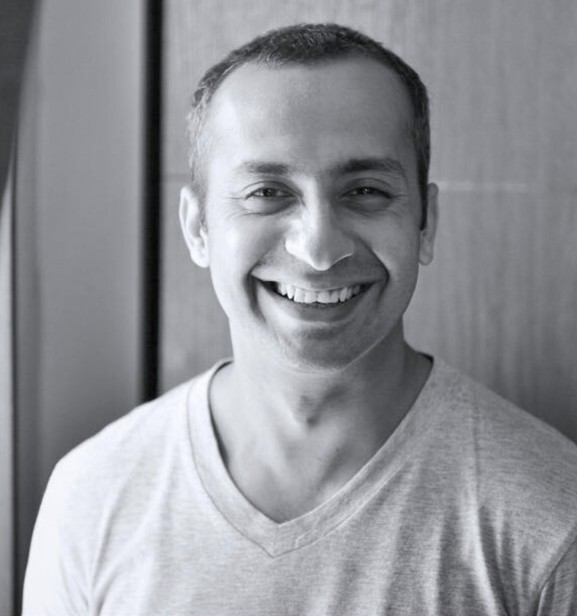
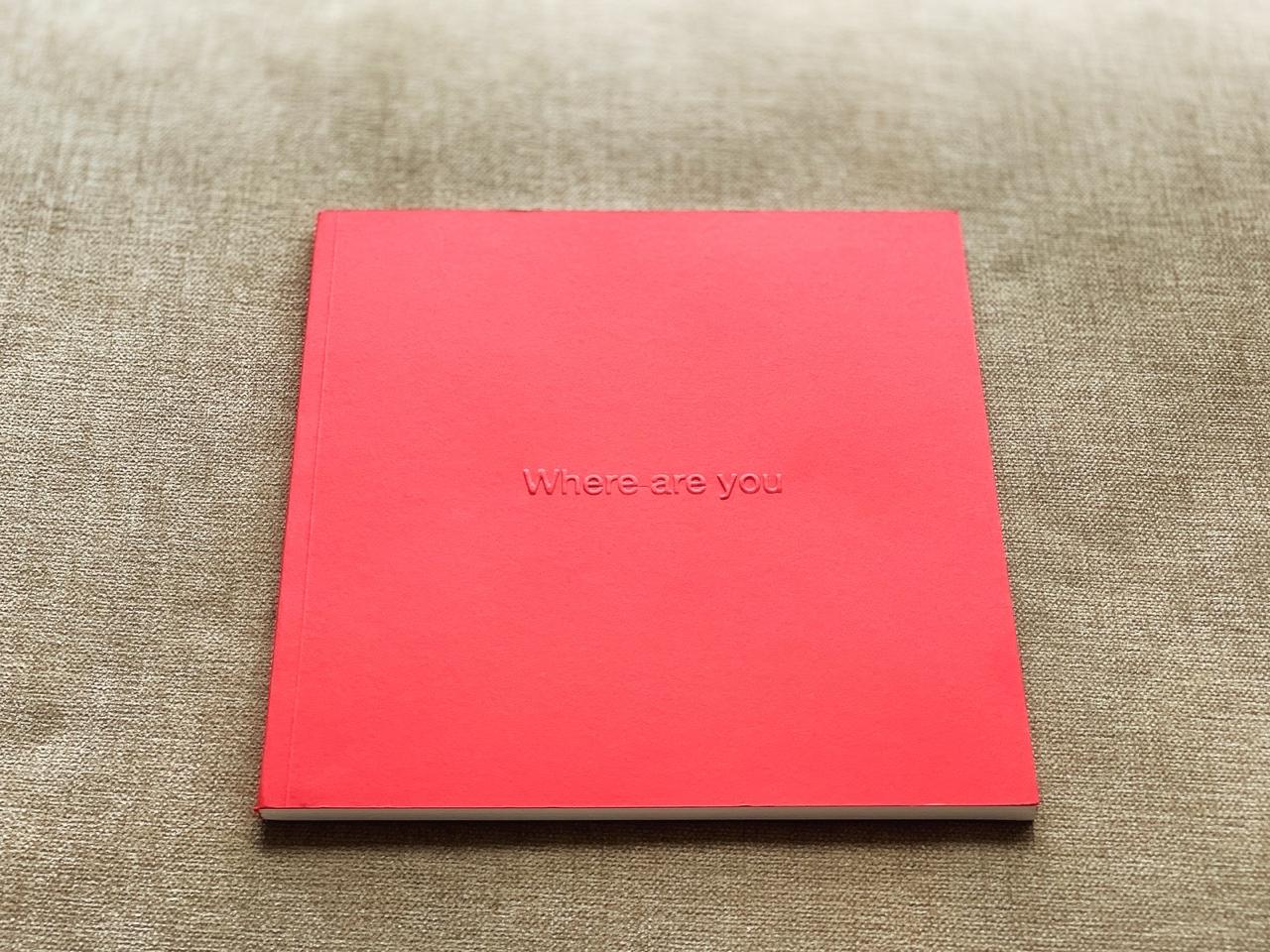
He has since made several self-published books and zines — on Mumbai, shot entirely on a phone; on local trains; on Manchester — each produced differently, each a new education in materials, printers, sequencing, and the particular vulnerability of putting something out under your own name. He does not work from a publishing imprint. He does not have a studio or a grants strategy. What he has is a deep curiosity about process, an unusually methodical approach to learning through doing, and a firm resistance to the mythology that tends to gather around the book as object.
I spoke with Ritesh over a video call from Mumbai. He had spent the morning making calls to wholesalers, looking for a paper substrate that could approximate the texture of vinyl for a new project — learning, as he often does, by chasing a specific problem through the city. This is a conversation about what it actually takes to make a book: not the dream of it, but the long, iterative, occasionally frustrating reality.
Selected Q&A
Beginnings
Uday: How did publishing first become part of your practice? You came out of newspaper photography — where did the impulse to make books come from?
Ritesh: It's not just one thing. It's a couple of factors that came together over time. One was being physically present in the production process at the newspaper — there's something called the scanning department, which comes from the old film era, where images are prepared for the press. Everyone in my department used to hate going there because they'd get critiqued and come back irritated. But I found it fascinating. The technicians there knew things we didn't — how much absorption the paper would take, how the blacks would translate, why an image that looks rich on screen would print as a solid black patch without intervention. Nobody explained this to us formally. I just learned it by sitting with them.
The second thing was the realization that you could spend your entire career as a news photographer doing the same Diwali-Bollywood-cricket routine for thirty or forty years, and your portfolio would look more or less identical to your colleagues'. I was pitching my own stories very early, because I was bored of assignments. And I knew that news photographs change things occasionally — sometimes an image stops a slum demolition, moves people to action. But that illusion of photographs changing the world had left my head quite early. For a photograph to germinate into something, you need education in place, culture in place, patience in place. That's a lot of conditions.
Then I was part of this Yahoo group called APAD — a photo a day — largely American photographers who came together to share unpublished material with each other. Rejects, outtakes, work in progress. And I saw many of them developing very strong narrative arcs in work that never appeared anywhere official. That was missing from what I was seeing around me. And later, when I moved to Open Magazine, I was surrounded by people writing books — Manu had a manuscript going through the entire nine-month incubation period before the magazine launched. So you're in an environment where books are just what people do with their ideas. That's when things started to germinate. Around 2014, I thought: I should do something.
Why Books Matter
Uday: What was the argument you made to yourself? Why a book, and not an exhibition or continued magazine work?
Ritesh: An exhibition is great. But you expect people to come to you. A book goes somewhere. And there's a question of what I'll call legacy — though it sounds more grand than I mean. Work you generate for a publication lives in that publication's archive. If you want to access a photograph from Indian Express in 2007, you walk into their office and they pull it up. But personal work? Where does that live? Where do you stand as an individual? A book is one answer to that.
The other thing is that a book is the best display of your work. It's the place where you reveal yourself — where you have to make a sustained argument through sequencing, through context, through what comes before and what comes after. It tests you in a way that a single image never can. And in the current moment, when reading habits have changed so dramatically, when people are bored of swiping — the people who pick up a book are actually more focused, more present. You can't pinch and zoom. You can't swipe it away. You have to go at it in a particular manner.
But the reason I find most convincing is what it does for the broader scene. When I put out my trains zine — a very simple, very accessible thing about something we all experience daily — and somebody sees it and thinks, if he could do that with material sitting in his hard drive for fifteen years, why can't I? That indirect inspiration is worth a great deal. Because what we don't have in India is a fertile, risk-taking publishing culture. When I've been to the UK or seen what people do elsewhere, there's a whole culture of putting things out without worrying about failure, without worrying about being mocked. That's what creates a healthy ecosystem. Somebody makes something, it inspires three others, it expands the readership, it creates audiences who start actually decoding images rather than asking where the photo was taken.
Uday: Can you give an example of that — of a book reaching someone it wasn't meant for?
Ritesh: I met someone once who had nothing to do with photography. She had gone to the dentist, and the dentist happened to have been gifted my Manchester book. She saw it sitting there in the waiting room and it made her remember her own time as an outsider — that particular feeling of being new to a place, of not quite belonging. She told me about it later. That resonance — when it happens with people who have no investment in the form — is when you know a book has done something real. When it happens with photographers, that's great. When it happens with a stranger at a dentist's office, that's something else entirely.
Why Publishing Feels Intimidating
Uday: Most photographers don't go through this. They shoot, they archive, they post online, and the work stays on a hard drive. What is it about the process that feels so large?
Ritesh: There's a lot of fetishization around it. The idea that a book has to look a certain way — hardcover, beautiful production, particular finishes, a price bracket that signals seriousness. All of that can intimidate someone into thinking they're not ready, that their work isn't enough, that they need to do this properly or not at all. I genuinely want to know who is making these unspoken rules. A book has to be hardcover? Says who?
But more than that, I think there's a particular kind of vulnerability to the whole thing. It's like getting dressed for a wedding, looking at yourself in the mirror, and thinking: I spent four hours on this and I still don't look right. The book acts as that mirror. You've been so deep inside the work for so long that when you finally see it as an object — as something another person will hold and judge — all the doubt comes rushing in at once. And that moment of doubt, I'd actually argue, is a good sign. It means you're not indulgent. It means you're self-aware enough to know when something isn't working. The problem is when people confuse that discomfort with a reason to stop.
The mental journey from caring too much to not caring enough is a long one. You want to reach the place where you're genuinely at peace with putting the work out — but you also still want people to engage with it. Those two things can coexist. The key is strategic self-awareness. If I fail, what's my plan? I make small books. I can store them at home. I'm not warehousing something that will bankrupt me. Someone who thinks that way will always feel more confident taking the risk. Someone who starts with a fetishized hardcover object with no thought to storage, distribution, or what happens if nobody buys it — they're setting themselves up to be frightened off the whole thing. Think of it like Bollywood: one flop doesn't end a career. People go back, they make something, they put it out. If you're intelligent about your production, if you're thoughtful about your scale, a flop is manageable. And then there's the information trap. People start searching — printers, paper, production costs — and by the end of the evening they've convinced themselves they have a brain tumor when it was just a headache. Too much information without a clear sense of what you're making will paralyze you. You end up chasing an object instead of making a work.
Self-Publishing As A Way Of Learning
Uday: Each project for you seems to be a new education. How do you actually approach the production side?
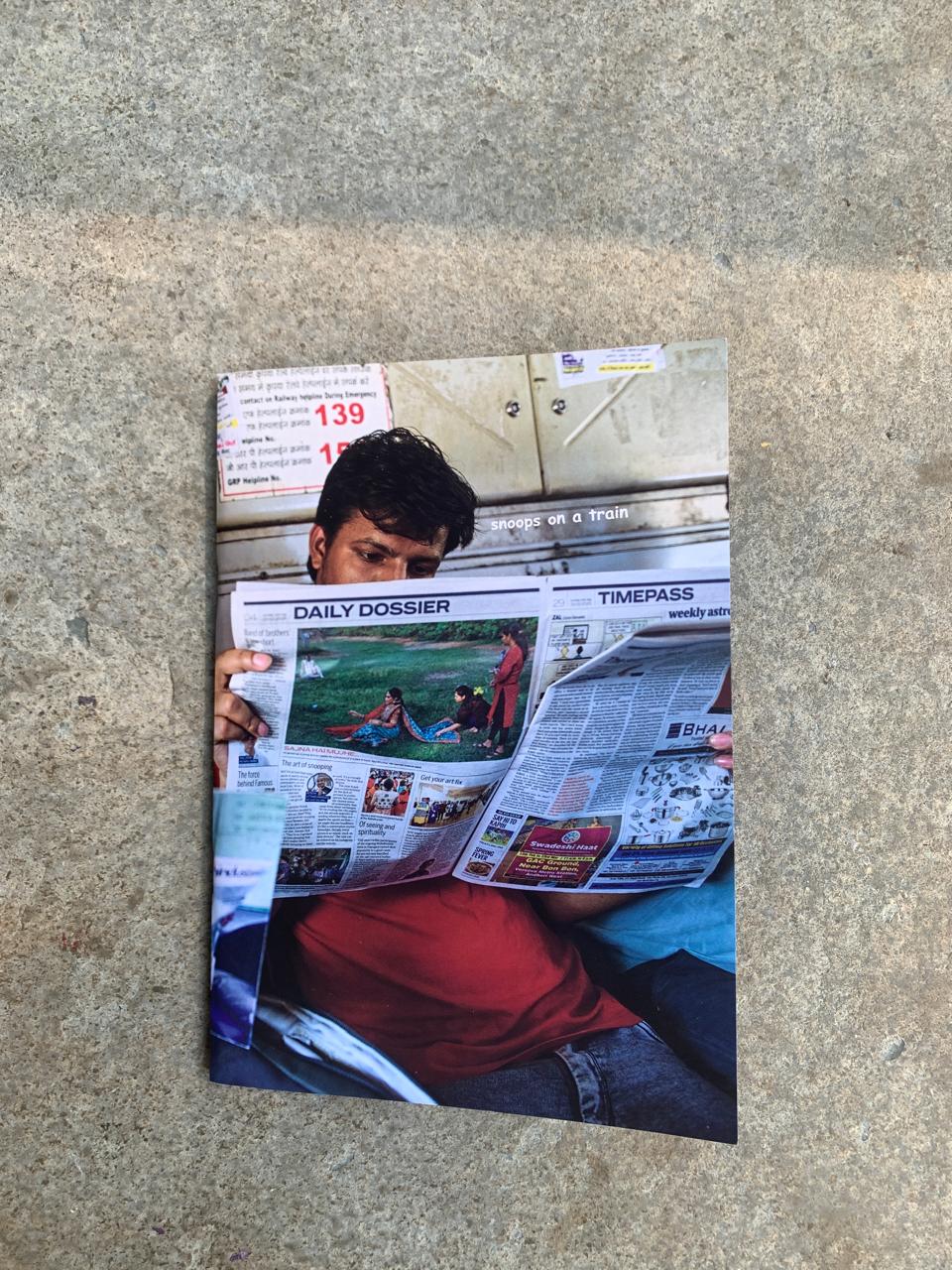
Ritesh: The first thing I always make is a dummy at home. Just an A4 printout, black and white, stapled or folded however it makes sense — something you can hold and move through. I made the dummy for the book I'm currently working on back in May of 2024. Only now is it getting close to production. That's not unusual — the Train Zine, I first made a dummy in 2021 and only printed it in 2025. The dummy tells you whether the sequence is working, whether the story holds, before you've committed a rupee to anything.
One of the most useful things that happened to me during the Red Cat book, I was spending time with Peter Bialobrzeski who was in Bombay working on his own project. We fed off each other — I'd show him my edits, he'd show me his. He's a teacher, so he had a very considered way of explaining things. He introduced me to the phrase 'killing your darlings,' and after our conversations, my dummy went from 144 images down to around 90. That reduction — that ruthlessness about what stays and what goes — was the making of the book. Most people think editing is about what you put in. But it's much more about what you throw out. What shouldn't be there is more important than what is.
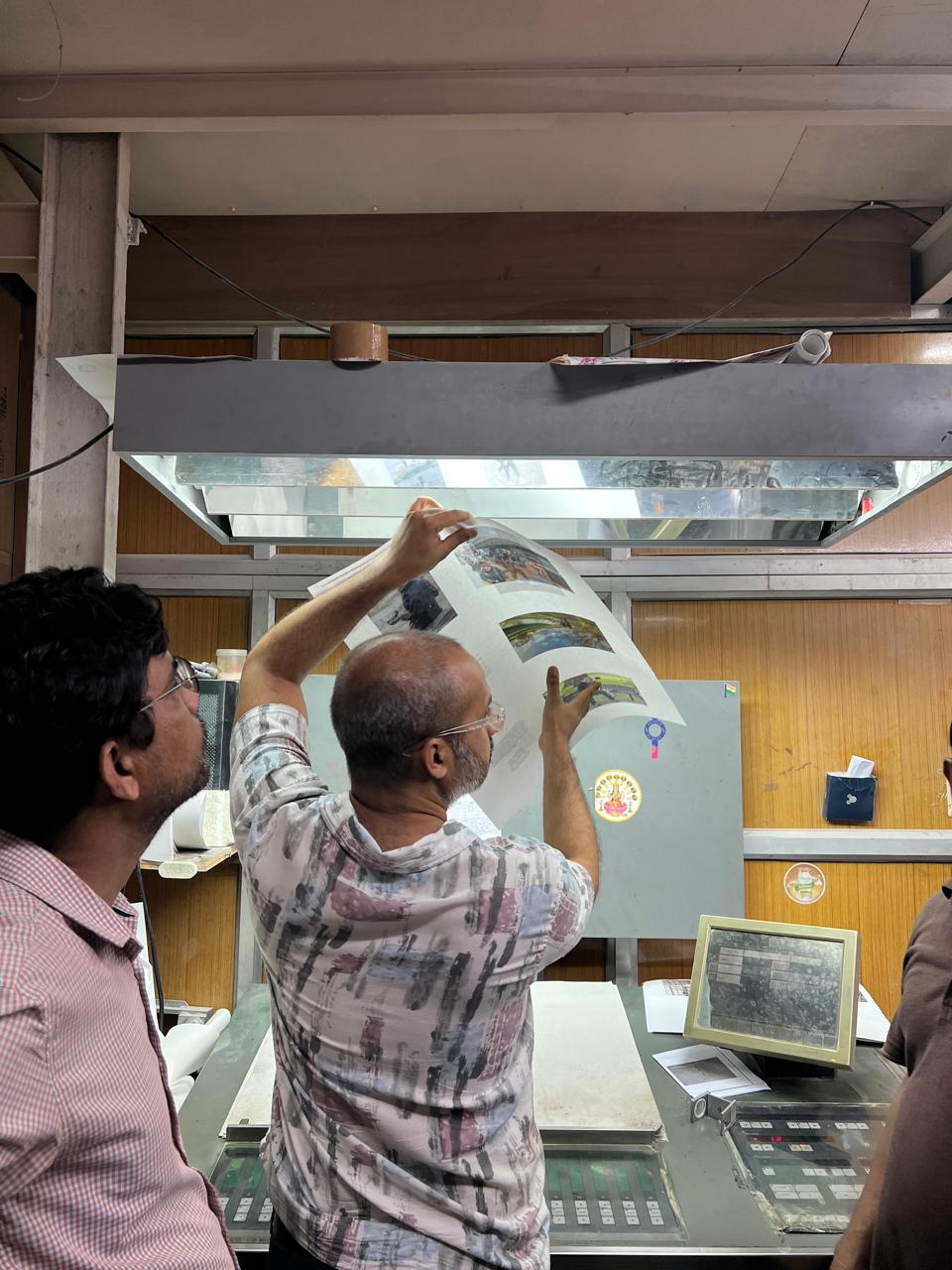
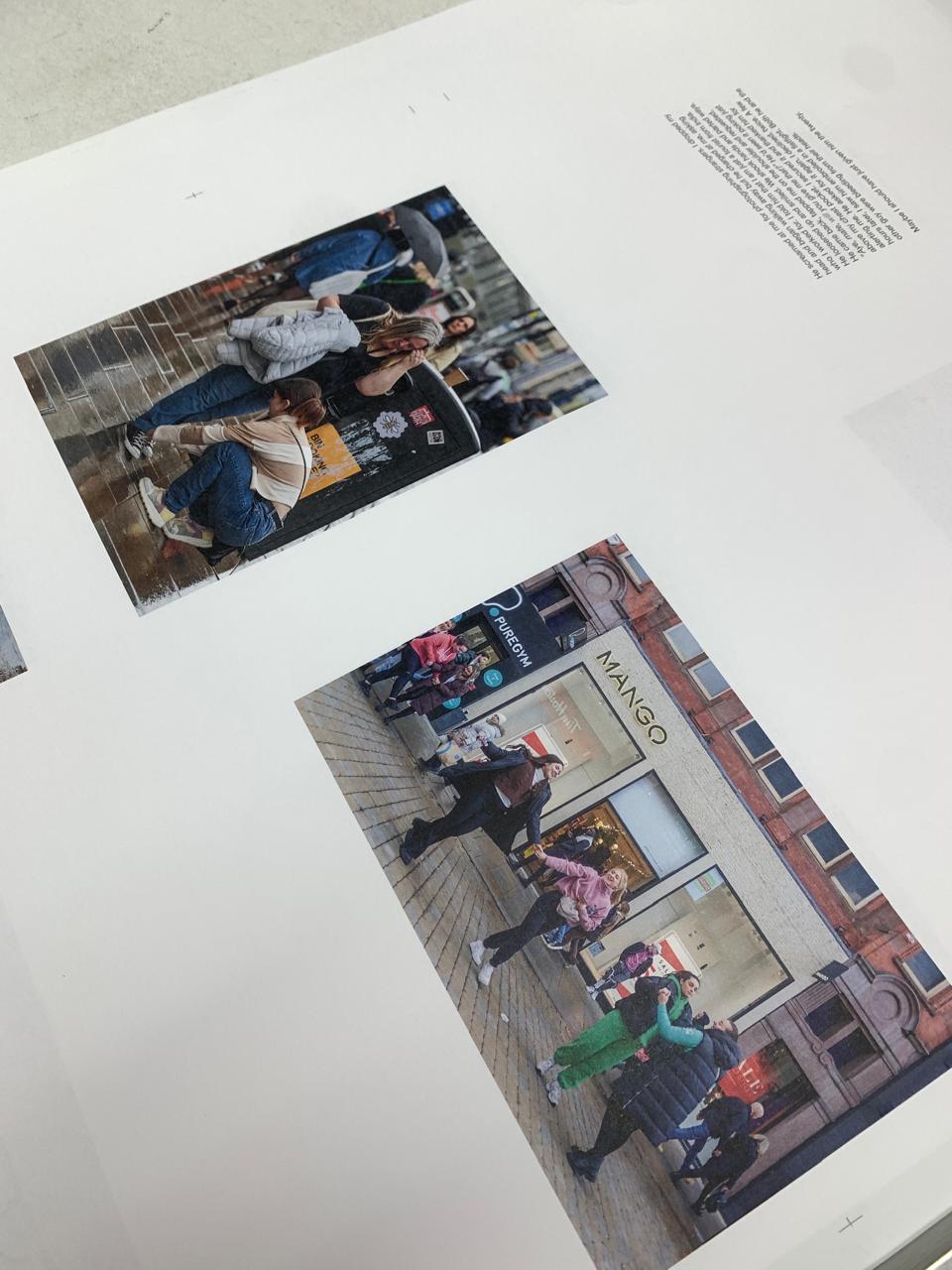
For the first final print run, I went to Pragati — a larger printer in Mumbai — on the recommendation of someone whose judgment I trusted. The output was excellent. But the learning was lesser for it. Big printers take care of everything: color correction, paper, the lot. You give them a PDF and step back. After that, I made a point of going to smaller workshops for subsequent projects — places where you can stand around asking questions, where you can experiment, where the printer is curious about what you're trying to do and not just processing a job. Every substrate yields a different result. Print in an air-conditioned environment versus a non-AC one and the tonalities shift. If the paper has moisture in it, the result changes. These variables aren't controllable — you're pointing at the moon and the printer is looking at your finger. But knowing those variables exist, knowing what they do, is something you only learn by being in the room.
Uday: And you've deliberately worked with a different printer on each project?
Ritesh: Every project, yes. Pragati for the first book. Swastik for the second, suggested by a paper supplier. Indraprastha for a zine that required a particular kind of binding intervention — something slightly unusual that most places wouldn't want to attempt, but they were excited by it. Everyone says that approach is suicidal. Stick with who you know, reduce your variables. But encountering a new set of constraints, a new personality, a new sense of what's possible — it always improves what you're making, even when it adds difficulty. And every press and every paper is a different conversation. I can't learn that from a tutorial.
Letting The Work Decide
Uday: There's a phrase you used — let the inside dictate. Can you say more about that? Because I hear a lot of photographers talking about production choices before they've fully settled the work itself.
Ritesh: That's exactly the problem. A lot of the conversation around publishing gets stuck on the object — hardcover or softcover, paper weight, binding style, cover finish. People begin with an idea of the book they want to make and then try to pour the work into it. I think that's entirely the wrong direction.
Start with your sequence. Start with your images in order on a table. Make that home dummy. Ask yourself whether the story is flowing, whether there are indulgent bits, whether the whole thing stands on its own. And once that's honest — once the inside is working — then everything else follows naturally.
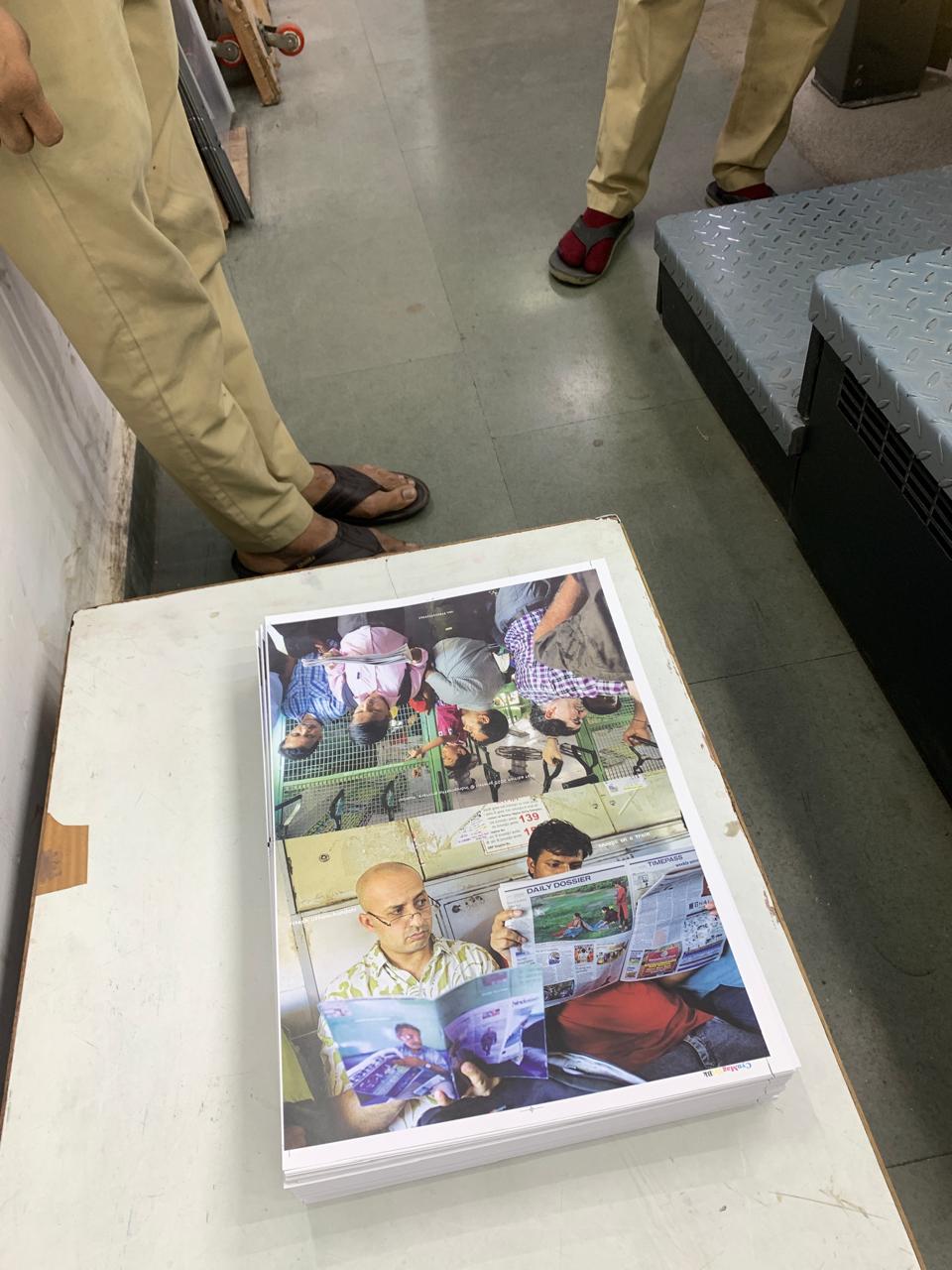
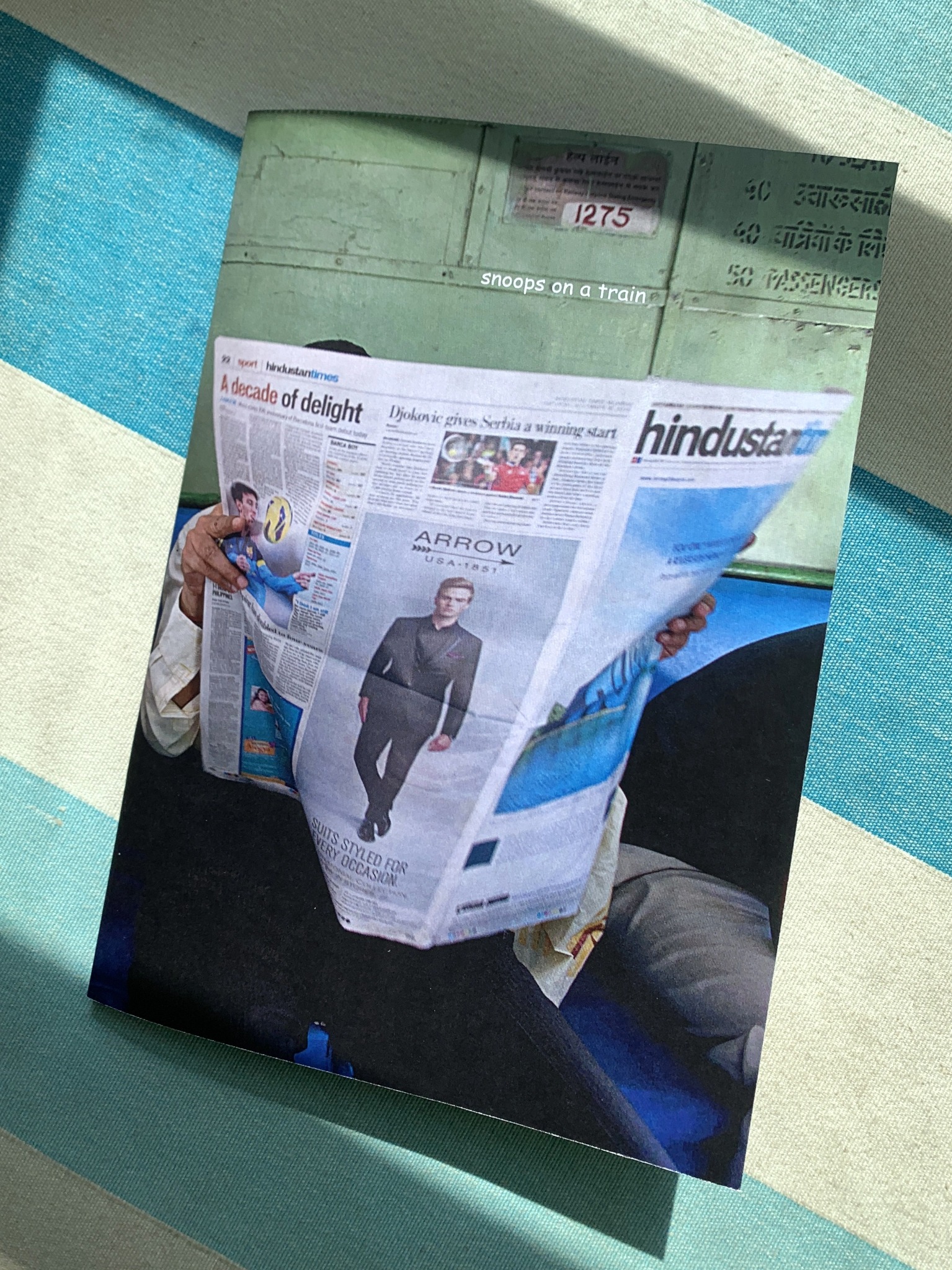
For the trains zine, I knew from the beginning that I wanted to use Comic Sans. I showed a British designer friend, and he was horrified. But I said: look at the inside of a train compartment — people are writing things on the walls, on the doors, in the compartment panels, in this exact spirit. Comic Sans is one of the most readable typefaces there is — dyslexic people, autistic people, everyone can read it. And trains are accessed by absolutely everyone. The font has a direct, honest relationship with the subject. Then I started thinking about the paper — what do people actually buy at railway stations? What do those periodicals feel like in your hand, that slightly rough, slightly thin quality? So I went to suppliers and described what I was looking for. The paper choice came from the subject, not from a preference for beautiful production.
For the Mumbai book, I wanted captions — but I didn't want to force them on the reader. I wanted people who had no interest in the text to be able to fold it away and read the book purely as images. People who wanted to read them could open the gatefold. Once that decision was clear, it meant I had to abandon the hardcover, because gatefolds and that kind of accessibility don't belong together structurally. The caption decision dictated the binding. That's the order in which it should go: inside first, outside later.
If you are clear about your strategies — what you're trying to tell, how you want the reader to move through it — the production questions answer themselves. It sounds almost magical. It isn't. It's just a matter of sequence.
Books Worth Returning To
Uday: Are there books you find yourself going back to — things that have shaped how you think about the form?
Ritesh: Louis Quail's Big Brother stays with me. It's about his brother's schizophrenia — how the state helps you, how the state gets in the way — but it's also deeply collaborative. The brother contributed poems and paintings throughout. By the end of it, you feel you understood something real about their life; something has shifted in you. A lot of books on mental illness feel like they're trying to show you how good an artist the photographer is — trying to punch you in the face with the difficulty of it. Big Brother doesn't do that. It comes from the inside, from a genuine relationship. You don't feel the effort. You feel the presence.
Red String is another — Japanese, I believe, about separation. I've never managed to actually hold a copy, it's so hard to find, but it has stayed with me. And then there's anything by Michael Wolff when you're thinking about cities — he looked at them in ways nobody else was. Peter Bialobrzeski has been doing a series he calls City Diaries, where he arrives in a place — Kochi, for instance — stays a week, shoots, and moves on. There's always a debate about access and who gets to look at whose city, but I respect that he's doing something honest with whatever access he has. He's not pretending he belongs.
And then there's The Sweet Flypaper of Life — the collaboration between Langston Hughes and Roy DeCarava. That's a book I keep coming back to every five or six years and finding something new in it each time. That's the test, isn't it? A book you can return to and still be surprised.
Leave a reflection
What stayed with you after reading? We welcome thoughtful, respectful responses.
Write to us at: editor@betweenstill.com