The Interior of the Work
Lou Jones on counter-narrative, the long commitment, and what Africa keeps teaching him.
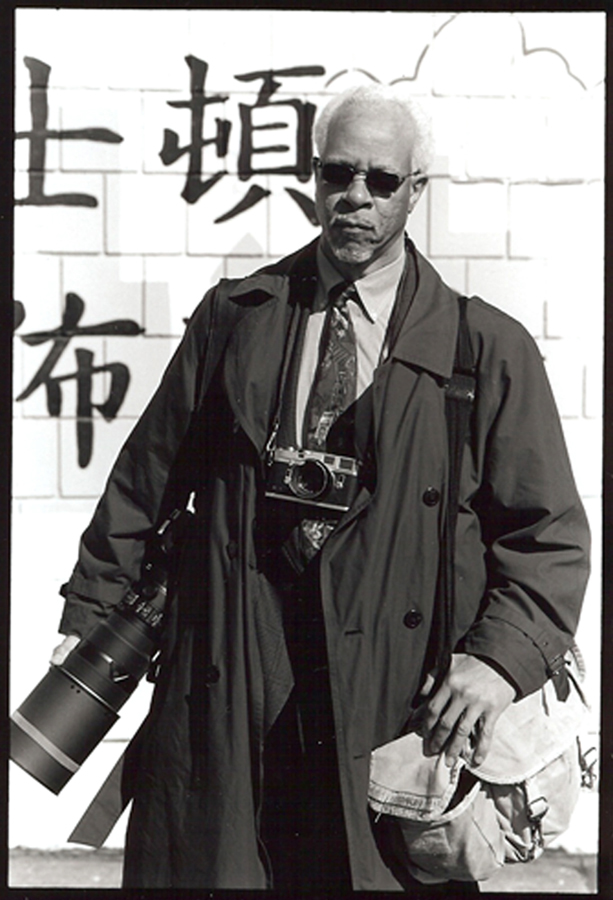
Lou Jones has spent more than fifty years making photographs. He has worked for Fortune 500 corporations, shot for Time/Life, National Geographic, and Paris Match, documented civil wars in Central America, and produced a landmark series of portraits from death row. Since 2013, he has been doing something that dwarfs all of it: photographing every country in Africa. Not passing through. Not skimming the surface. Going in, staying long enough to let the place teach him something, and then going back. The project is called panAFRICAproject. Eighteen countries down. Thirty-six to go.
What drew me to Lou was not the scale of the project — though the scale is staggering — but the clarity of the argument behind it. Western media has spent generations producing a single, distorted image of a continent of fifty-four countries and over a billion people. Lou Jones decided, in his sixties, to spend the rest of his working life building the counter-portrait. We have known each other from his years in Boston. We spoke over Google Meet on a Wednesday in April — morning for him, evening for me in Mumbai. What follows is a shaped version of that conversation.
Selected Q&A
The Elevator Speech
Uday: When people ask what you're working on, what do you tell them?
Lou: The elevator speech is: I'm working on a project to photograph every country in Africa. And that sounds, after a while, like those people you see on Instagram who say they visited twenty-five countries in twenty days. You know what they do — they fly somewhere, walk around the airport, get on another plane. That's nonsense.
We're not just trying to photograph in every country. We're trying to formulate a much more complete picture of what Africa really looks like. The elevator speech doesn't begin to cover it.
Uday: So where does it actually begin?
Lou: It goes back more than twenty years. I was working on those books — you may remember them — A Day in the Life of Japan, A Day in the Life of the USA. A wonderful series. Very successful. And eventually they did one on Africa.
I looked at those books and I said: they only dealt with the upper surface. And more importantly — which I found out from people much later, after the books had come out — a lot of the countries were very upset. The books were successful in America, but they said: all they dealt with were the clichés. When they went to Japan, they photographed women in kimonos. And people said: kimonos is not Japan anymore. It may be part of our history, part of our exotic nature — but it's not Japan.
And I thought: they're right.

Time as an Ally
Uday: And then there was the article that changed how you were thinking about the whole project?
Lou: I read a piece in the New York Times — this is over twenty years ago — that the African Union was going to censor Western access to news stories in Africa. They were going to actually prevent Western media from doing stories there. And I'm a dumb American kid who grew up believing in freedom of the press. The word censorship was always a four-letter word to me.
And then I started to think about it. Quite on my own — not from anything they said — I realised they were probably right. Because Western media — Europe, North America, South America, India, Russia, China — only deals with three stories in Africa. Poverty. Pestilence. Conflict. That's it. A little Black kid looking through a chain-link fence with flies on his face and a distended stomach. Someone running across a field with an AK-47.
I said: I've been to Africa. There is that. But there is so much more. Why are we not showing it?
Uday: You spent years trying to figure out how to actually do this. What kept going wrong?
Lou: Every time I thought I had a way to do it, I'd walk down an alley and realise: that's not going to work. And I'd come back and start again.
For a long time I thought I was going to hire ten photographers, give each of them a different set of countries, do a book. Like the Day in the Life model. And then I realised — I was going to become an administrator. I wanted to be one of the photographers, and I knew that.
What I finally understood was this: the Day in the Life books are vertical. Everything is compressed into twenty-four hours. Literally — they started at midnight and ended at midnight. That's why the coverage was only surface, why every photographer wanted to photograph the geishas, why nobody wanted to go out into the woods. There wasn't time for anything else.
So I changed it. I made it horizontal. A lot of work, over a long period of time. I started talking about it in terms of making time an ally rather than an enemy. Dragging it out. So I can actually investigate each country. Really thoroughly. Figure out the right questions to ask — which, even now, I'm not always sure I know.
Making time an ally rather than an enemy.

What the Continent Teaches
Uday: You launched in 2013. That's more than a decade of this now. How has it changed you?
Lou: I've become more and more delighted with the project the more I do it. People ask: what's your favourite country, what's your favourite photograph? And I go — Jesus, that's like asking which is my favourite child.
What has happened is that each country has built on the last. We've become, I think, a little more sophisticated in how we look at each place. We don't even know what we're looking at sometimes — we don't know the product being produced, we don't know the society and the interactions of the people and why they do things. As time has gone on we've become more and more aware of how unique each country is.
That's one of the central mistakes we make teaching Africa in schools — it's taught as one big country. Everybody's alike. Everybody's running around with feathers in their hair and rings in their nose. And we're not just teaching that — we're saying the entire continent is like that. And it's fifty-four individual countries, and they are so completely different from one another.
Uday: You've said that political borders have almost nothing to do with how people actually live there. But you're still working country by country. On the ground, how do you navigate that?
Lou: I break the rules of how I used to work. When I was shooting for National Geographic, you'd get off the plane and the fixer who met you was white — and they were wonderful, very knowledgeable — but white people deal with white people. And we're dealing with a continent that is the opposite of that.
So I go in and I talk to native people. They can be pundits, they can be news people, they can be business owners. But people who were born and raised there and have families and can say something about what is actually happening now — that's a very, very important part of how we do this. We're talking to them. Making them tell us what's important. In their country.
Uday: And what have they taught you that you couldn't have found in a library?
Lou: One of my pet peeves is the way poverty gets measured. It gets reported that the average person in Malawi lives on a hundred and fifty-four dollars a year. Below the poverty level. And a man in Zambia said to me: that's nonsense.
He said: there's a man who has a wife, three kids. He has a farm. He has animals. He grows his crops. He sends his kids to school and pays for them to go. He feeds them every day. He sells his product. And somehow you find that he gets a hundred and fifty-four dollars a year out of all that and make that the criterion.
The measure is just wrong.
And you go — Jesus, he's right.
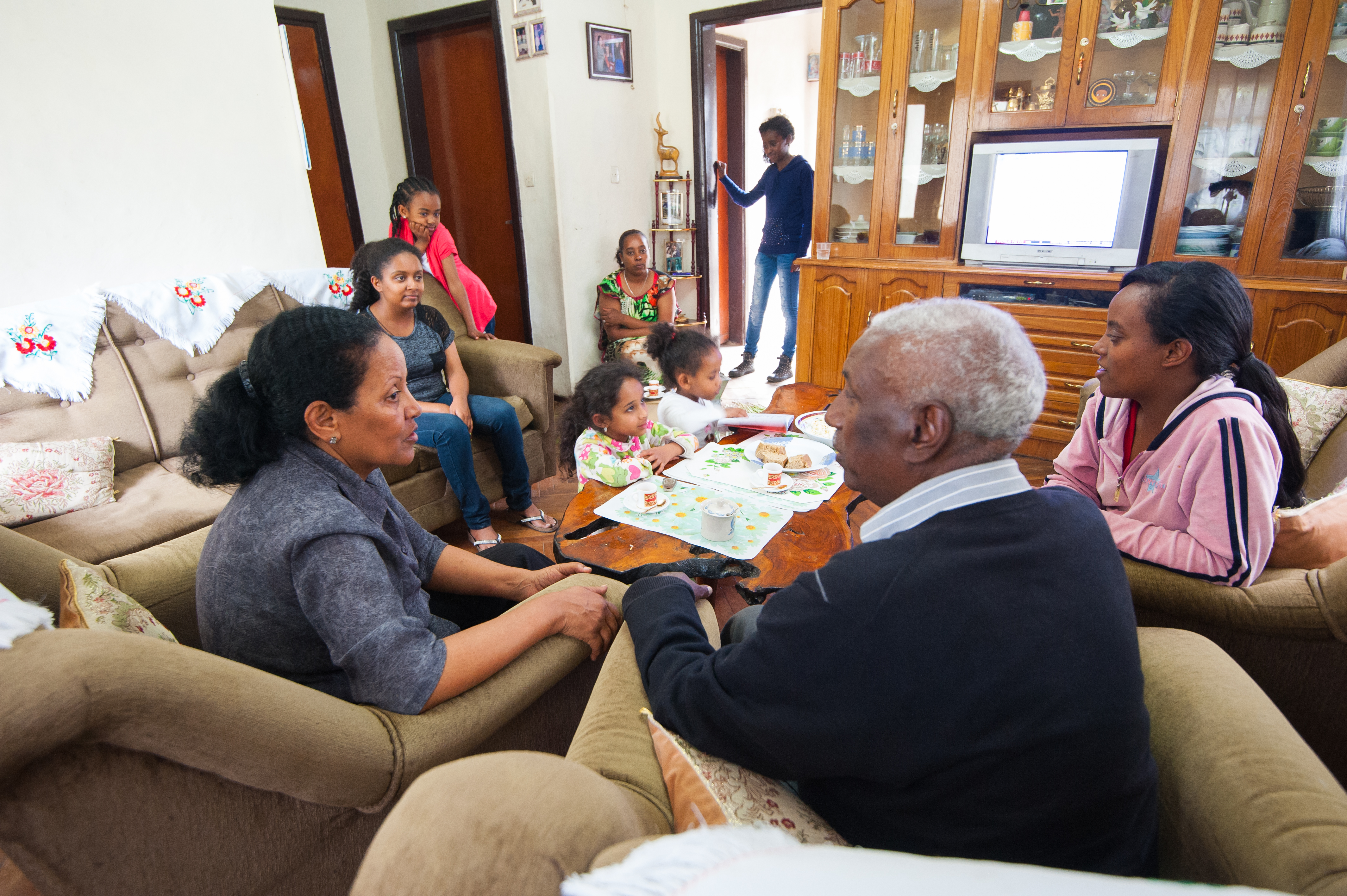
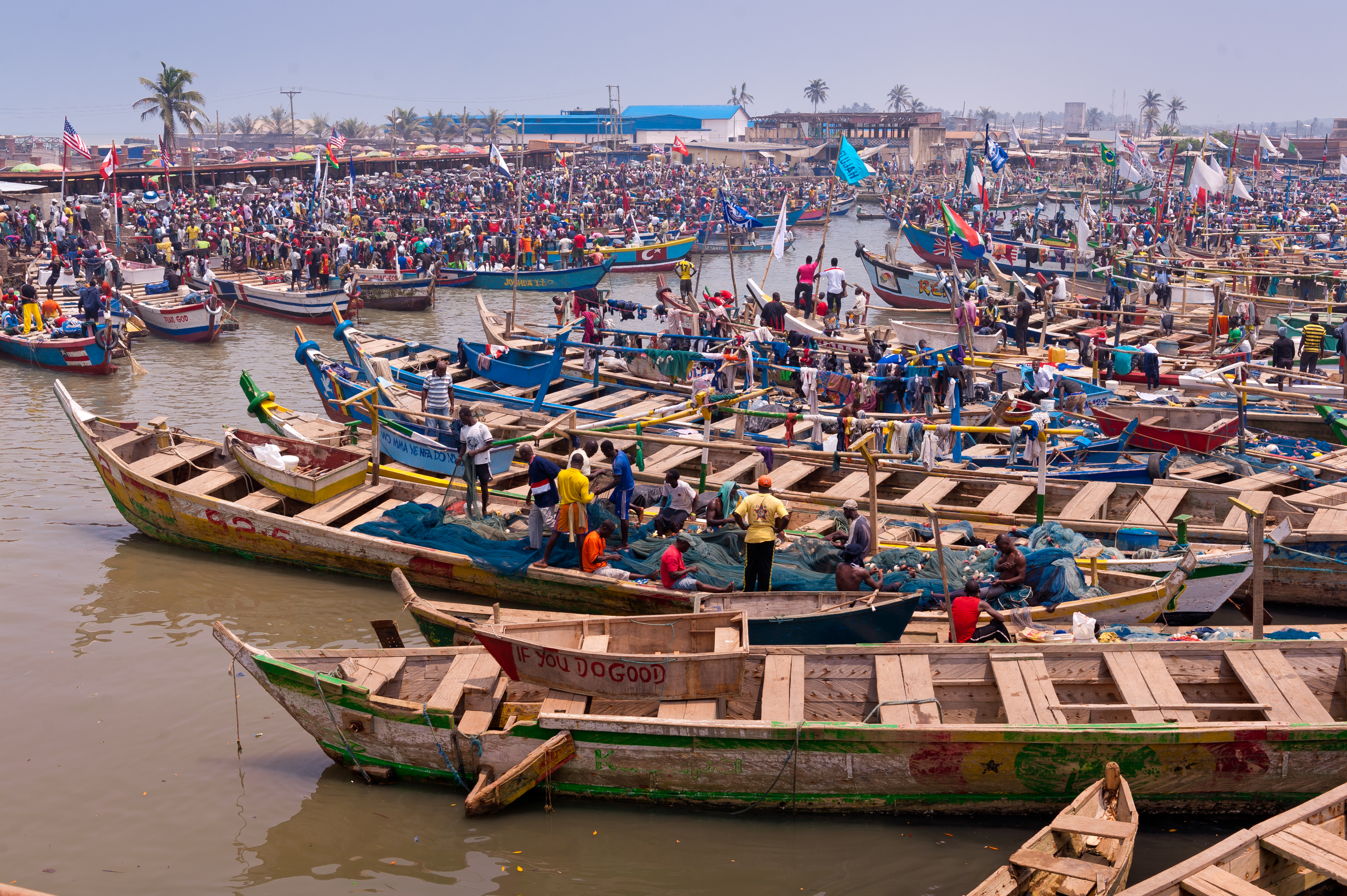
That's what I mean by the informal economy. You see it in India too — people who've spread a blanket on the street and are selling vegetables, selling products. The political structure can't measure that. It doesn't get taxed, it doesn't get reported. But it's an enormous part of how people actually live. And it's completely different in each country.
Borders and What They Cannot Hold
Uday: In 2013 — the same year you launched — South Sudan, Africa's newest nation, descended into civil war. Your project is structured around fifty-four sovereign countries, and yet you've said those borders are largely a colonial fiction. What do you do when a country you've photographed collapses? And what about a place like Somaliland — stable, self-governing, functioning, but unrecognised by the world?
Lou: We haven't done Somaliland. That's the only one I'd say we haven't figured out.
A lot of the others have changed. The most obvious was Swaziland — we photographed there, and after we left they changed the name to eSwatini. We deal with that in the book. Burkina Faso — the government changed, there's been turmoil. Ethiopia has had turmoil.
And — to be very truthful — I have not dealt with that part well yet. It's sort of beyond me. It's hard. It goes a little behind the project in a way I haven't fully worked out.
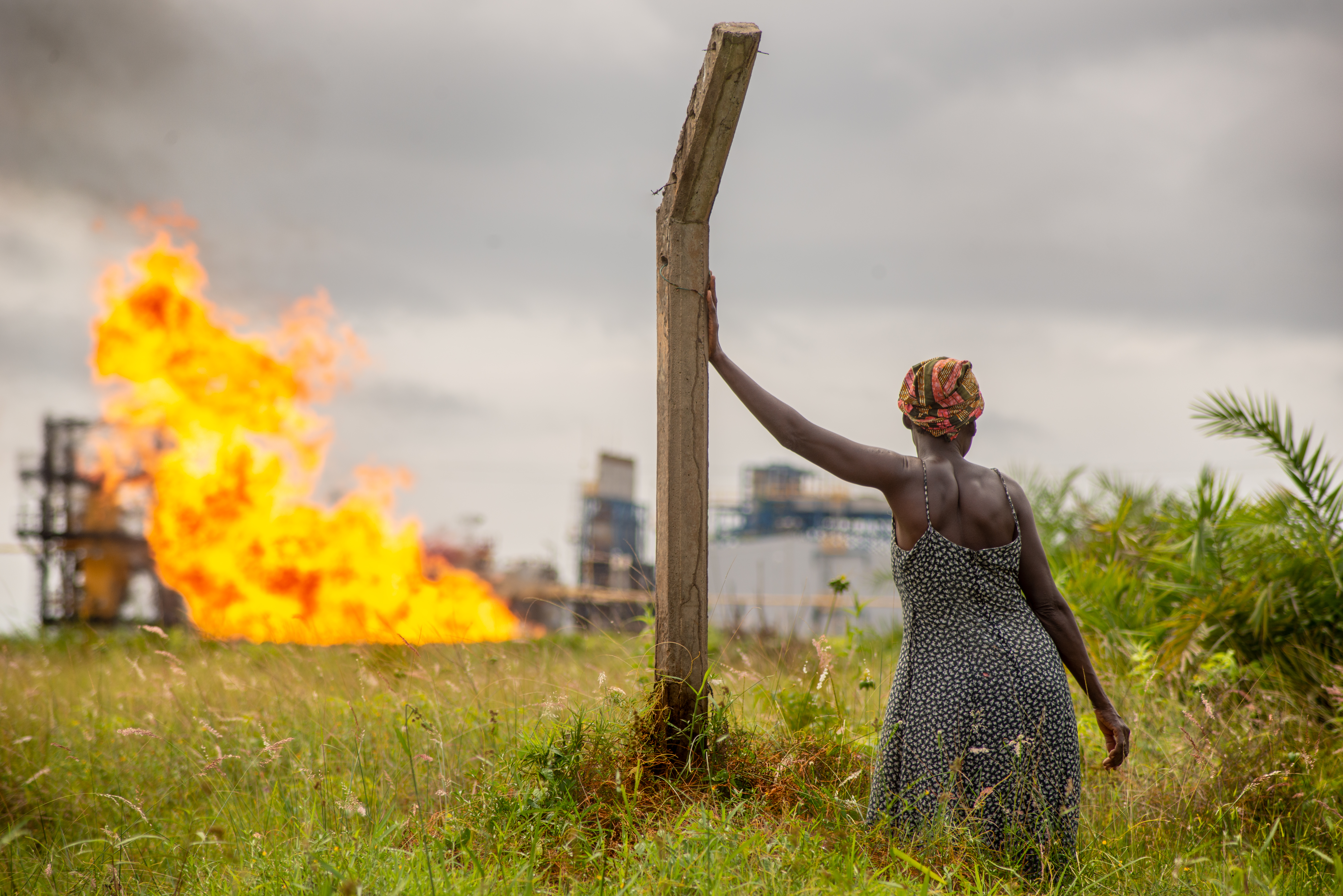
I'm not trying to be a pundit or an expert on the politics and economies of any of these countries. I'm trying to report what is there. Trying to interpret who's good and who's bad — I've been dancing around that. I'm not sure I'm smart enough yet. I may never be smart enough. I may have to bring someone else in.
What I can tell you is that we're working toward a chapter on corruption. And the word 'tribes' — that's another one. You go to one country, you say 'tribes,' it's fine. You go to the next country and say it and they'll knock you down. So we use 'indigenous peoples.' Writing that chapter has been very, very hard.
I'm not sure I'm smart enough yet. I may never be smart enough. I may have to bring someone else in.
The Children Looking
Uday: Your photographs are now in the Massachusetts school curriculum. Children are building their first image of Africa from your work. Does that responsibility feel different from any other assignment?
Lou: Yes. But that was by design.
The pictures that were in the curriculum for years and years were just horrific — not because they weren't real, but because they only dealt with one surface. The distended bellies. The grass skirts. The exotic. Those pictures are important from a historical standpoint. But the kids weren't getting anything else.
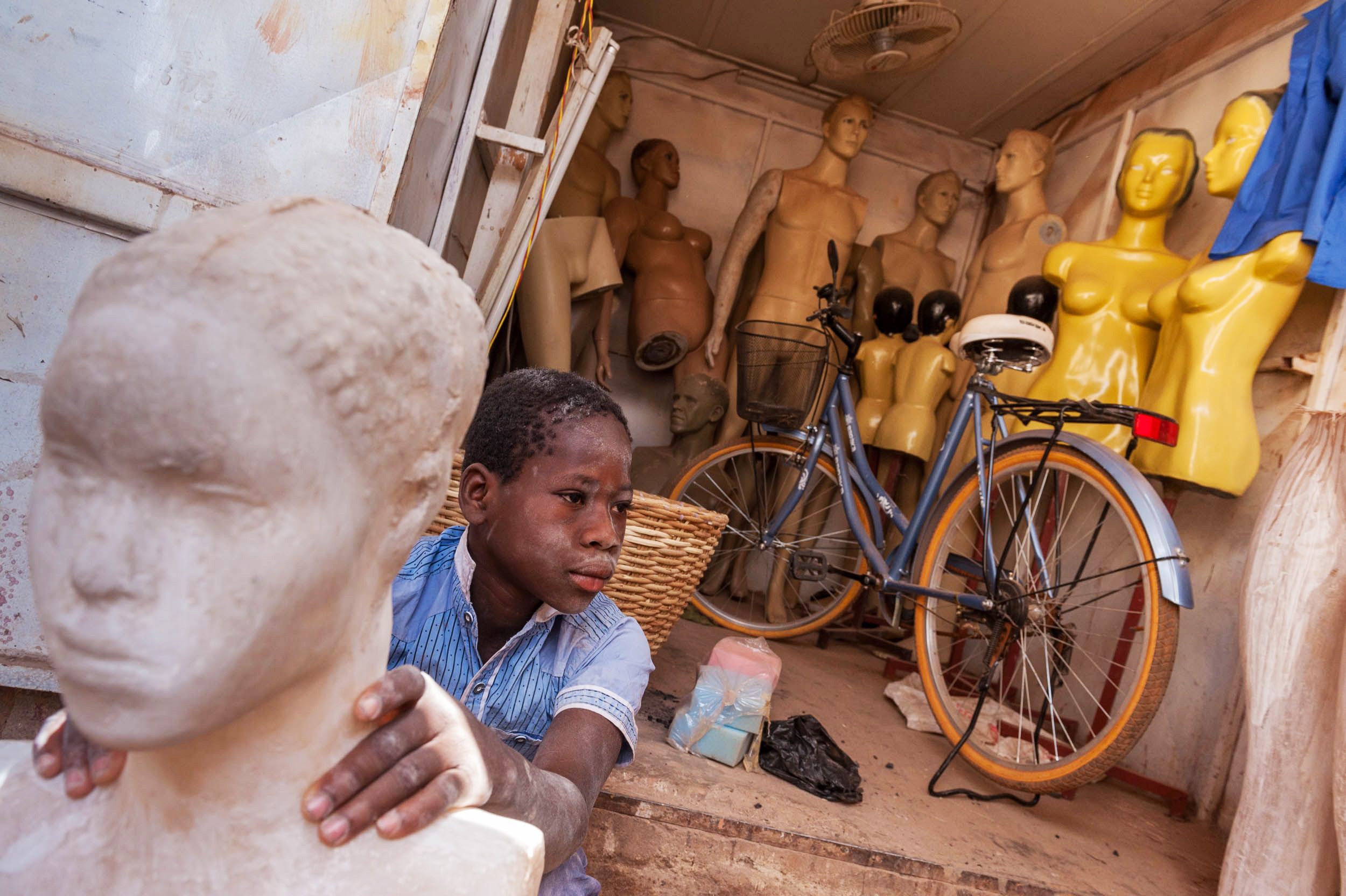
So we've replaced a lot of those photographs with something a little more current, with a much more objective viewpoint. Modern hospitals alongside traditional medicine. The market alongside the high-rise. When kids go out on their own now and search for images of Africa, they're starting from a different place.
That's very important stuff. Primary source material. The teachers are still the teachers — they don't always know more than what they were trained to know. But if we can change what's on the wall, we can start to change what's in the room.
If we can change what's on the wall, we can start to change what's in the room.
Two Thirds Ahead
Uday: Two-thirds of the continent still ahead of you. How do you carry that?
Lou: I'm hoping that people like yourself — who are now finally discovering it, ten years in — will help it pick up momentum. That's the intent.
I had a dear friend, a few years ago, who pulled me aside at a cocktail party — she'd had a few drinks — and she said: Lou, when you started that Africa project, I thought you were out of your mind. What a stupid thing to do.
And then she said: And now I see you doing it. It's amazing. I can't believe you're actually doing this.
So. There's the turnaround.
Uday: Last question. What does this project ask of you that no one ever asks about in interviews?
Lou: It takes money out of my pocket. That's just — oh, woe is me. But the bigger thing is: fighting against all the objections. Which I've done all my career. The Death Row project was a perfect example — people said, why are you doing that, why don't you just do weddings, do something nice and safe and go home at night?
A girlfriend of mine, just a couple of months ago, pulled me aside at an event and said — this is an educated woman — she said: You're so brave. I said, what do you mean? She said: going to those dangerous places. She meant Africa.
And I went: it's like going to Cleveland. What is she talking about? You go to Africa and everybody thinks someone's going to stab you in the bathroom.
That's the image. That's exactly what I'm trying to change. That's the whole point.
It's like going to Cleveland.
Leave a reflection
What stayed with you after reading? We welcome thoughtful, respectful responses.
Write to us at: editor@betweenstill.com