We’re Nice to Strangers
Toby Binder on nearly two decades in Belfast, the long work of building trust, and what photographs can carry across a wall.
Toby Binder came to Belfast sideways — it was one stop in a longer inquiry into working-class British communities, and it had to wait while assignments took over. He went back in 2016 when the Brexit referendum was happening, and he stayed.
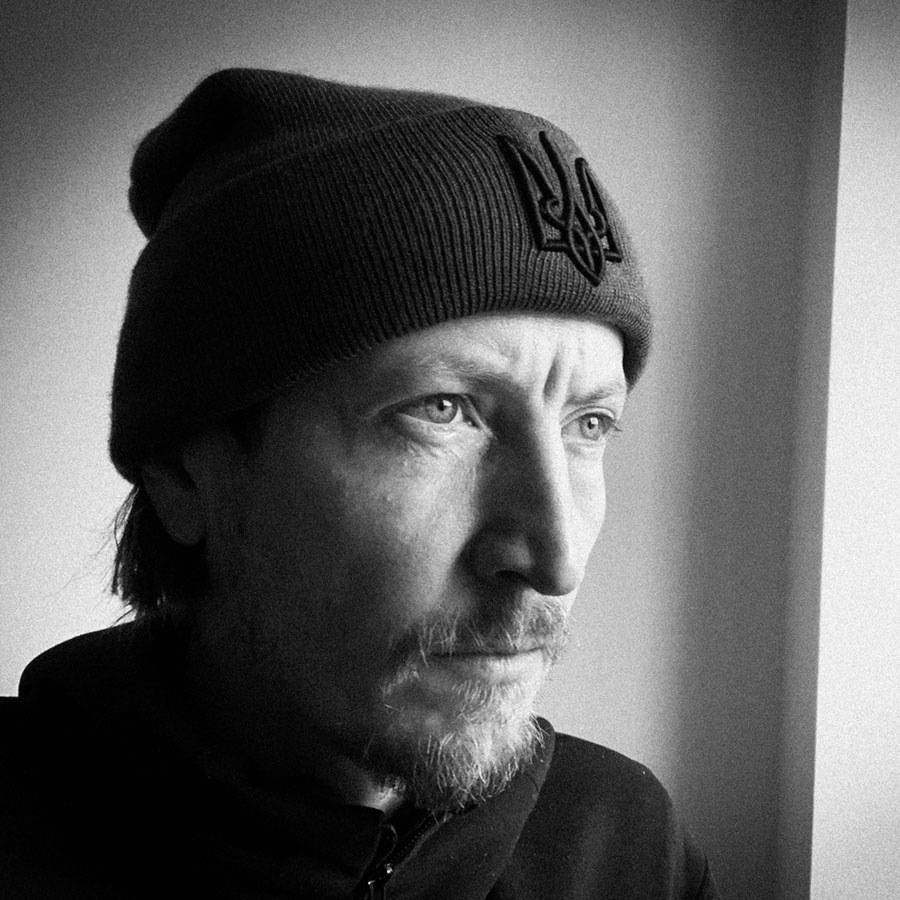
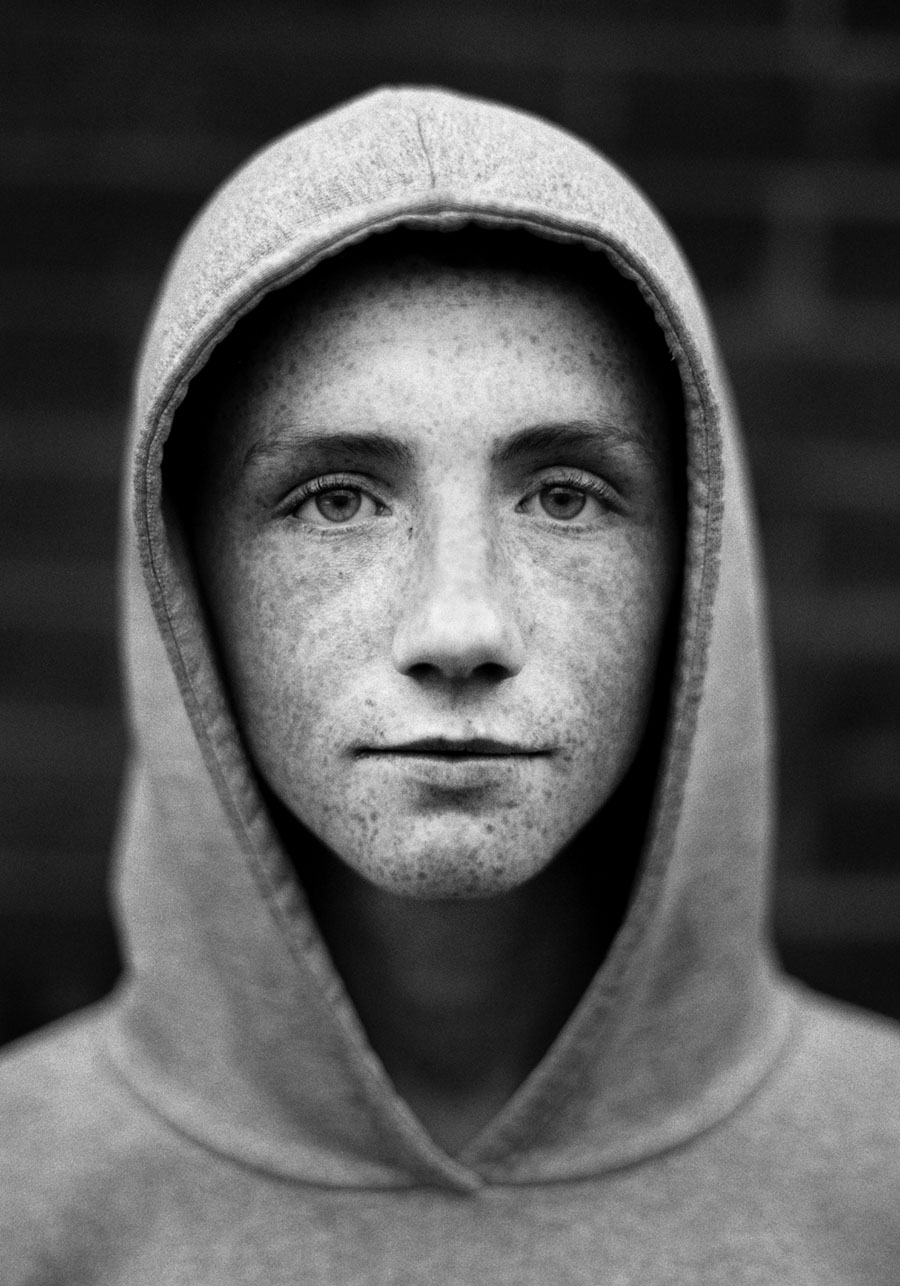
What followed is one of the longer sustained documentary commitments in contemporary photography. Binder has returned to Belfast across nearly two decades, across summers and now winters, through the Kehrer book Wee Muckers published in 2019 and well beyond it. He has watched the young people he first photographed as teenagers grow into their mid-twenties and still find themselves in the same neighbourhoods they always wanted to leave. He has carried photographs of each community across the wall to the other side and watched people crowd around images of a world fifty metres away that they had never seen. He has built the kind of trust that is not offered but accumulated — slowly, visit by visit, roll by roll.
I spoke with Toby over WhatsApp — a technical difficulty with our Google Meet sent us there — and he talked for close to an hour about Belfast, about duration, and about what it means to keep going back. He seemed genuinely at ease discussing all of it, and genuinely fond of the people he has spent so many years photographing. That fondness runs through the work. It is, I think, the reason it is still open.
Selected Q&A
Beginnings
Uday: Belfast wasn’t your starting point. You had been working across Britain first.
Toby: Yes, 2005 and 2006. My interest back then was in working-class communities in Britain more broadly — I wanted to document that world, understand it. Glasgow was actually the entry point for a larger project I called the Youth of the UK series — a body of work about the passion for football in Scotland, kids playing in backyards and alleys, which became a self-published book. Liverpool followed. Belfast was part of that same inquiry. But it didn’t feel like the right entry point for a sustained project at that time, and then assignments came and took over. The free project had to wait.
Then Brexit happened, and Belfast suddenly felt completely different. It had always been a divided city, but the referendum sharpened everything. The two communities had completely opposing views — the Catholic community wanted to stay in Europe, the Protestant community wanted out. And that division was not just about the vote. It was already embedded in every part of daily life: which schools the children attended, which football clubs they supported, which side of the wall they lived on. I went in 2016 when the referendum was happening, and I stayed.
Uday: You had planned to stay through the Brexit process.
Toby: Initially, yes — from the referendum through to the final implementation, the point at which the UK would be factually out of the EU. The referendum was June 2016. Due to political deadlocks in the House of Commons over the withdrawal agreement, the final date kept being postponed. But by then it didn’t matter. I had started making real connections. The more time I spent with people in these communities, the more the project opened up. At some point I stopped thinking about when it would end and just kept going back.
The Division
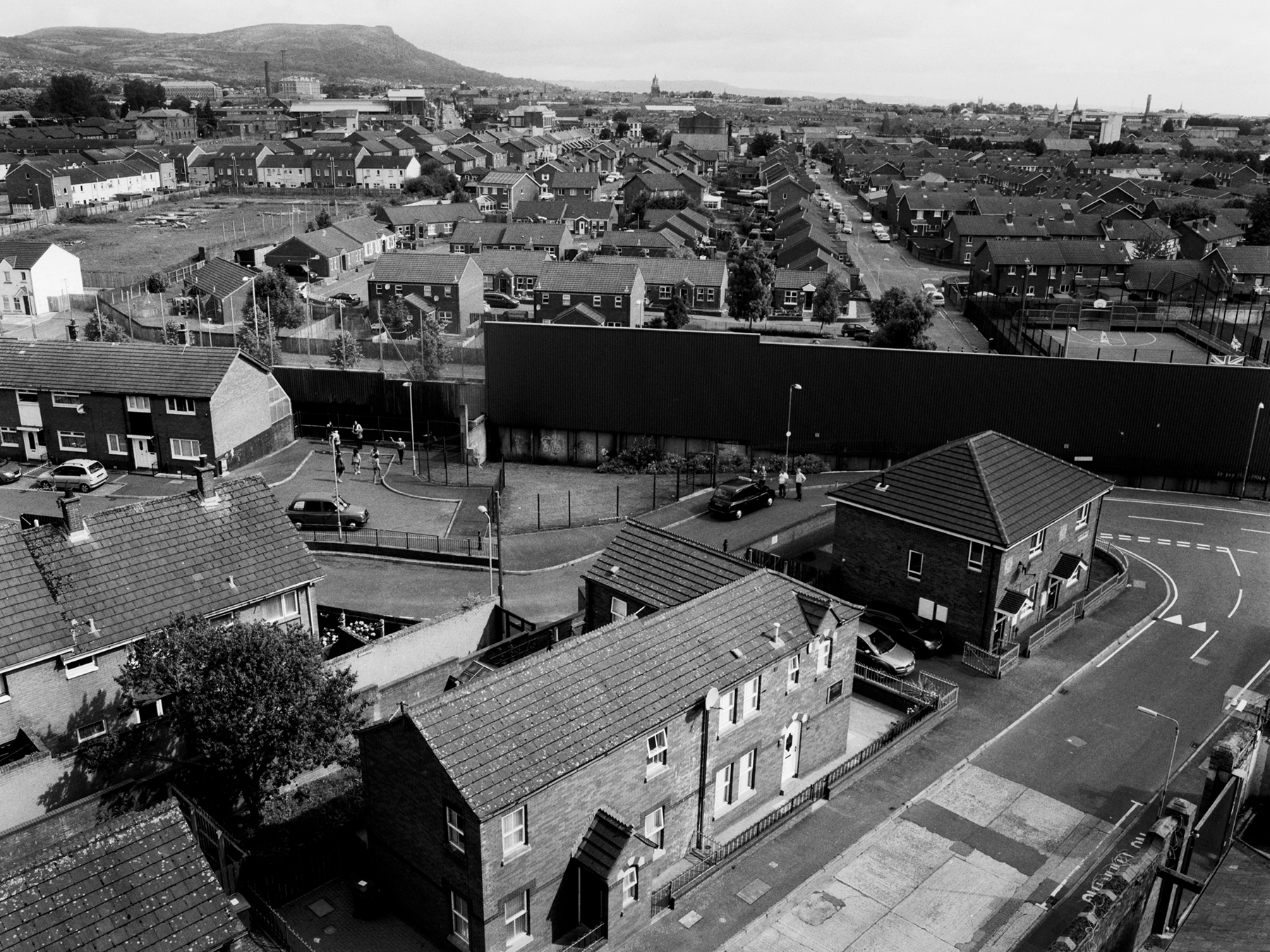
Uday: For people who don’t know Belfast — can you describe what that division actually looks like on the ground?
Toby: The walls are real. Physically real — concrete and steel, running between neighbourhoods. And what exists on one side of those walls is almost entirely separate from what exists on the other. The division shapes everything — and it is worth being precise about what that division is. It is less about religious practice than about identity: whether you see yourself as Irish, and therefore Catholic, or British, and therefore Protestant. That identity determines which school you attend from childhood, which football clubs you support. Celtic on the Catholic side, Rangers on the Protestant. Those affiliations carry into how you dress, what colours you wear. If you are in one neighbourhood wearing the colours of the other side, you can be picked on for it. That is how embedded the identity is.
And the elders keep it going. The older generation constantly tells the young who to support, who to distrust, which side to be on. Belfast is a place where this sense of identity plays such a large part in young lives that it shapes choices they will make long before they are old enough to have made them freely.
The Outsider
Uday: You are German. You came to all of this without being British, without being Irish, without belonging to either community. How did that affect the access?
Toby: It was an advantage, honestly. The locals saw me as someone with no inherent bias. I wasn’t taking sides because there was no side for me to take. When I first entered these communities, people would ask me: which country are you from, and which community do you belong to? I would tell them I was from Germany, and that technically I’m Protestant but I don’t go to church, I’m not religious. And then I would turn it around and ask them: when was the last time you went to church? And there would be this moment — a pause, a laugh — where they’d realise the question applied to them too. A lot of those conversations became funny. The question only touched the practice of religion, of course. As for their sense of belonging — their identity — there was never any doubt for them. But in that small shared moment of questioning, something opened up.
Building Trust
Uday: How did the access change as you kept coming back?
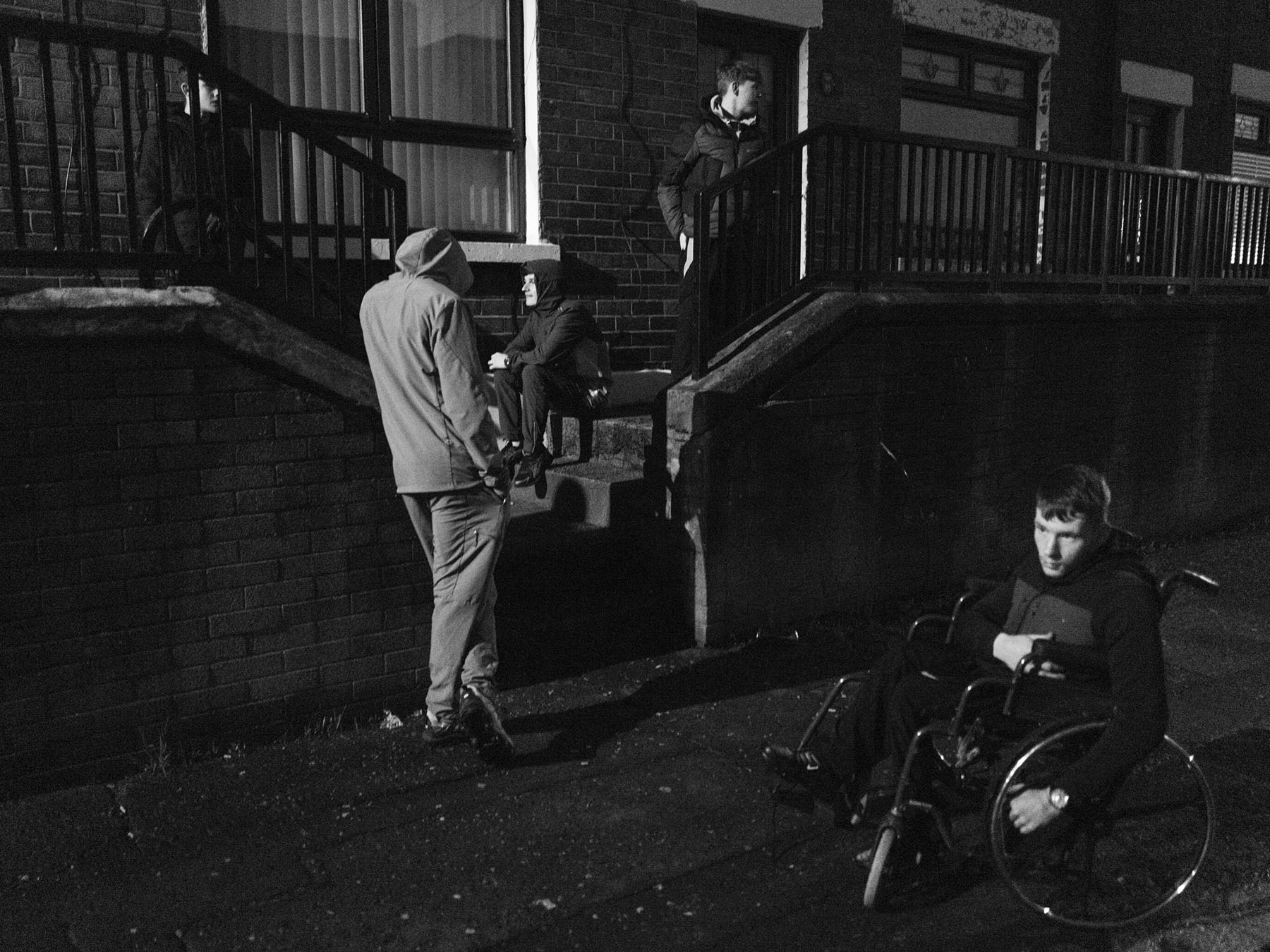
Toby: Very slowly, and in stages. When I first started going into their neighbourhoods, I used to walk around and talk more than I photographed. I’d shoot one or two rolls at most. The point was to build contacts, to let people get used to me being there. In the beginning, when they were going somewhere, they would say: Toby, you wait here, we’ll be back in ten minutes. That was the first stage.
Over time, as the relationships grew, it became: Toby, you can come with us, but don’t take pictures. That was the second stage. And eventually — after years of return, after showing them what I was making, after they understood what I was doing and trusted that I wasn’t there to expose them — it became: Toby, you can come with us and shoot whatever you want.
There are things I have seen in those communities that might look wrong or troubling to the wider world. I make choices about what to photograph and what to hold back. The kids often don’t consciously register those choices — they don’t give it a second thought, and they often can’t fully gauge the consequences of what they do. But the trust is real. They know I’m not there to get them.
Uday: And physically — have you moved closer to them over time?
Toby: Yes, that too. In the early years, I spent most of my time with them in the streets. Belfast has long summer days and the young people are always outside — that is still where I love to photograph, people gathering, taking over public space. It took me a long time before I was invited into anyone’s home. Now they have their own homes, and they invite me in. Some of them invite me to their parents’ homes. That is a different kind of access than anything the streets give you.
Across the Wall
Uday: You mentioned bringing photographs back to the communities on your return visits.
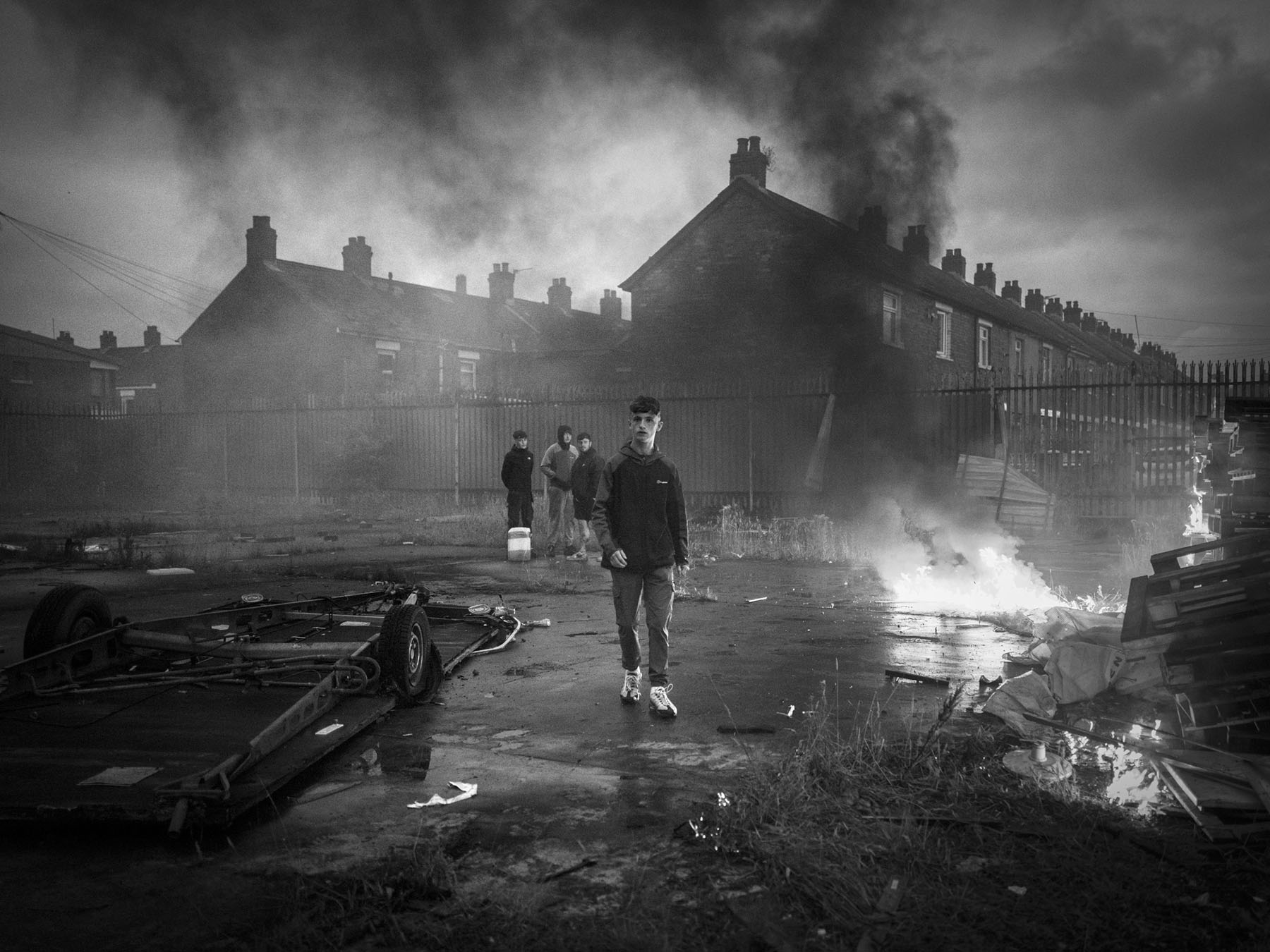
Toby: Yes, from early on — both prints and the book. I do it partly because I genuinely believe the photographs belong to the people in them. I just took them. And partly because it shows them that I’m not someone who comes randomly into their homes, takes some snaps, and disappears. I always try to give something back to the communities I work with. That means photographs, but it also means sharing something of myself — stories about my own family, photographs of my own children. Many of them have known my kids since they were born, through pictures I’ve shared over the years. It becomes a real exchange.
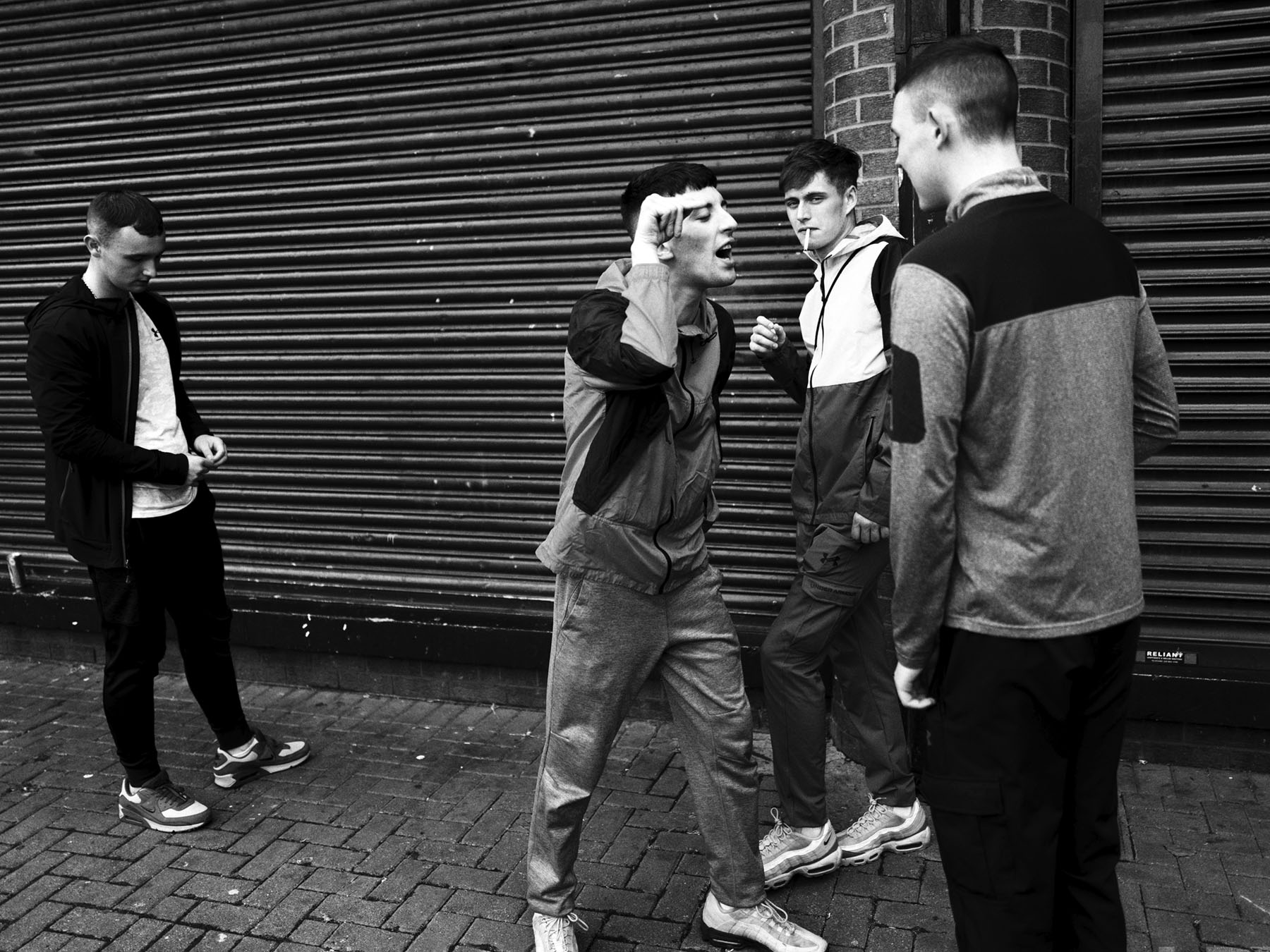
And something consistent happened whenever I showed photographs. When I showed people from one side their own images alongside images from the other community, they were always less interested in seeing themselves than in seeing the other side. Every time. They wanted to look at how the other community lived, what the other streets looked like, what the other people’s faces looked like. Not out of hostility — out of curiosity. Because most of them had never been to the other side of the wall. An eighty-year-old man told me he had never once crossed to the other side in his entire life.
What struck me about this was how human it was. The curiosity was identical on both sides. They were both doing the same thing — looking at the other with the same mix of wonder and recognition. That said more about what the project was about than anything I could have explained in words.
Uday: And the book — when you showed it to people in the communities?
Toby: There was one moment I keep coming back to. An old woman saw the book and was looking through it — looking at the young people from the other community. And she said: these kids from the other side look just like our own kids. There is no reason for hatred. That was very powerful to hear. That was the whole project in a single sentence.
These kids from the other side look just like our own kids. There is no reason for hatred.
What the Work Is For
Uday: You began this project at a time when Belfast had already been photographed extensively. Did that weigh on you?
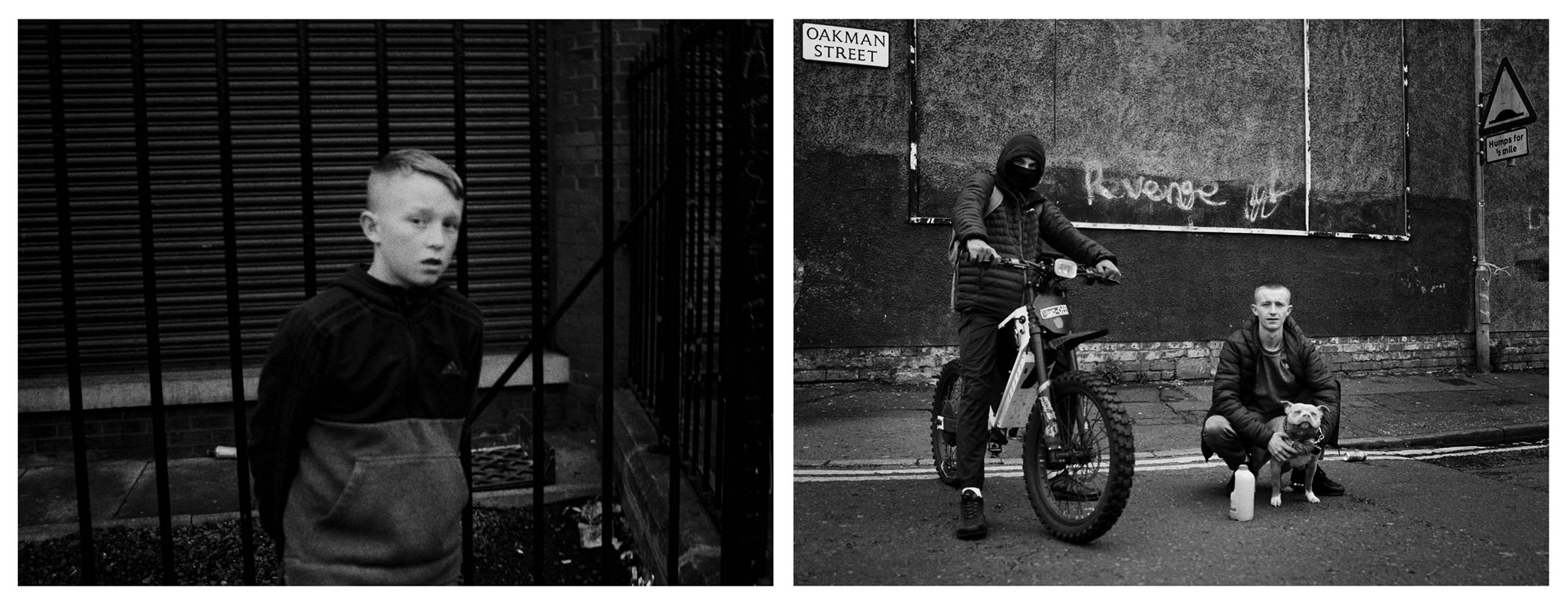
Toby: It did, at the beginning. I used to ask myself: why am I here? Belfast has been covered by almost every significant photographer. What can I offer that hasn’t already been done? But the longer I stayed, the more I started to see that my work was simply different. Not better or worse — different. It had its own visual register, its own relationship with the people in it. That confidence didn’t come from a single moment or a single photograph. It came from the duration of the project itself. The longer you are inside something, the more clearly you can see what you are doing and what makes it yours. I stopped comparing and started trusting the work.
The longer you are inside something, the more clearly you can see what you are doing and what makes it yours.
The Couple
Uday: You mentioned meeting a couple during the project — two people from opposite communities who were in love.
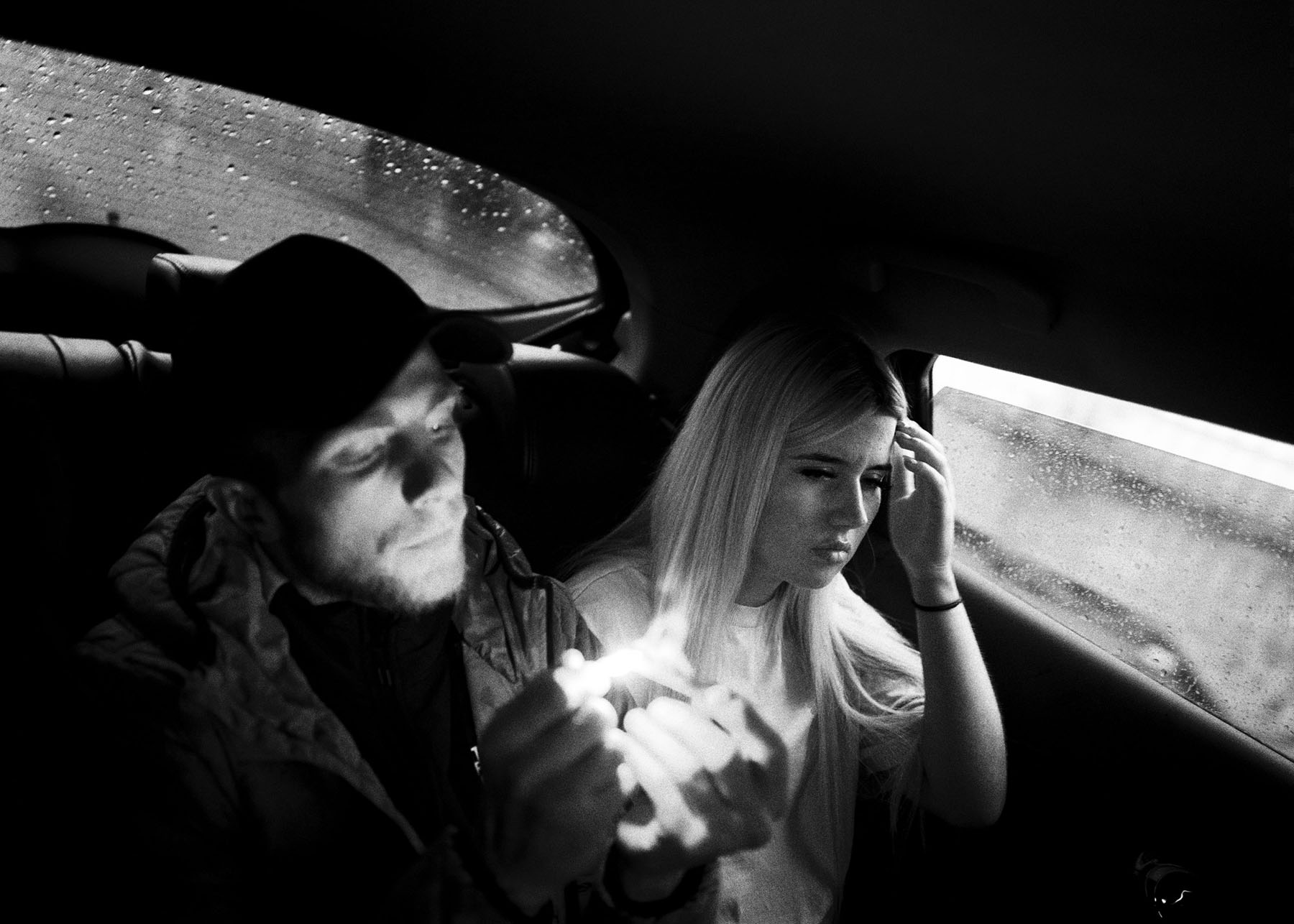
Toby: Yes. I first met them in 2017. They were from opposite sides and they had found each other. That was very rare — still is. They even had a child together. But they split up in 2020. Partly the pressure from the communities, partly because they were very young when the child arrived. It didn’t last.
When those relationships fail, it is often not so much the families directly as the hardliners in the communities — old men with connections to the paramilitary organisations. They are the ones who apply the real pressure. But I will say this: their influence is fading. They are dying out. Young people are no longer letting themselves be dictated to in the same way.
One of the guys I’ve known the longest — and one of the smartest — is now dating the daughter of a British army officer. Meanwhile, his own family includes an IRA fighter who was convicted of multiple murders and was later shot dead. That history of suffering, which has affected so many families on both sides, can turn into something as wonderful as love. I find that very moving.
That history of suffering, which has affected so many families on both sides, can turn into something as wonderful as love.
The Long Return
Uday: You went back in November last year — outside of your usual summer visits.
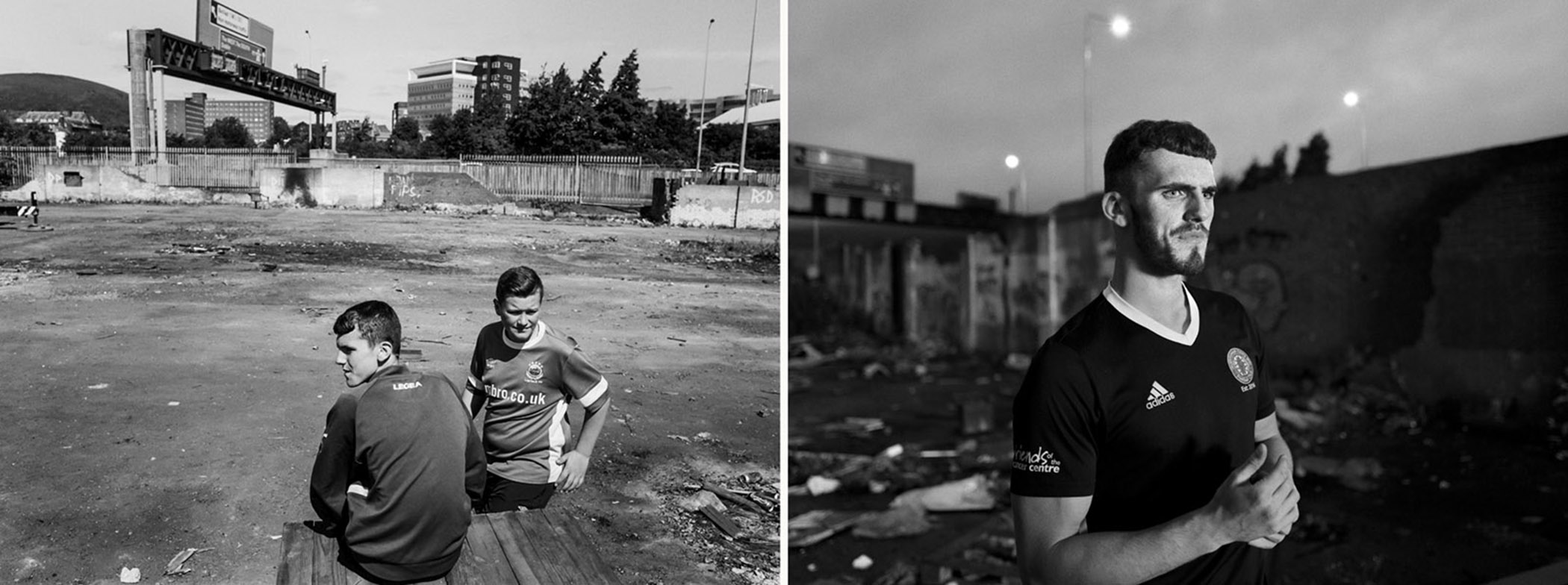
Toby: Yes, I was in Northern Ireland for an assignment and I decided to stay an extra four or five days and go back into the Belfast area. I knew it would be different — harder to run into people in the streets in winter, colder, a different quality of light entirely. But what I realised is that it no longer matters in the same way. I don’t need to wander the streets hoping to encounter people anymore. I just call them and we arrange to meet. That shift — from stranger with a camera to someone with a contact list — is itself a measure of how long this has been going on.
And the winter material feels like another facet of a comprehensive project. Just like the photographs made inside people’s homes, it shows a dimension of Belfast that the summer work doesn’t reach. I’d like to go back in winter more deliberately.
Before we ended the call, I asked Toby about what it has been like to carry a project of this length — what it asks of a photographer to keep returning to the same place, the same streets, the same faces, across nearly two decades. He was quiet for a moment. Then he told me about a conversation he had on one of his recent visits. He had been walking through the streets with his camera when an old man stopped him.
“What are you doing?” the man asked. “Why are you always photographing in Belfast?”
Toby told him: because I like Belfast. Because of the people.
The old man laughed. “Oh yes,” he said. “We’re nice to strangers. We just shoot our own people.”
—
Leave a reflection
What stayed with you after reading? We welcome thoughtful, respectful responses.
Write to us at: editor@betweenstill.com