Praying in the Rain
Photographs by Michael Dean Morgan
Michael Dean Morgan spent several years living in Bali before Praying in the Rain began to take shape. What started as a deliberate avoidance of the island's most photographed subject — its devotional life — became, over time, a sustained inquiry into how ritual and contemporary existence share the same space. Thirteen photographs, made across different regions of the island over three to four years, form the sequence that follows. This essay draws on conversations between Morgan and editor Uday Khambadkone, conducted in April 2026.
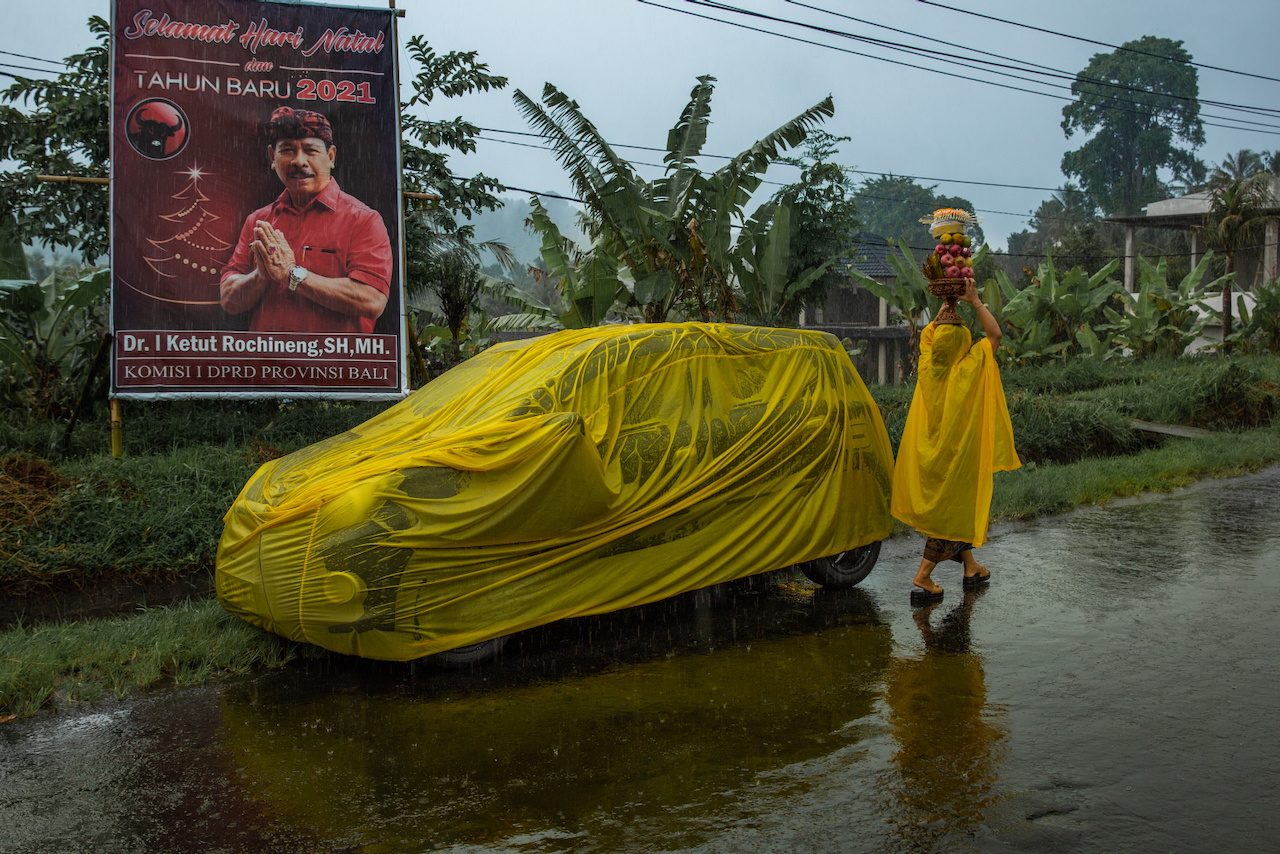
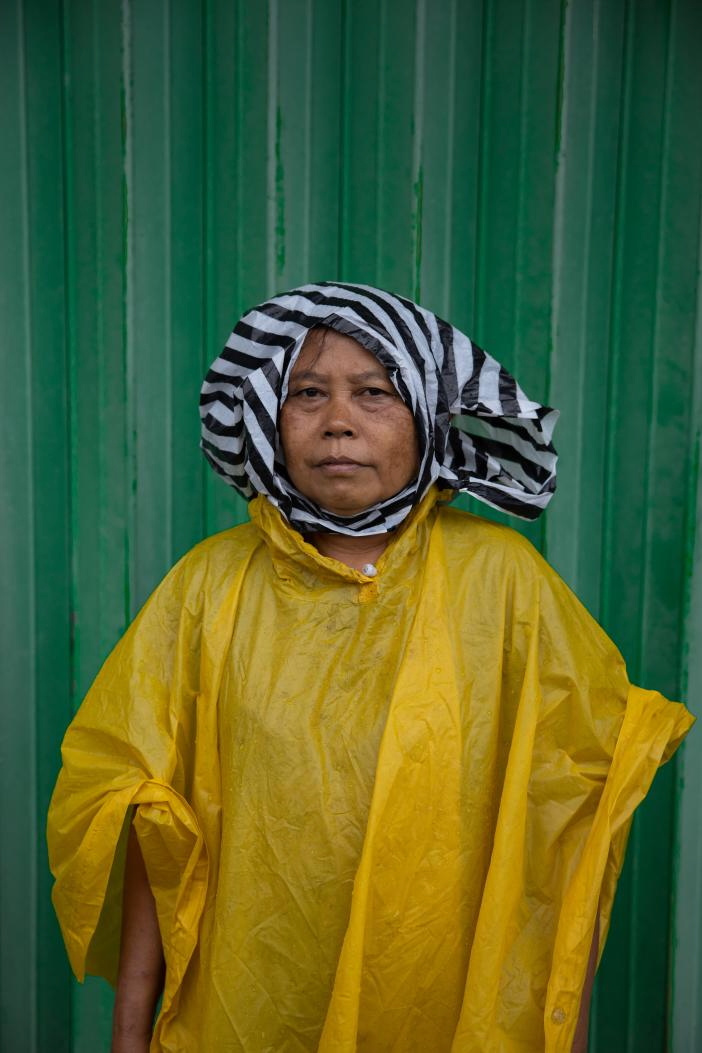
Michael Dean Morgan had been living in Bali for several years before turning his camera toward the island's spiritual life. Impossible to avoid entirely, but he felt it was something most photographers focused on — and it had become predictable.
What changed was time. "There came a point where I thought perhaps I did have a way to approach it photographically, so I got to work." He left Canggu and moved to Ubud, then began exploring the surrounding villages and rice fields. "Moving to a new part of the island with a new project gave me a sense of discovery. Without that, working on your own projects can be difficult."
He had heard about a woman in Gobleg who walked from house to house selling laundry detergent, wearing a raincoat with a plastic bag over her head to keep her hair dry. He drove up one morning to find her on her rounds. "The plastic bag is a common way of dealing with the rain in Indonesia — an improvised way of staying dry." Around her, the village was already mid-ceremony. Two things happening at once, neither interrupting the other. An image that holds something specific about Bali now — not old or new, but both, moving through the same space at the same time.
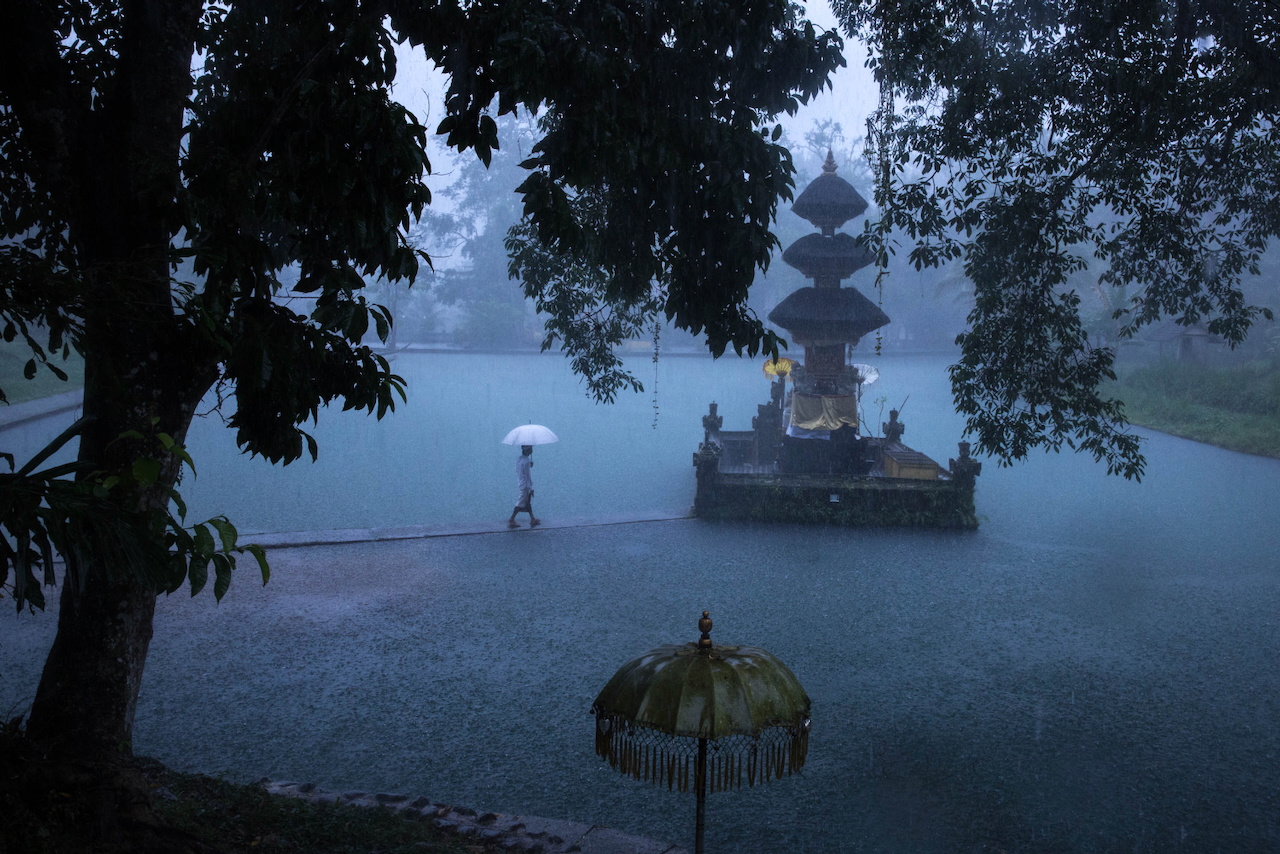
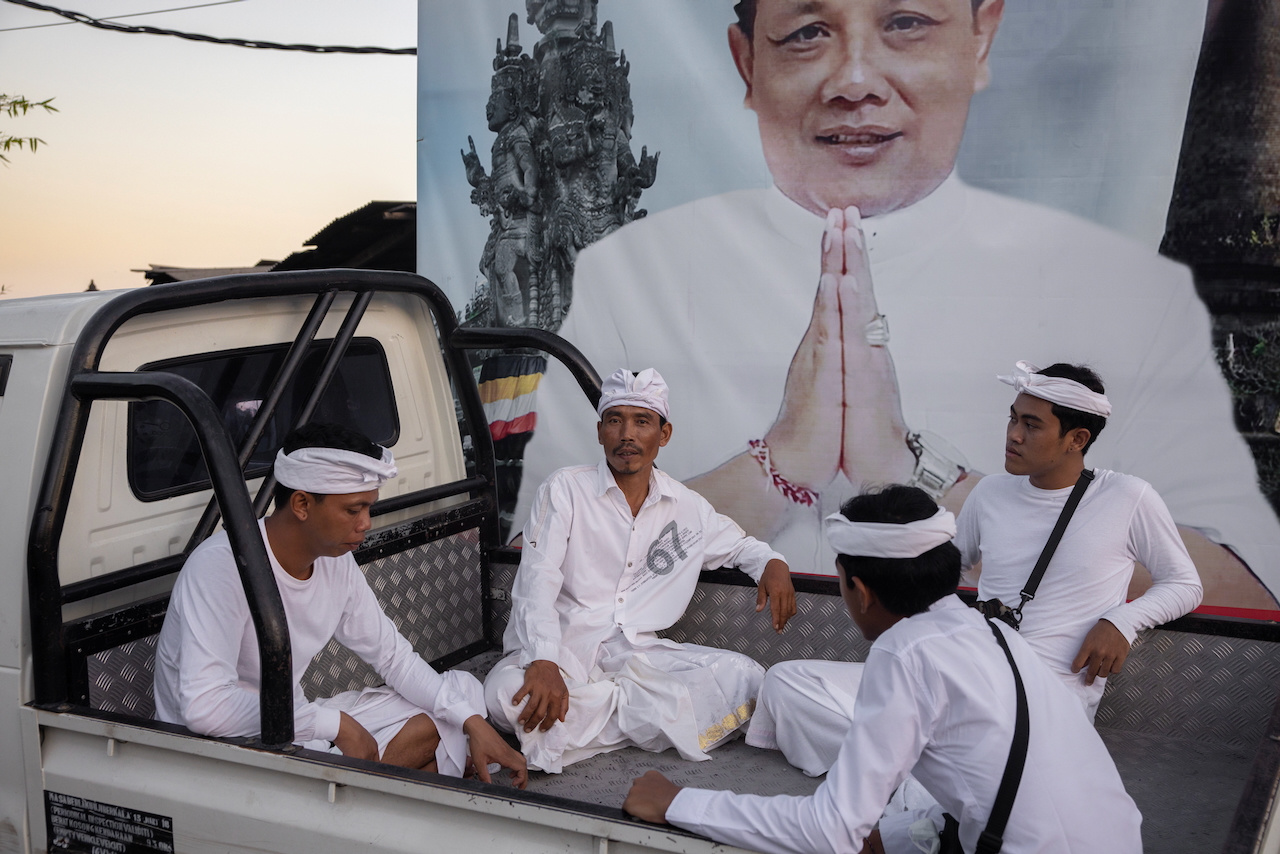
Over time his eye became more selective. He began to notice recurring elements — colours, patterns, the way people occupied space. The black and white of poleng cloth, yellows and greens, occasional flashes of purple. Old scooters, government posters — details that felt specific to Bali, but entirely contemporary. "One of the great things about photography is the way your perception changes. Each time it happens, the world opens up again in a different way."
"For me, Bali feels more like Bali when it's raining. The light drops, everything becomes more even. There's less contrast — the images become more somber."
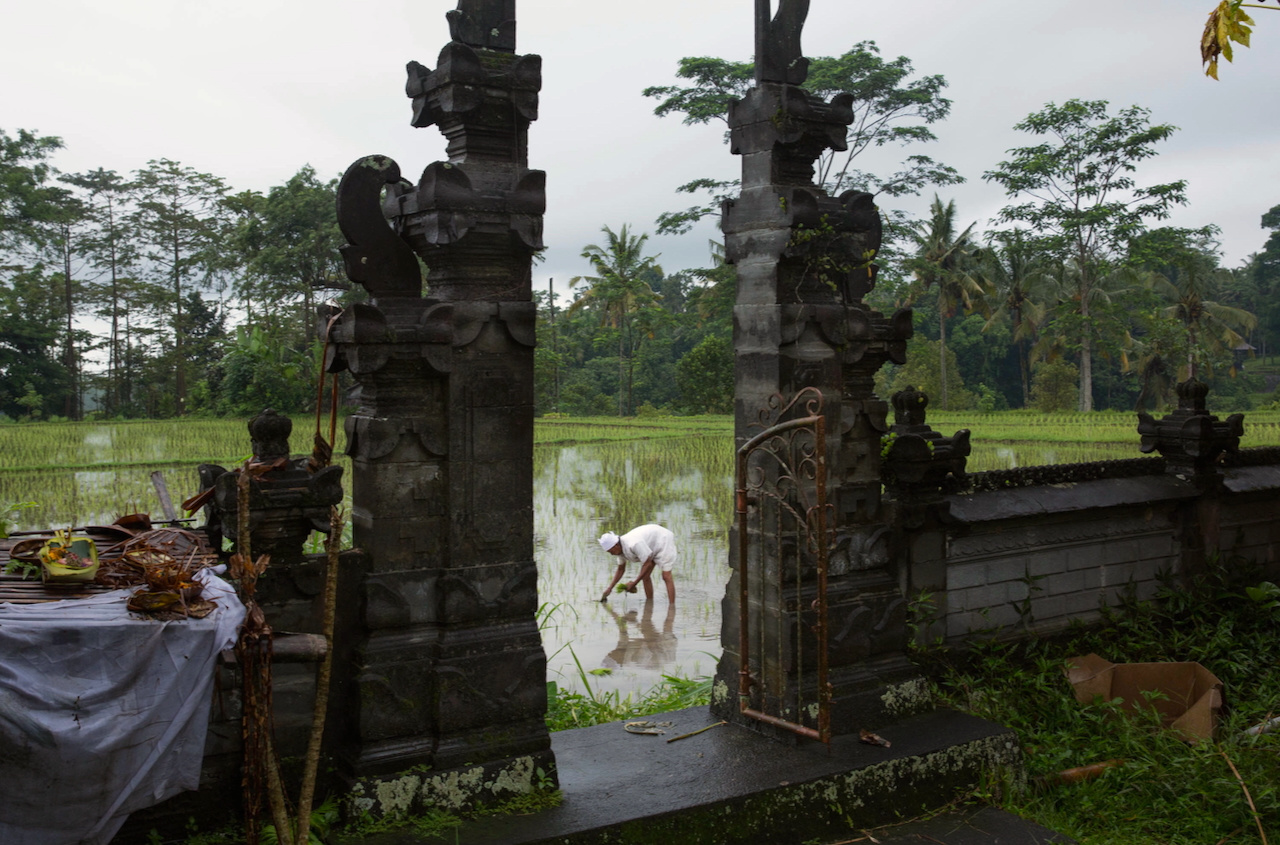
Rain was both a visual and symbolic choice. Light softens, colours deepen, surfaces reflect back into themselves. If it rained, he would go out. The ceremonies continued regardless — offerings placed on wet ground, rituals carried out in rain-soaked temples. The devotional life of the island, he realised, does not pause for weather.
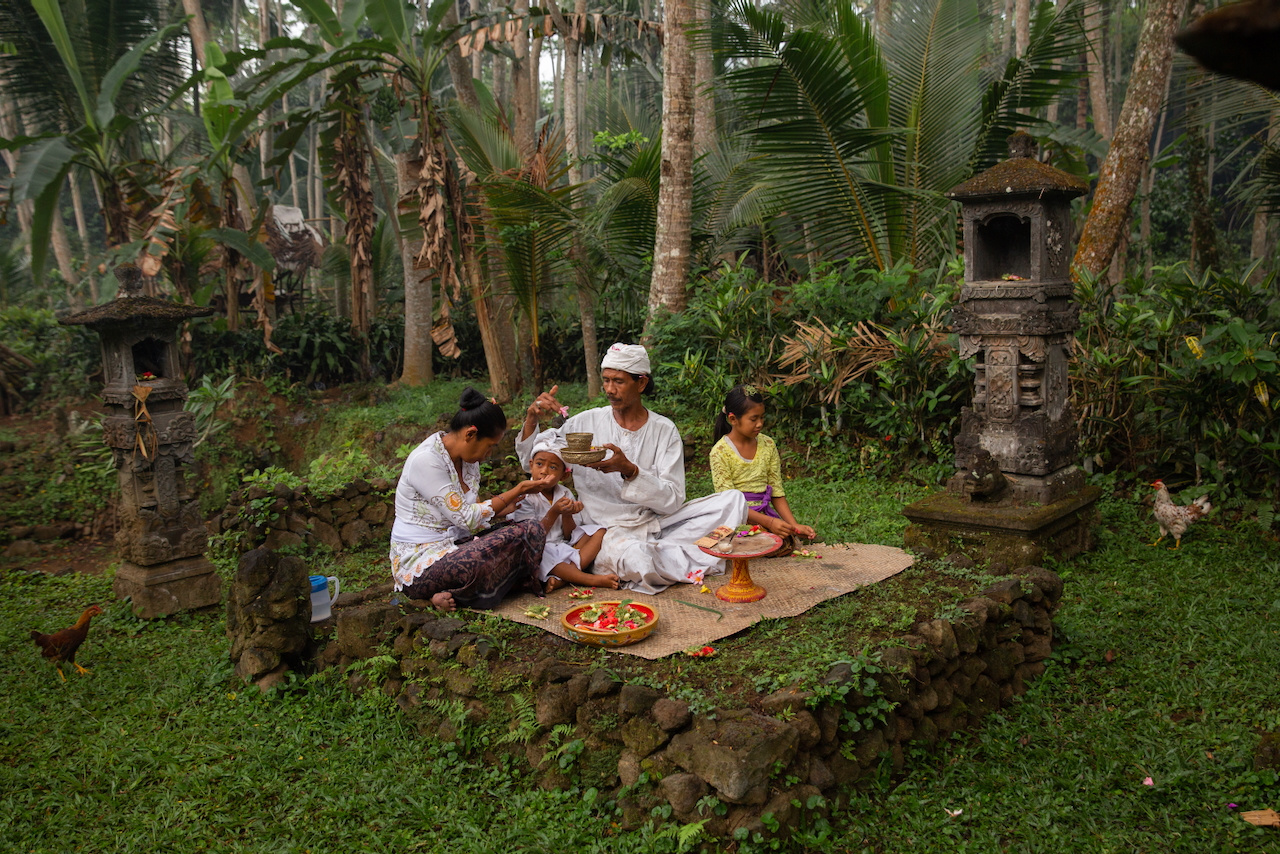
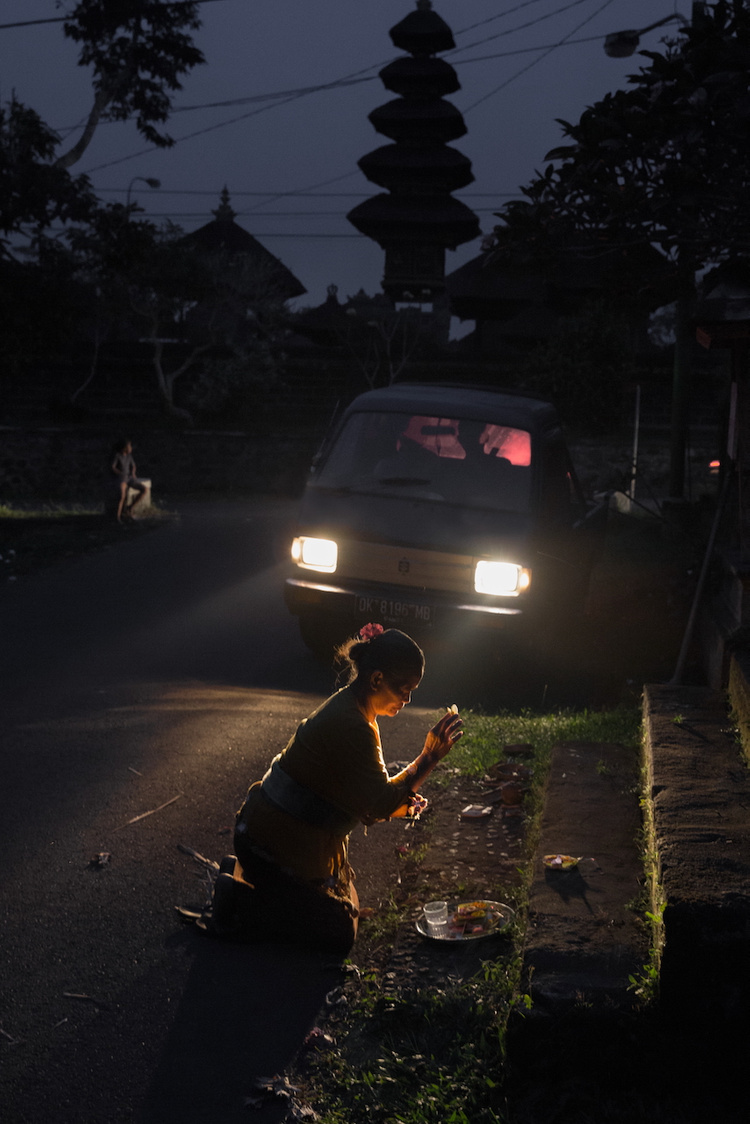
That coexistence became central to the work. Morgan wasn't interested in a Bali stripped of its modernity, or a version of its spiritual life presented as untouched by time. The photographs include cars, raincoats, political posters — the fabric of contemporary life — because the ceremonies exist within that, not apart from it.
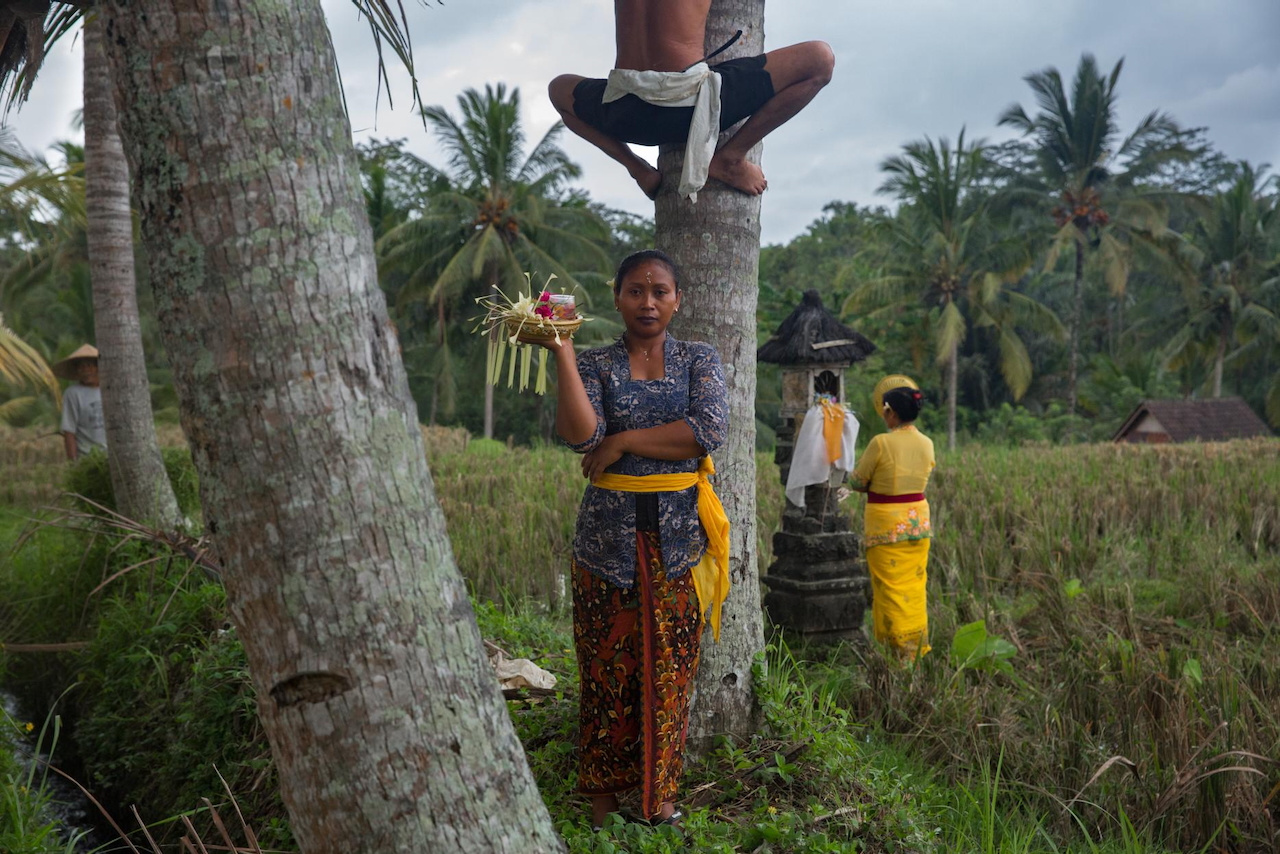
Access came slowly, through repetition and presence. He returned to certain villages dozens of times, building familiarity, allowing people to become less guarded. "You often pass small ceremonies like this while driving around Bali," he says of a post-harvest ritual in Pejeng — a man in a coconut tree, women below him in a flooded rice field. "The combination made me stop."
"It wasn't a place you'd come across by accident."
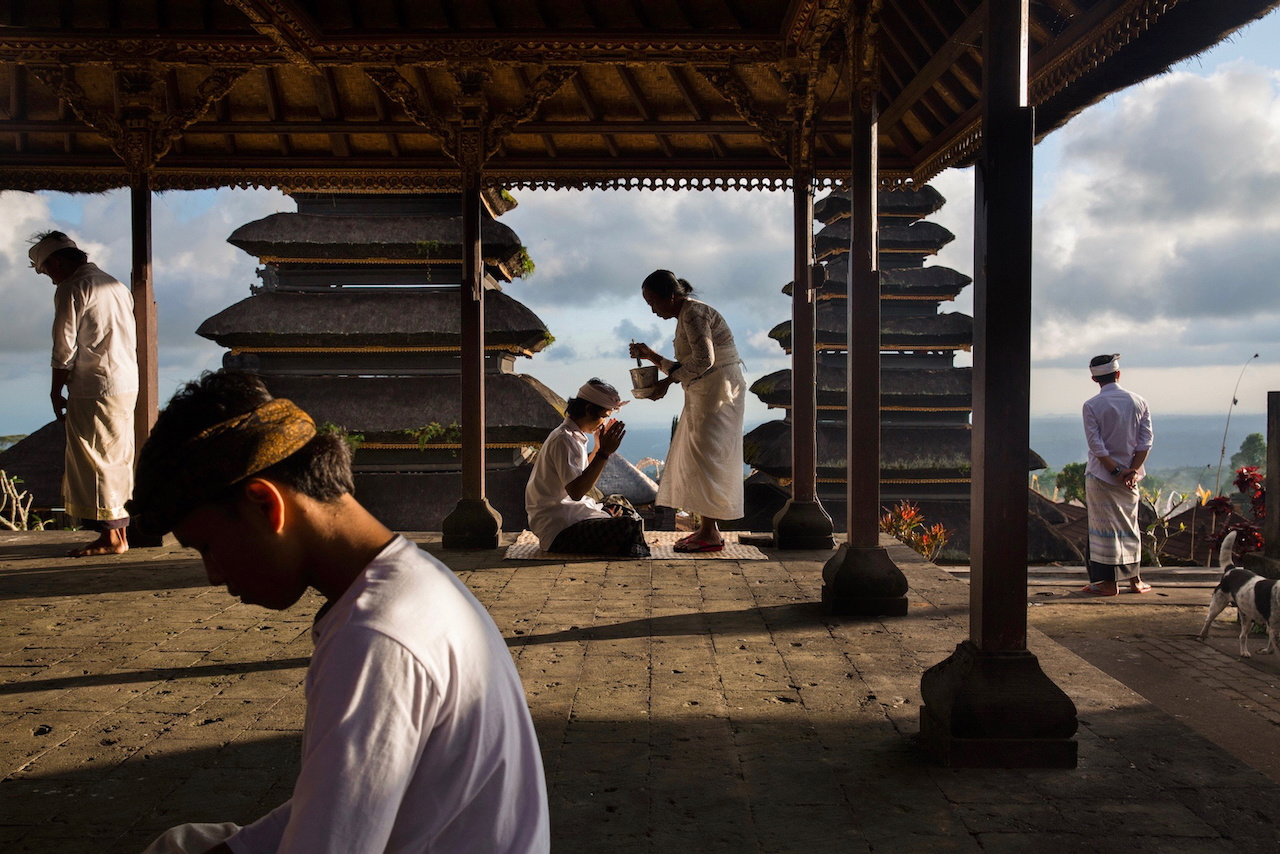
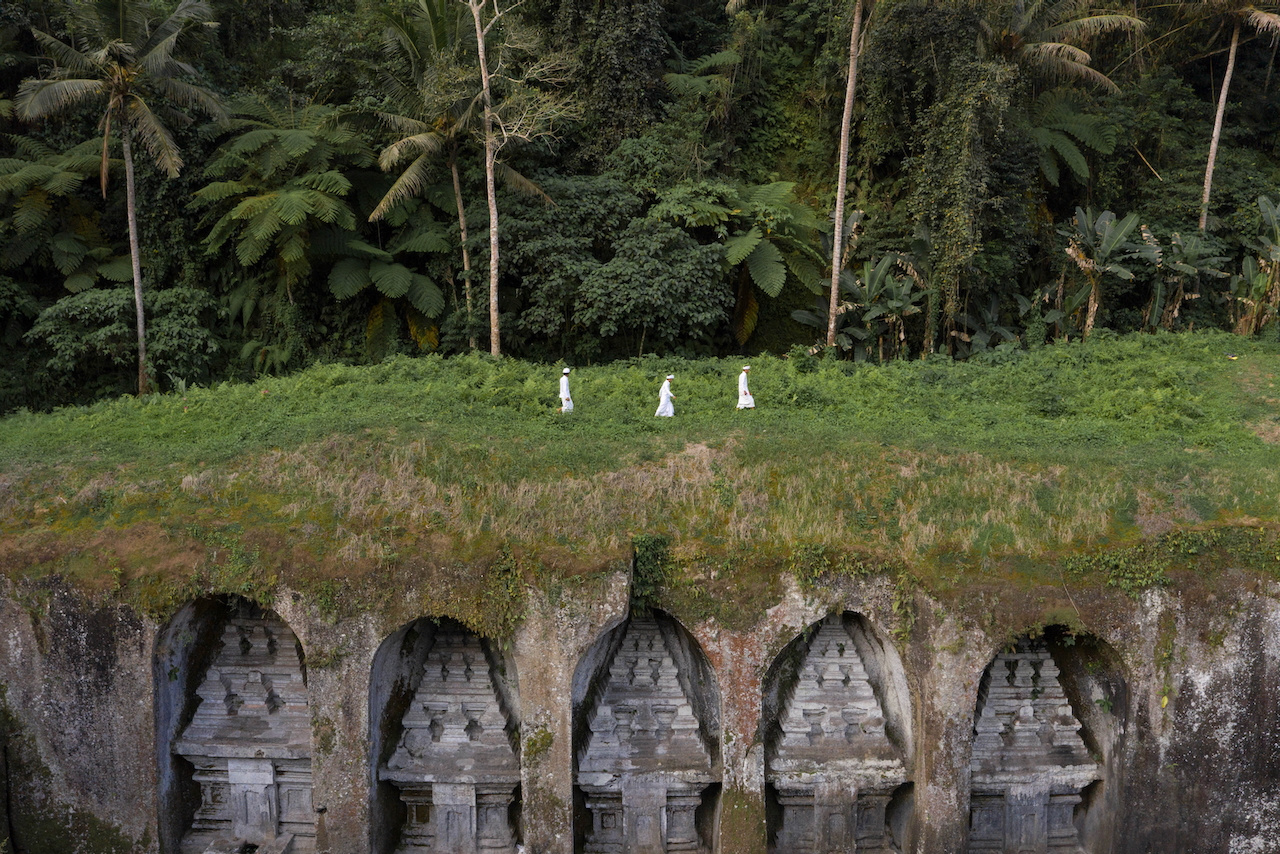
The cave in Munduk required a different kind of access. A priest friend told him about a ceremony deep in a valley in northern Bali. He arrived before sunrise. A small group gathered first — the priest, his wife, a few others — sitting together in a timber kitchen, drinking black coffee before heading down. The walk took about an hour.
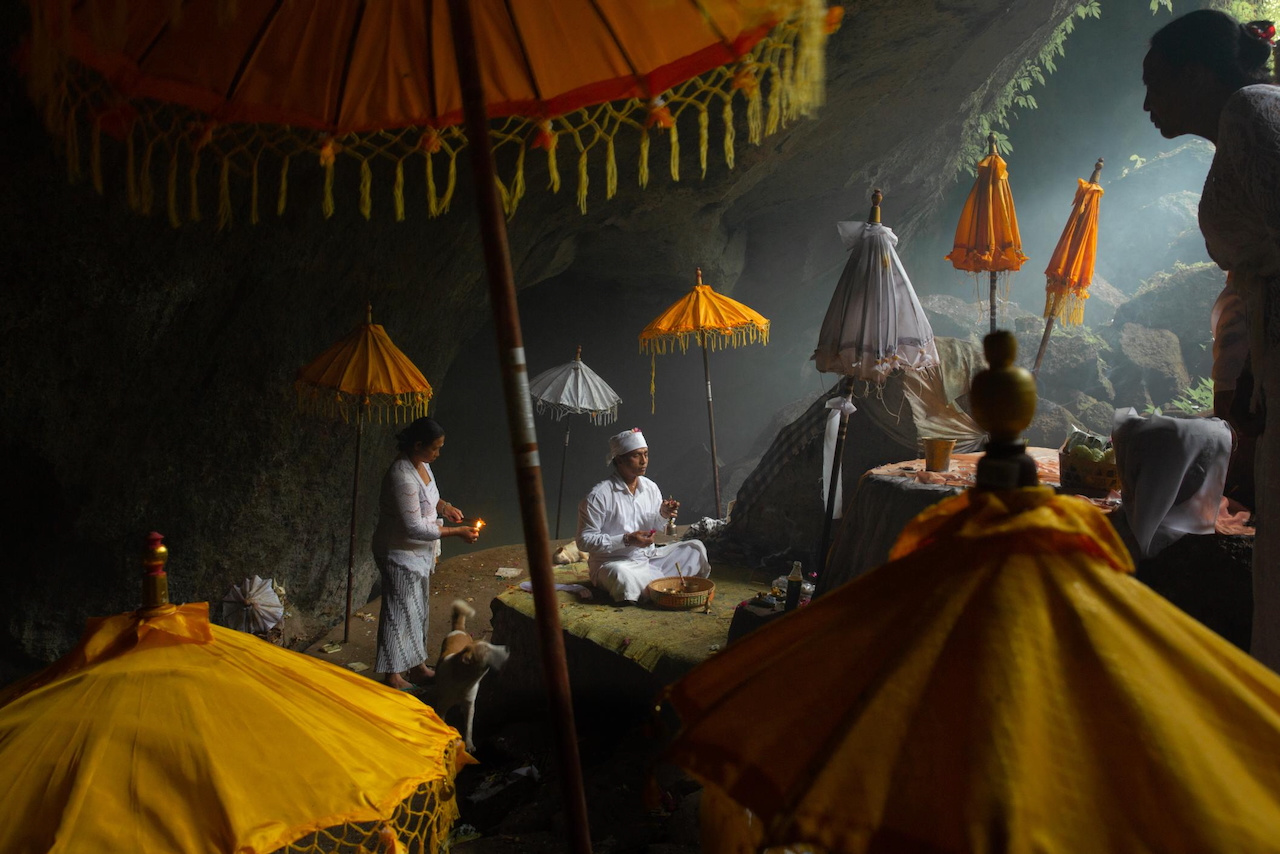
When they arrived, the priest quietly began preparing the space. "That's what the photograph is — not the ceremony itself, but the lead-up to it." By the time it began, the cave was full — bells ringing, prayers echoing off the walls.
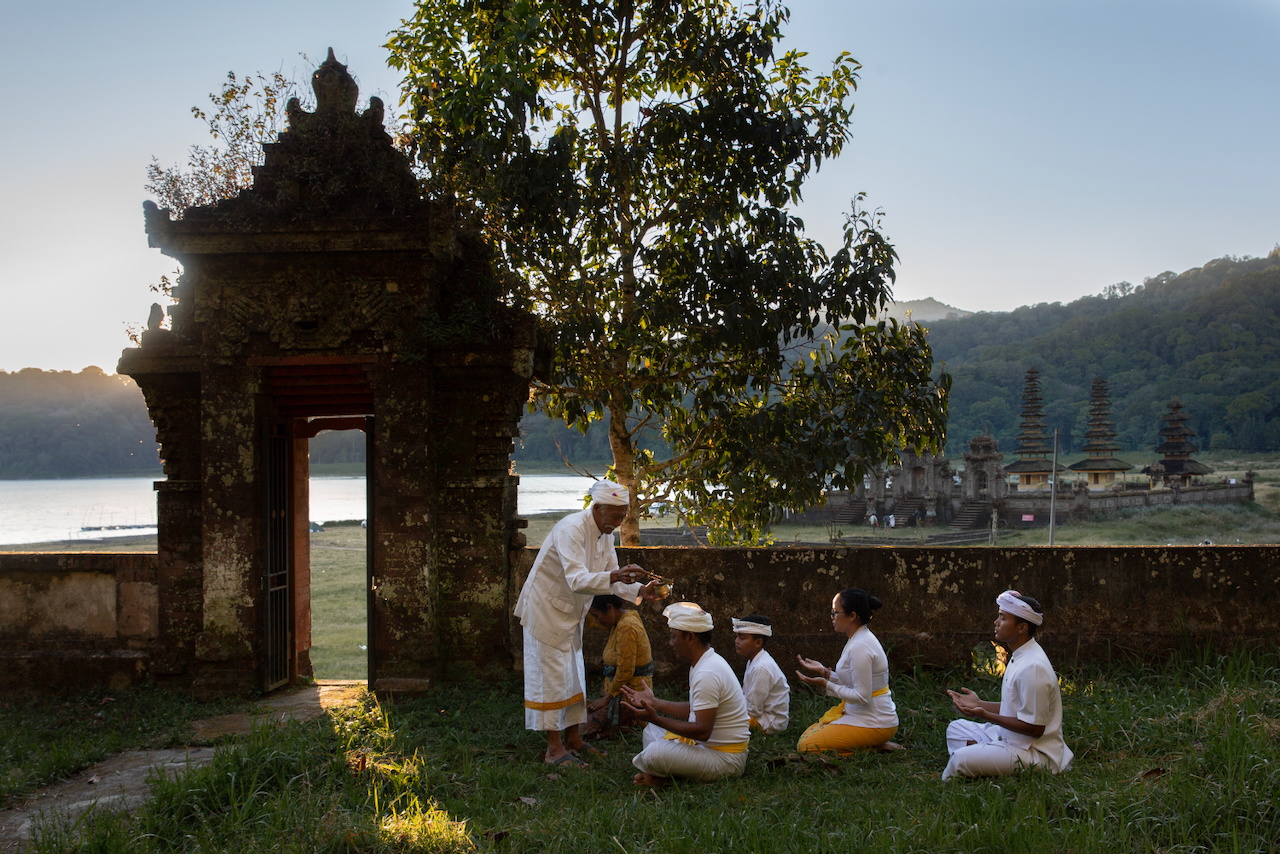
Near Singaraja, after morning rituals, Morgan spent the afternoon walking through a village. One house had its front door open. Inside, soft pink tones covered the walls. A woman saw him and invited him in. A mother was helping her daughter prepare for the next part of the ceremony. On the wall, a poster of Western hairstyles — the kind found in village salons across the island, its colours faded over time. The daughter was in full traditional dress. He took a few photographs and left.
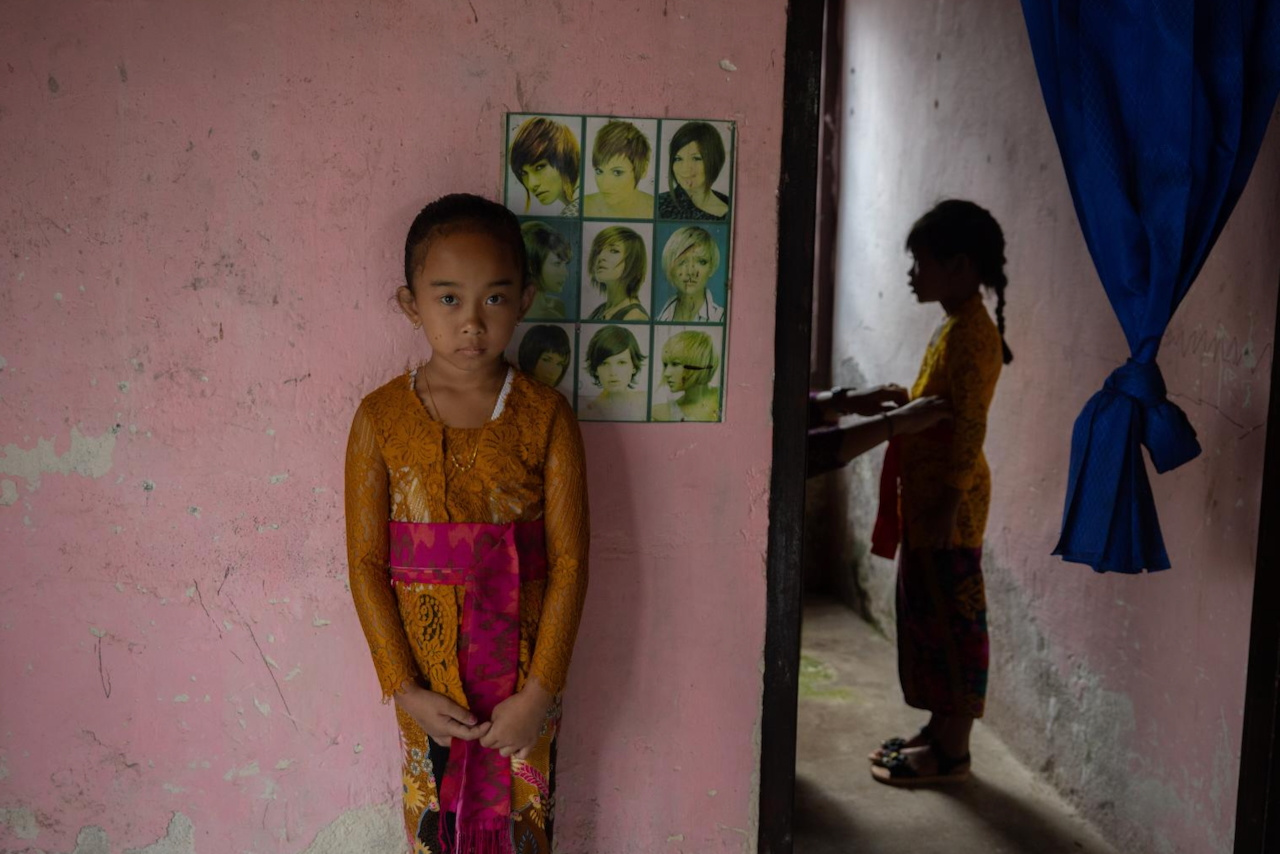
What holds these photographs together is not a fixed idea of Bali, but a shared atmosphere. Rain falls across everything — ceremonies, vendors, interiors, landscapes — without distinction. Morgan photographs the island as it is: wet, contemporary, and deeply rooted in ritual, without forcing those elements into contrast.
The work suggests these are not opposing forces, but part of the same reality. Ceremonies continue regardless of setting or weather — not as performance, but as routine. Daily life and devotion exist side by side, uninterrupted, each continuing without needing to announce itself.
Leave a reflection
What stayed with you after reading? We welcome thoughtful, respectful responses.
Write to us at: editor@betweenstill.com